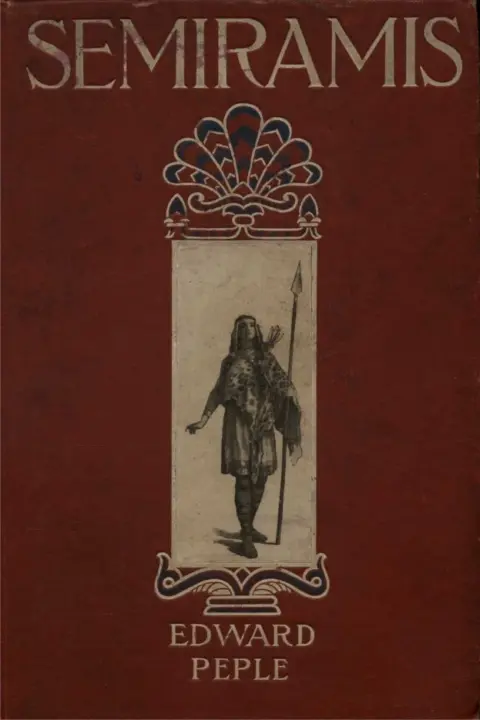
Semiramis: A Tale of Battle and of Love
Edward Peple
THE CLASSIC COLLECTION · 1914
"The Littlest Rebel" by Edward Peple is a novel written in the early 20th century. The story revolves around a young girl named Virginia "Virgie" Cary, who navigates the complexities and harsh realities of life during the Civil War, particularly the impact that the conflict has on her family and home. With a blend of childhood innocence and the burdens of war, the novel touches on themes of loyalty, bravery, and the spirit of humanity amidst strife. At the start of the narrative, we are introduced to Mrs. Cary and her daughter Virgie, who are struggling to maintain a semblance of normalcy despite the looming war. Virgie's playful imagination brings a moment of levity as she and her playmate, Sally Ann, engage in a game based on the story of Blue Beard. However, the play is interrupted by the harsh realities of war and its effects on their lives. Through Mrs. Cary and Uncle Billy, we learn about the family's challenges, including poverty and the looming threat of Union soldiers, while Virgie's innocent and spirited responses highlight her resilience in the face of adversity. As the chapter unfolds, we sense the growing tension and uncertainty that permeates their lives, setting the stage for the conflicts to come.
Introduction adapted from the source catalogue; source summaries may be automatically generated.
Free to read · English · 43,847 words · No account needed
MAKE TIME FOR A GOOD BOOK
On by default. Untick to stop anonymous reading totals. Each page counts after 10 seconds in view. How this works.
Anonymous counting is on unless you have switched it off.
The tone was deep and tender, proud, but as reverent as the baby's prayer for her father's immunity from harm; yet the man who spoke sank back into his seat, closing his eyes and repeating slowly, sadly:
"He's well; God bless him! But he's tired, darling--mighty tired."
"Daddy," the soldier's daughter asked, "will you tell him
somethin'--from me?"
"Yes, dear. What?"
"Tell him," said the child, with a thoughtful glance at Miss Susan Jemima across the table, "tell him, if he ever marches along this way, I'll come over to his tent and rub his head, like I do yours--if he'll let me--till he goes to sleep." She clasped her fingers and looked into her father's eyes, hopefully, appealingly. "Do you think he would, if--if I washed my hands--real clean?"
The Southerner bit his lip and tried to smile.
"Yes, honey, I know he would! And think! He sent a message--to you."
"Did he?" she asked, wide-eyed, flushed with happiness. "What did he
say, Daddy? What?"
"He said," her father answered, taking her hands in his: "'She's a brave little soldier, to stay there all alone. Dixie and I are proud of her!'"
"Oh, Daddy, did he? Did he?"
"Yes, dear, yes," the soldier nodded; "his very words. And look!" From his boot leg he took a folded paper and spread it on his knee. "He wrote you a pass--to Richmond. Can you read it?"
Virgie leaned against her father's shoulder, studying the paper long and earnestly; then, presently looked up, with a note of grave but courteous hesitation in her tone:
"Well--he--well, the Gen'ral writes a awful bad hand, Daddy."
Her father laughed in genuine delight, vowing in his heart to tell his general and friend of this crushing criticism, if ever the fates of war permitted them to meet again.
"Dead right!" he agreed, with hearty promptness. "But come, I'll read it for you. Now then. Listen:
"Pass Virginia Cary and escort through all Confederate lines and give safe-conduct wherever possible.
"R.E. LEE, General."
There was silence for a moment, then Virgie looked up, with tears in her
eyes and voice.
"An' he did that--for little me? Oh, Daddy, I love him so much, it--it
makes me want to cry."
She hid her face on the coat of gray, and sobbed; while her father
stroked her hair and answered soothingly, but in a tone of mourning
reverie:
Your reading position is saved on this browser. Take it to another device with a library code. Reading pages adapt to text, rather than matching a printed edition.
BEHIND THE BOOK
This eBook is for the use of anyone anywhere in the United States and most other parts of the world at no cost and with almost no restrictions whatsoever. You may copy it, give it away or re-use it under the terms of the Project Gutenberg License included with this eBook or online at www.gutenberg.org. If you are not located in the United States, you will have to check the laws of the country where you are located before using this eBook. Read the source licence.
The original source file, including credits and licence, is retained by this library. Request an original-format copy at no charge. Please include the book title and Project Gutenberg identifier #15414.
KEEP YOUR CURIOSITY GOING
Cécile Tormay

Moritz Busch
Coulson Kernahan
John L. Ransom

Maurice Baring
Frances Wright