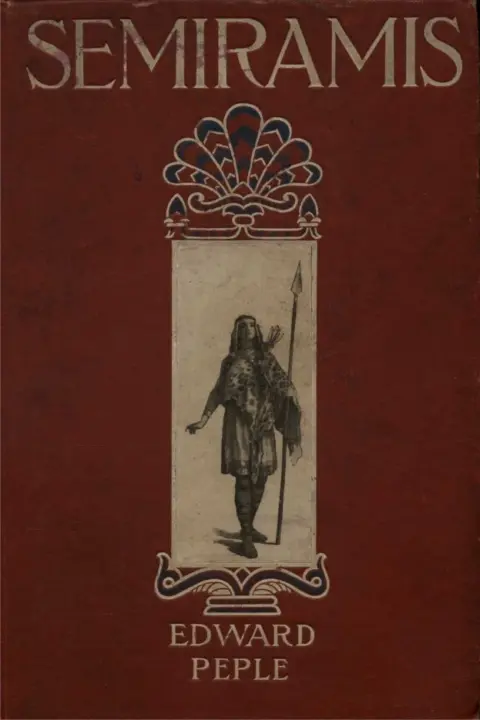
Semiramis: A Tale of Battle and of Love
Edward Peple
THE CLASSIC COLLECTION · 1914
"The Littlest Rebel" by Edward Peple is a novel written in the early 20th century. The story revolves around a young girl named Virginia "Virgie" Cary, who navigates the complexities and harsh realities of life during the Civil War, particularly the impact that the conflict has on her family and home. With a blend of childhood innocence and the burdens of war, the novel touches on themes of loyalty, bravery, and the spirit of humanity amidst strife. At the start of the narrative, we are introduced to Mrs. Cary and her daughter Virgie, who are struggling to maintain a semblance of normalcy despite the looming war. Virgie's playful imagination brings a moment of levity as she and her playmate, Sally Ann, engage in a game based on the story of Blue Beard. However, the play is interrupted by the harsh realities of war and its effects on their lives. Through Mrs. Cary and Uncle Billy, we learn about the family's challenges, including poverty and the looming threat of Union soldiers, while Virgie's innocent and spirited responses highlight her resilience in the face of adversity. As the chapter unfolds, we sense the growing tension and uncertainty that permeates their lives, setting the stage for the conflicts to come.
Introduction adapted from the source catalogue; source summaries may be automatically generated.
Free to read · English · 43,847 words · No account needed
MAKE TIME FOR A GOOD BOOK
On by default. Untick to stop anonymous reading totals. Each page counts after 10 seconds in view. How this works.
Anonymous counting is on unless you have switched it off.
"No," he said quickly, and as suddenly caught and held her eye. "There's a Rebel scout who has been giving us trouble--a handsome fellow riding a bay horse. I thought, perhaps, he might have passed this way."
If he had thought he would detect anything in her face he was once more
mistaken.
"It is more than possible," Mrs. Cary remarked with a touch of weariness. "The road out there is a public one."
"And where does it lead to, may I ask?"
"That depends upon which way you are traveling--and which fork you
take."
"Possibly. But suppose you were riding north. Wouldn't the right fork lead to Richmond--and the left swing around toward the river crossing?"
"As to that I must refer you to a more competent authority," she answered with a hint of some disclosure in her tones.
"Who?"
"Mr. Jefferson Davis," she replied and almost laughed outright as he turned away to hide his vexation. This was an easy game for her to play--and every moment she gained added to Herbert's safety. But if only she could hear those three shots from across the river.
"Well, Harris?" said Morrison as his Lieutenant strode up.
"I have to report, sir, that we've gotten what little hay and corn there was in the stables and are waiting for your orders."
"Very well," and Lieutenant-Colonel Morrison's incisive words rang mercilessly in the listening woman's ears. "Pick out the best shots you have among your men and send them at the gallop down this road to the river crossing. String them along the bank, dismount them and have them watch as they've never watched before. You understand? Now hurry!"
If ever a woman hated a man, or rather the crushing force he typified, then Herbert Cary's wife hated this clear headed, efficient Northerner, who was now discovering how he had been delayed and thwarted. Yet she had plenty of spirit left, for as Corporal Dudley and his file of troopers emerged from the house she stood up and caught Uncle Billy's eye.
"Well, Corporal?" asked Morrison.
"Well, William?" asked Mrs. Cary.
"It's all right, Miss Hallie," Uncle Billy grinned. "Dey ain't took nothin'--not a single thing."
"Thank you, William," said Mrs. Cary, having triumphed again. "And thank you, gentlemen." With a bow to Morrison she went superbly back to her seat under the trees. But as she went it took all her strength of will to keep from crying. Down the carriage road a squad of cavalry was galloping furiously towards the river. And still she had not heard the three shots.
"Now, then, Corporal, you found what?"
"Nothing, sir. We hunted from cellar to roof. No arms and no rebels."
Your reading position is saved on this browser. Take it to another device with a library code. Reading pages adapt to text, rather than matching a printed edition.
BEHIND THE BOOK
This eBook is for the use of anyone anywhere in the United States and most other parts of the world at no cost and with almost no restrictions whatsoever. You may copy it, give it away or re-use it under the terms of the Project Gutenberg License included with this eBook or online at www.gutenberg.org. If you are not located in the United States, you will have to check the laws of the country where you are located before using this eBook. Read the source licence.
The original source file, including credits and licence, is retained by this library. Request an original-format copy at no charge. Please include the book title and Project Gutenberg identifier #15414.
KEEP YOUR CURIOSITY GOING
Cécile Tormay

Moritz Busch
Coulson Kernahan
John L. Ransom

Maurice Baring
Frances Wright