
The lost dirigible
Ralph Henry Barbour
THE CLASSIC COLLECTION · 1909
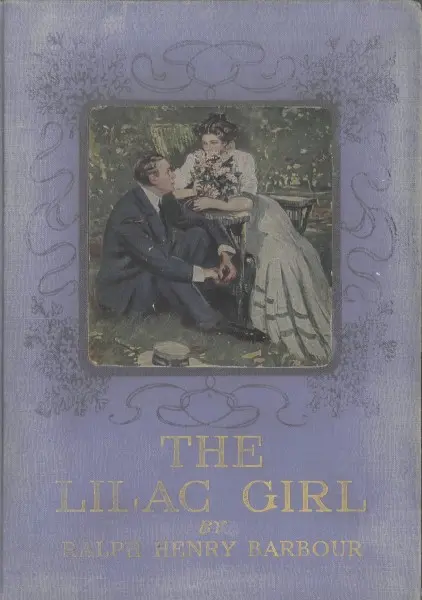
"The Lilac Girl" by Ralph Henry Barbour is a novel likely written during the early 20th century. The story begins with a lively depiction of two men, Wade and Ed, camping in the mountains of Colorado, hinting at themes of adventure, camaraderie, and romance. The narrative shifts between their rustic outdoor life and Wade's encounters with Evelyn Walton, the girl who symbolizes love and beauty against the backdrop of nature. The opening of the book introduces Wade, who finds himself captivated by Evelyn when he glimpses her on a train platform. Their brief yet electric interaction is marked by youthful passion and charm, as they exchange names and promises, hinting at the deeper connection that will unfold. Following this, the story transitions to Wade five years later, exploring his new life in the quaint Eden Village, replete with its lilac fragrances and charming homes. Throughout this section, there are hints of intertwining destinies and family legacies, particularly concerning Wade's connection to Evelyn through Ed Craig. This mix of romance with a touch of nostalgia sets the stage for a compelling narrative about love, loss, and new beginnings.
Introduction adapted from the source catalogue; source summaries may be automatically generated.
Free to read · English · 38,363 words · No account needed
MAKE TIME FOR A GOOD BOOK
On by default. Untick to stop anonymous reading totals. Each page counts after 10 seconds in view. How this works.
Anonymous counting is on unless you have switched it off.
"Now where are those glasses, I wonder?" He looked about the room searchingly over the tops of his spectacles. "There we are." He discovered one on his desk and another on the shelf over the little sink. The latter held some liquid which he first smelled, then tasted and finally threw away. "Wonder what that was," he muttered. "Well, a little rinsing will fix it. Here we are now, Mr. Herrick. Pour your drink, sir, and I'll put the water in. Don't be afraid of it. It's as mild as milk."
"You're quite sure it isn't laudanum?" asked Wade, with a suspicious
look at the big bottle.
"Bless you, no." The Doctor lowered himself into a chair with a sigh of relief and contentment. "Now tell me the news, Mr. Herrick. I haven't seen our good friends at The Cedars since yesterday."
Wade sipped from his glass, set it down, hesitated.
"The only piece of news I have, Doctor," he said, finally, "is that I asked Miss Walton to marry me this morning."
"Bless my soul!" The Doctor started to rise. "I do most heartily
congratulate you, Mr. Herrick!"
"Hold on, though," said Wade. "Don't jump to conclusions. She hasn't
accepted me, Doctor."
"What! But she's going to?"
"I wish I was certain," replied Wade, with a smile.
"But--why, I'd have said she was fond of you, Mr. Herrick. Miss Mullett and I were talking it over just the other day. Old busy-bodies, I suppose you'd call us. But what did she say--if that isn't an impertinent question, sir."
"Well, it seems that there's some one else."
"Never!"
"Yes. I don't know why there shouldn't be."
"Miss Mullett told me that Miss Eve had never shown the slightest favor to any one since she'd known her."
"Maybe this was before that. It isn't very clear just how the other chap stands with her. But she asked time to think it over."
The Doctor chuckled. "Who hesitates is lost, Mr. Herrick. Take my word for it,--she'll come around before long. I'm very glad. She's a fine woman, a fine woman. I knew her mother."
"Well, I hope you're right, Doctor. Maybe you'd better not say anything
about it just yet."
"Not a word, sir. I presume, though, if you do marry her, you'll take
her out West with you."
"I don't dare make plans yet. I'm sure, though, we'd come to Eden
Village in the summer."
"I hope so. I wouldn't want to think I wasn't to see her again. I'm very fond of her in an old man's way. How is the house getting along? Workmen almost through, I guess."
Your reading position is saved on this browser. Take it to another device with a library code. Reading pages adapt to text, rather than matching a printed edition.
Ralph Henry Barbour
Ralph Henry Barbour

Ralph Henry Barbour

Ralph Henry Barbour
BEHIND THE BOOK
This eBook is for the use of anyone anywhere in the United States and most other parts of the world at no cost and with almost no restrictions whatsoever. You may copy it, give it away or re-use it under the terms of the Project Gutenberg License included with this eBook or online at www.gutenberg.org. If you are not located in the United States, you will have to check the laws of the country where you are located before using this eBook. Read the source licence.
The original source file, including credits and licence, is retained by this library. Request an original-format copy at no charge. Please include the book title and Project Gutenberg identifier #12858.
KEEP YOUR CURIOSITY GOING
Coulson Kernahan

Maurice Baring
Frances Wright
Cécile Tormay

Frederic Jesup Stimson

W. H. P. (William Henry Pope) Jarvis