
The lost dirigible
Ralph Henry Barbour
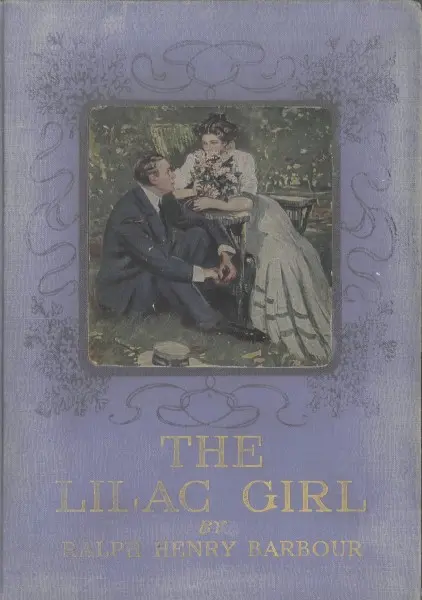
THE CLASSIC COLLECTION · 1909
"The Lilac Girl" by Ralph Henry Barbour is a novel likely written during the early 20th century. The story begins with a lively depiction of two men, Wade and Ed, camping in the mountains of Colorado, hinting at themes of adventure, camaraderie, and romance. The narrative shifts between their rustic outdoor life and Wade's encounters with Evelyn Walton, the girl who symbolizes love and beauty against the backdrop of nature. The opening of the book introduces Wade, who finds himself captivated by Evelyn when he glimpses her on a train platform. Their brief yet electric interaction is marked by youthful passion and charm, as they exchange names and promises, hinting at the deeper connection that will unfold. Following this, the story transitions to Wade five years later, exploring his new life in the quaint Eden Village, replete with its lilac fragrances and charming homes. Throughout this section, there are hints of intertwining destinies and family legacies, particularly concerning Wade's connection to Evelyn through Ed Craig. This mix of romance with a touch of nostalgia sets the stage for a compelling narrative about love, loss, and new beginnings.
Introduction adapted from the source catalogue; source summaries may be automatically generated.
Free to read · English · 38,363 words · No account needed
MAKE TIME FOR A GOOD BOOK
On by default. Untick to stop anonymous reading totals. Each page counts after 10 seconds in view. How this works.
Anonymous counting is on unless you have switched it off.
"The last thing I'd do," Eve replied, smilingly. "One's friends are the very ones to avoid when you want unbiased advice. For instance, there's Carrie Mullett. I told her what you said the other night, and what do you suppose her advice was?"
"I'm sure it was sensible," said Wade. "She's a very sensible, as well as a very charming, lady."
"H'm; well, she said: 'Accept enough to live on, my dear. Your father
would never have wanted you to be dependent on yourself for your
living.'"
"Well?" asked Wade, hopefully.
"She never knew papa," replied Eve. "Besides, I am not dependent on myself for my living. I have enough to live on even if I never sold a thing. I'm not so poverty-stricken as you imagine."
"If you'd talk it over with a lawyer--"
"But it isn't a question of law, Mr. Herrick. It's something between me and my conscience, you see. And surely," she ended with a smile, "you wouldn't consult a lawyer about an affair of conscience? Why, I might have to explain what a conscience was!"
"Well," said Wade, grimly. "I've made no promises, and I haven't given up yet. And you'll find, Miss Walton, that I'm a tiresome chap when it comes to having my own way."
"And you'll find, Mr. Herrick, that I'm a stubborn woman when it comes to having mine. There, the battle is on!"
"And I shall win," said Wade, looking up at her with a sudden gleam in his eyes. For an instant she met his gaze and found herself a little dismayed at some expression she found there. But--
"We'll see," she answered, calmly. "Is it to be war to the knife, Mr.
Herrick?"
"I hope it won't come to that," he answered. "But there's another thing I want you to do, and as it's something you can do without wounding your conscience, I hope you will."
"It sounds formidable. What is it, please?"
"Come over this afternoon and have tea, you and Miss Mullett. Will you?"
"Gladly. I haven't had afternoon tea since I left New York."
"Then shall we say four o'clock? Don't fail me, please, Miss Walton, for Zephania and I will be terribly disappointed if you do. It's our first tea, you know."
"Indeed we won't fail you!" answered Eve. "And, please, I like lemon
with mine."
Your reading position is saved on this browser. Take it to another device with a library code. Reading pages adapt to text, rather than matching a printed edition.
Ralph Henry Barbour
Ralph Henry Barbour

Ralph Henry Barbour

Ralph Henry Barbour
BEHIND THE BOOK
This eBook is for the use of anyone anywhere in the United States and most other parts of the world at no cost and with almost no restrictions whatsoever. You may copy it, give it away or re-use it under the terms of the Project Gutenberg License included with this eBook or online at www.gutenberg.org. If you are not located in the United States, you will have to check the laws of the country where you are located before using this eBook. Read the source licence.
The original source file, including credits and licence, is retained by this library. Request an original-format copy at no charge. Please include the book title and Project Gutenberg identifier #12858.
KEEP YOUR CURIOSITY GOING
Coulson Kernahan

Maurice Baring
Frances Wright
Cécile Tormay

Frederic Jesup Stimson

W. H. P. (William Henry Pope) Jarvis