THE CLASSIC COLLECTION✦An outlaw’s diary: the CommuneCLASSIC FREE BOOKS
An outlaw’s diary: the Commune
Cécile Tormay
THE CLASSIC COLLECTION · 1916
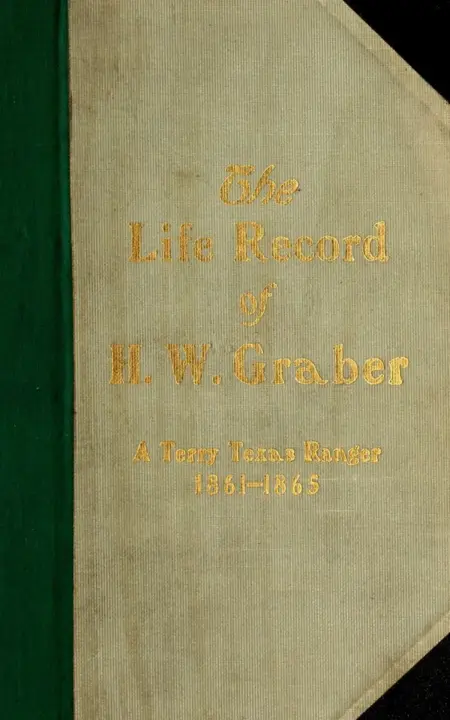
"The Life Record of H. W. Graber" by H. W. Graber is a personal memoir written in the early 20th century. The work recounts the author’s experiences during the tumultuous years of the American Civil War and his life in Texas, touching upon various adventures, hardships, and reflections on his military service. It promises an intimate and historical glimpse into the life of a soldier and settler amid significant national turmoil. The opening of this memoir introduces H. W. Graber, who shares his earliest memories of life in Germany before moving to Texas. He describes the challenges his family faced, including the loss of his parents and the responsibilities he assumed as the eldest sibling. Graber’s narrative journeys through his childhood, working various jobs, and the formative experiences that led him to serve in the war. Early chapters set the stage for his later military endeavors, showcasing his resilience and adaptability in a rapidly changing world as he navigates both his family obligations and the dangers of frontier life.
Introduction adapted from the source catalogue; source summaries may be automatically generated.
Free to read · English · 105,816 words · No account needed
MAKE TIME FOR A GOOD BOOK
On by default. Untick to stop anonymous reading totals. Each page counts after 10 seconds in view. How this works.
Anonymous counting is on unless you have switched it off.
When the Federal Army, which crossed at Fort Royal ferry, commenced its movement northward to meet the column under General Sherman, which came from Savannah, it was your company scouts which gave me notice of it, and I commenced following their movement along one side, which was the left bank of the Salkatchie. The night I left my headquarters was a very cold one, and the troops suffered considerably. I had an A. D. C., a relative of mine, whom I had found in Colcock’s regiment of cavalry, and, not being accustomed to campaigning, he grumbled some as we rode along and my other A. D. C., Mr. Lamar, hearing him, asked what was the matter. He replied, “Lamar, if this is liberty, I would rather be a slave.” We arrived in time to successfully defeat the crossing at Braxton’s Bridge, and I then rode on that night to Reeves’ Bridge, some eight or ten miles above, and, finding everything in readiness, rode on to the bridge above. When I started from Braxton’s Bridge, I had some seven or eight of Colcock’s cavalry, who professed to know the country, and I had sent several of them to find Wheeler’s cavalry, in order to get a force from him to help defend the crossing at Reeves’ Bridge the next day, but I heard afterwards it was not done and in some unaccountable way my escort from Colcock’s cavalry disappeared, every one of them. Fortunately I came across my inspecting officer, Captain King, a very energetic and fearless soldier, and I directed him to go on and bring over a division of cavalry under Wheeler, have them dismounted and placed in line close to the swamps on the right of the infantry force at Reeves’ Bridge. I went on to the bridge above where General Hardee was in command, and he, seeming confident of holding his position, I started back to Reeves’ Bridge alone, my escort having disappeared, as I have stated. On my way back, I came across a camp of a single teamster with his team and wagon. I dismounted, told him who I was, and asked him to feed my horse and let me lie down by his fire and to wake me before daylight, all of which he consented to. Before daylight the next day, I was on my way and arrived at Reeves’ Bridge very early and found that Wheeler had sent me a division of cavalry which was placed as I had directed. I met Captain King, who told me of the daring ride of you and himself, and of your desperate venture to find the cavalry, and for which I was very grateful, for, had it not been for additional force thus acquired, the enemy would have crossed above me early in the day, for the Salkhatchie had fallen so much that it had become fordable and the enemy were crossing not only above, but parties crossed between Reeves’ and Braxton’s bridges, and after crossing in sufficient numbers to warrant it they would have come down on my flank at Reeves’ bridge, and I would have had to retire. The presence of the cavalry prevented this. The cavalry late in the day, having exhausted its ammunition, I directed that they be formed mounted in the woods in the rear, and to charge any body of the enemy attempting to make a flank attack of the force at the bridge. This condition continued until sundown, when I directed the officer in command at the bridge to increase his force in the fortifications protecting the bridge and then to withdraw his artillery by hand, and as night approached the troops were withdrawn and I directed them to march directly to the rear and bivouac after going four or five miles. I then rode towards Braxton’s bridge alone, my Carolina cavalry escort never returning to me. As I rode along I saw a mounted man sitting on his horse looking intently down the road. As I approached he heard my coming and turning recognized me and spoke quickly, telling me that the enemy had crossed and were between us and Braxton’s bridge. I told him to go ahead and act as scout and keep a good lookout. So on we went until we saw a man on horseback. His horse was half hidden in a blacksmith’s shop. He also was looking down the road intently, and, as I came up, he also said the enemy had crossed, and were occupying the road. I told him to join the other man and go ahead. We had not gone far when I heard the rapid gallop of a number of horses, and I thought to myself if the enemy have crossed cavalry I may be captured, so I withdrew a little off the road, so as to have a chance of running quickly to my infantry in the rear. A considerable body appeared, dashing wildly on, each man having his pistol drawn, and, as they came near, I was saluted with wild hurrahs. It was the lieutenant with his Texas company, who told me that he had heard I had been captured, and he had determined to rescue me at the risk of the lives of all, and the men demanded it. Of course, I was much gratified, and, feeling myself secure, we rode on rapidly to find out what had been done at Braxton’s bridge. As we went, the first of the parties who had crossed the river were visible but a short distance away, three or four hundred yards along the edge of the river swamp to which they had retired. We halted where the Braxton bridge road joined the one I was on, and I sent in my staff officer, Captain King, to tell the officer to march his command in my direction. After waiting a long time, word came that he had started his command on another road. He had become alarmed, because parties of the enemy had been seen by his command to cross the river above him, and he was apprehensive of being intercepted. I let him go, although his scare cost his men a good many more miles of marching. My escort, with myself in charge, rode on towards the Ediste, bringing up the rear. I would very much like to read your account of what took place when you were with Paysinger. He would come in after a scout between twelve and daylight at night, and would report to me at once, and he gave valuable information as to the movements of the enemy.
Your reading position is saved on this browser. Take it to another device with a library code. Reading pages adapt to text, rather than matching a printed edition.
BEHIND THE BOOK
This eBook is for the use of anyone anywhere in the United States and most other parts of the world at no cost and with almost no restrictions whatsoever. You may copy it, give it away or re-use it under the terms of the Project Gutenberg License included with this eBook or online at www.gutenberg.org. If you are not located in the United States, you will have to check the laws of the country where you are located before using this eBook. Read the source licence.
The original source file, including credits and licence, is retained by this library. Request an original-format copy at no charge. Please include the book title and Project Gutenberg identifier #68143.
KEEP YOUR CURIOSITY GOING
Cécile Tormay

Moritz Busch
John L. Ransom
Frances Wright
Cécile Tormay

Mabel Potter Daggett