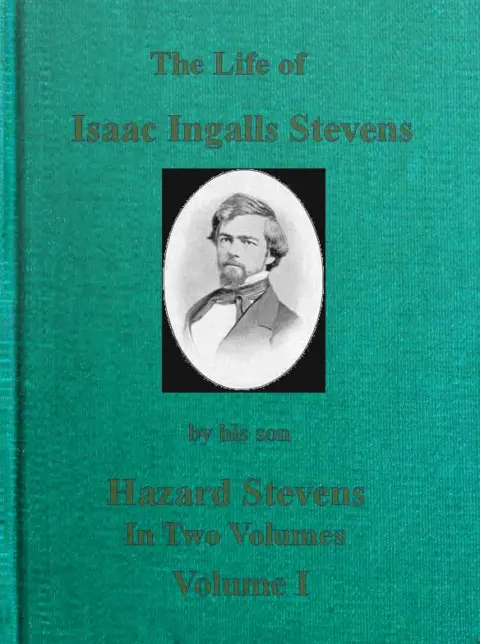
The Life of Isaac Ingalls Stevens, Volume 1 (of 2)
Hazard Stevens
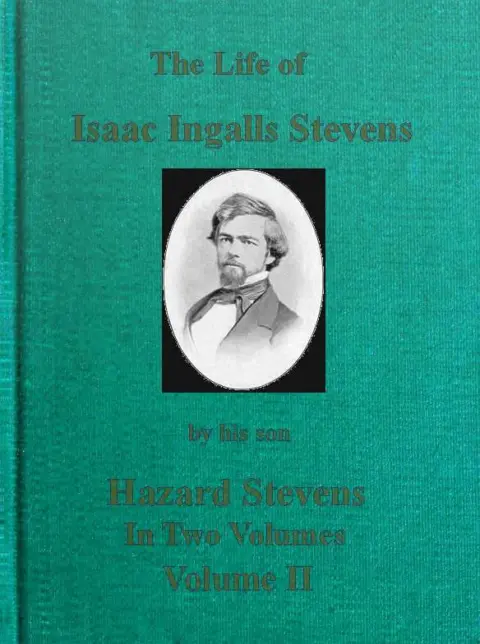
THE CLASSIC COLLECTION · 1900
"The Life of Isaac Ingalls Stevens, Volume 2 (of 2)" by Hazard Stevens is a historical account written in the late 19th century. This biography explores the life and political career of Isaac Ingalls Stevens, focusing particularly on his role as a governor and his negotiations with Native American tribes in the Pacific Northwest. The work delves into Stevens' efforts to establish treaties and maintain peace amid rising tensions between white settlers and Indigenous communities. The opening of the book details the Chehalis Council, where Governor Stevens convenes a meeting with several Indian tribes to negotiate treaties. The narrative paints a vivid picture of the council's atmosphere, showcasing the interactions between Stevens, his team, and the Native American leaders. Key events include the colorful arrival of tribes, the adaptations made by both parties during the negotiations, and the challenges faced due to misunderstandings and resistance from some tribal leaders. Through these initial interactions, the text sets the stage for the complex dynamics at play in Stevens' quest for cooperation and peace in a time of significant cultural change and conflict.
Introduction adapted from the source catalogue; source summaries may be automatically generated.
Free to read · English · 170,639 words · No account needed
MAKE TIME FOR A GOOD BOOK
On by default. Untick to stop anonymous reading totals. Each page counts after 10 seconds in view. How this works.
Anonymous counting is on unless you have switched it off.
The following officers were appointed for the joint treaties, in each case the first named for Washington, the second for Oregon: Governor Isaac I. Stevens and Superintendent Joel Palmer, commissioners; James Doty and William C. McKay, secretaries; R.H. Crosby and N. Olney, commissaries; R. H. Lansdale and R.R. Thompson, agents; William Craig, N. Raymond, Matthew Danpher, and John Flette, interpreters.
The governor also appointed as interpreters A.D. Pambrun, John Whitford, James Coxie, and Patrick McKensie.
Lieutenant Gracie, with his little detachment, arrived on the 23d. A tent, furnished by the governor, was pitched for the officer and his guest, Mr. Kip, while the soldiers built huts of boughs, and spread over them canvas pack-covers. The two gentlemen dined with the governor under the arbor near his tent, "off a table constructed from split pine logs, smoothed off, but not very smooth," says Mr. Kip.
The scanty treating party of whites were now all assembled, and awaited the arrival of the Indians with interest, not unmixed with apprehension; for it seemed a bold and perilous step to meet so many brave and warlike Indians, many of whom were known to be disaffected and ready to provoke an outbreak, in the heart of the Indian country, two hundred miles from the nearest settlement or military post, with such a mere handful. They numbered barely a hundred men,--the governor's party of thirty-five, twelve with General Palmer, the military guard of forty-seven, two Catholic missionaries, and a few settlers.
The second day after reaching the valley Governor Stevens, learning that General Wool had just arrived at Vancouver, wrote him a letter urging the importance of occupying the Walla Walla valley with a strong military force, preferably of cavalry, pointing out the central location of the point, and its strategic advantages for protecting the emigrant road, the trails to the Missouri on the east, the Puget Sound on the west, and for controlling the disaffected Indians, particularly the Cuyuses and Snakes. This, like other sound and indeed necessary measures recommended by the governor, was ignored by the self-sufficient Wool and his officers, until they were obliged to adopt them from necessity.
[2] Numbers and names of all these tribes as given in tabular statement or census, in Governor Stevens's map and report of April 30, 1857, to the Commissioner of Indian Affairs, now on file in Indian Bureau. See Appendix.
[3] Pisquouse or Wenatchee, 600; Yakimas, 700; Ps-hawn-appan, 500; Columbia River bands, 1000; Palouses, 600; Klikitats, 500.
[4] Letter to author; Report of J. Ross Browne, H. Doc., p. 38, 1st session, 35th Congress; Swan's Three Years, Washington Territory, pp. 324-425; Speech of Governor Stevens, 1st session, 35th Congress, Congressional Globe, vol. 37, pp. 490-494.
Your reading position is saved on this browser. Take it to another device with a library code. Reading pages adapt to text, rather than matching a printed edition.
BEHIND THE BOOK
This eBook is for the use of anyone anywhere in the United States and most other parts of the world at no cost and with almost no restrictions whatsoever. You may copy it, give it away or re-use it under the terms of the Project Gutenberg License included with this eBook or online at www.gutenberg.org. If you are not located in the United States, you will have to check the laws of the country where you are located before using this eBook. Read the source licence.
The original source file, including credits and licence, is retained by this library. Request an original-format copy at no charge. Please include the book title and Project Gutenberg identifier #43590.
KEEP YOUR CURIOSITY GOING
Cécile Tormay

Moritz Busch
John L. Ransom
Frances Wright
Cécile Tormay

Mabel Potter Daggett