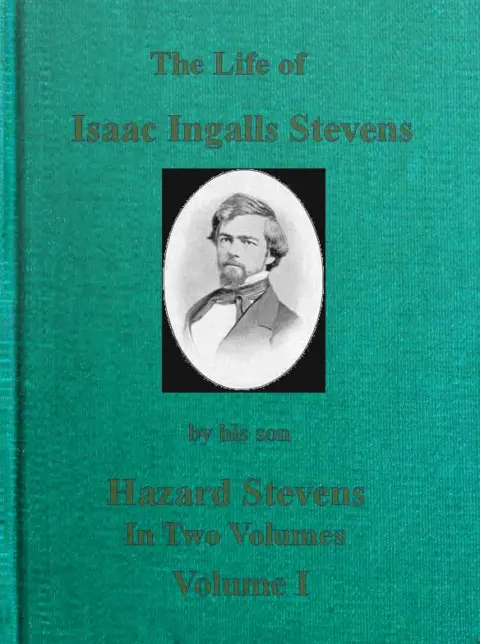
The Life of Isaac Ingalls Stevens, Volume 1 (of 2)
Hazard Stevens
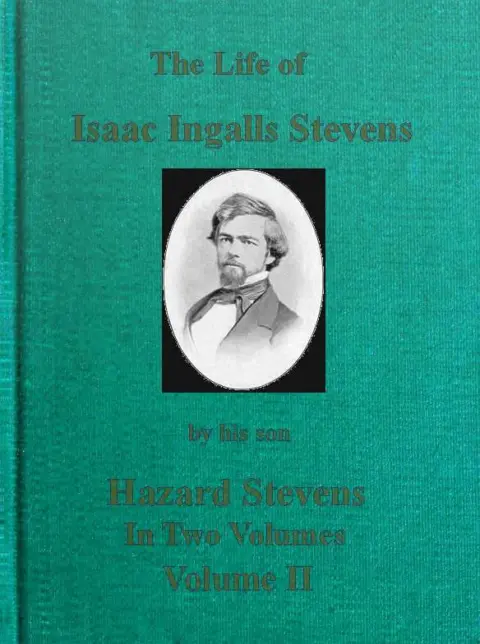
THE CLASSIC COLLECTION · 1900
"The Life of Isaac Ingalls Stevens, Volume 2 (of 2)" by Hazard Stevens is a historical account written in the late 19th century. This biography explores the life and political career of Isaac Ingalls Stevens, focusing particularly on his role as a governor and his negotiations with Native American tribes in the Pacific Northwest. The work delves into Stevens' efforts to establish treaties and maintain peace amid rising tensions between white settlers and Indigenous communities. The opening of the book details the Chehalis Council, where Governor Stevens convenes a meeting with several Indian tribes to negotiate treaties. The narrative paints a vivid picture of the council's atmosphere, showcasing the interactions between Stevens, his team, and the Native American leaders. Key events include the colorful arrival of tribes, the adaptations made by both parties during the negotiations, and the challenges faced due to misunderstandings and resistance from some tribal leaders. Through these initial interactions, the text sets the stage for the complex dynamics at play in Stevens' quest for cooperation and peace in a time of significant cultural change and conflict.
Introduction adapted from the source catalogue; source summaries may be automatically generated.
Free to read · English · 170,639 words · No account needed
MAKE TIME FOR A GOOD BOOK
On by default. Untick to stop anonymous reading totals. Each page counts after 10 seconds in view. How this works.
Anonymous counting is on unless you have switched it off.
"The Federal infantry, about four o'clock in the evening, moved from under cover in the woods and advanced in several lines, first engaging the right, but soon extending its attack to the centre and left. In a few minutes our entire line was engaged in a fierce and sanguinary struggle. As one line was repulsed, another took its place and pressed forward, as if determined, by force of numbers and fury of assault, to drive us from our positions. So impetuous and well sustained were these onsets as to induce me to send to the commanding general for reinforcements."
Says Colonel Bradley T. Johnson, who commanded the second brigade of
Ewell's division:--
"Before the railroad cut, the fight was most obstinate. I saw a Federal flag hold its position for half an hour within ten yards of the flag of one of the regiments in the cut, and go down six or eight times; and after the fight one hundred dead were lying within twenty yards from the cut, some of them within two feet of it. The men fought until their ammunition was exhausted, and then threw stones. Lieutenant Lewis Randolph killed one with a stone, and I saw him after the fight with his skull fractured."
With Porter's repulse comes Lee's opportunity, the opening for which he has so coolly waited the better part of two days. Longstreet, anticipating the order to advance, throws forward his whole wing in one of those overwhelming attacks for which he became famous. At first there seems to be almost nothing to oppose the avalanche. Pope has just ordered Reynolds's division to the right of the pike to aid in protecting Porter's withdrawal, although more than half the army was bunched together there in the centre, and Meade's and Seymour's brigades and Ransom's battery have taken the new position. Colonel G.K. Warren, of Sykes's division, without waiting for orders, seeing Hazlett's battery, which was well advanced on the pike, uncovered by Reynolds's movement, has just hurried his little brigade of two regiments, 5th and 10th New York, over to the left of the road to support the battery, when the storm bursts upon him. Furiously assailed in front, masses of the enemy come swarming through the woods on his left and rear, and it is only by breaking to the rear that any escape capture. His loss is four hundred and thirty-one, but the few minutes he holds back the enemy saves the guns. Reynolds's remaining brigade, under Anderson, with three batteries, in the act of moving to the right as ordered, is suddenly assailed with fury and forced to turn and fight where it stands, and now bears the brunt of the onslaught. Under cover of the woods, the enemy has completely turned the flank of all the Union positions, as Reynolds had told Pope only an hour before, and now strikes them with heavy masses of infantry on both front and left. After a gallant resistance Anderson is forced back, with the loss of four guns of Kerns's battery and the caissons of Cooper's. McLean, who sees with amazement Reynolds's division move away, leaving him to hold the hill alone, at once deploys his brigade, facing westward, and receives the attack. He now changes front to the left, and in a magnificent charge drives back the flanking forces of the enemy, but has to offer his right in the movement to the deadly enfilade fire from his former front, and he, too, bravely struggling, is borne back over the Chinn Hill. Meantime the generals in the centre are making frantic efforts to hurry troops over to the left. General Zealous B. Tower, distinguished for his gallantry in the Mexican war, one of the ablest officers of the army, leads the two reserve brigades of Ricketts across the pike and up the Chinn Hill, where McLean is being overborne; but, before he can reach a good position, his men are falling by scores, he is stricken down with a severe wound,--disabled for life and his career in the field closed,--and ere long his brigades are driven back. Colonel Koltes, of Sigel's corps, leading his brigade to the same position, is killed, and his troops, too, are forced back. General Schenck, leading reinforcements to McLean, is wounded. The enemy have driven the last defenders from the Chinn Hill and plateau, and their exultant lines go sweeping on to complete the victory. But Reynolds, with Meade's and Seymour's brigades, and Milroy with his brigade, are now formed in line upon the slope of the Henry Hill, along or near the Sudley road, and throw back the charging Confederates with deadly fire, and soon Sykes's regulars, Buchanan's and Chapman's brigades, and Weed's battery reinforce the hard-pressed and struggling line, extending it farther to the left and rear. The enemy cannot break it, but his fire fast thins its ranks, and his flanking movement and deadly enfilade still continue. At last night is at hand, and the fury of his attack abates. The defenders, spent with heavy loss and the hard struggle, now fall back; but General Reno has just led his second brigade and Graham's battery up the hill, and forms his three regiments, 21st Massachusetts, 51st Pennsylvania, and 51st New York, around its crest in a thin line facing both the Chinn Hill and the woods on the left, with the guns in the intervals between the regiments. In this position he repulses after dark two attacks of Wilcox's troops, the last efforts of Longstreet's mighty onslaught. After nine o'clock, after the fighting had ceased, he quietly retires from the hill and marches to Centreville.
Your reading position is saved on this browser. Take it to another device with a library code. Reading pages adapt to text, rather than matching a printed edition.
BEHIND THE BOOK
This eBook is for the use of anyone anywhere in the United States and most other parts of the world at no cost and with almost no restrictions whatsoever. You may copy it, give it away or re-use it under the terms of the Project Gutenberg License included with this eBook or online at www.gutenberg.org. If you are not located in the United States, you will have to check the laws of the country where you are located before using this eBook. Read the source licence.
The original source file, including credits and licence, is retained by this library. Request an original-format copy at no charge. Please include the book title and Project Gutenberg identifier #43590.
KEEP YOUR CURIOSITY GOING
Cécile Tormay

Moritz Busch
John L. Ransom
Frances Wright
Cécile Tormay

Mabel Potter Daggett