THE CLASSIC COLLECTION✦The Night ClubCLASSIC FREE BOOKS
The Night Club
Herbert George Jenkins
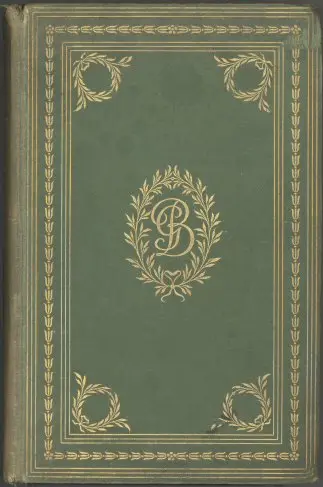
THE CLASSIC COLLECTION · 1912
"The Life of George Borrow" by Herbert George Jenkins is a biographical account written in the early 20th century. This work explores the life and career of George Borrow, with particular attention to his experiences between the late 18th century and early 19th century. The narrative emphasizes Borrow's development from a struggling writer to a significant figure known for his missionary work and literary contributions, especially within the context of his time in Spain. The opening of the book sets the stage for Borrow's intriguing life, starting with the background of his father, Thomas Borrow, and the family's circumstances that shaped George's early years. Jenkins paints a vivid picture of young Borrow's tumultuous upbringing amidst the backdrop of historical events, military life, and his striking duality as both an introverted child and a spirited student. The introduction examines key moments, such as his early combativeness and his burgeoning interest in languages, which foreshadow his later pursuits as a linguist and writer. It establishes that Borrow's life was not only defined by his literary ambitions but also by his complex personality and the societal expectations of his family, setting the stage for further explorations of his remarkable journey.
Introduction adapted from the source catalogue; source summaries may be automatically generated.
Free to read · English · 161,465 words · No account needed
MAKE TIME FOR A GOOD BOOK
On by default. Untick to stop anonymous reading totals. Each page counts after 10 seconds in view. How this works.
Anonymous counting is on unless you have switched it off.
“What I admire in Borrow to such a degree that before it his faults or failings seem very trifling, is his absolutely vigorous, marvellously varied originality, based on direct familiarity with Nature, but guided and cultured by the study of natural, simple writers, such as Defoe and Smollett. I think that the ‘interest’ in, or rather sympathy for gypsies, in his case as in mine, came not from their being curious or dramatic beings, but because they are so much a part of free life, of out-of-doors Nature; so associated with sheltered nooks among rocks and trees, the hedgerow and birds, river-sides, and wild roads. Borrow’s heart was large and true as regarded English rural life; there was a place in it for everything which was of the open air and freshly beautiful.”—Memoirs of C. G. Leland, 1893.
{462b} Romano Lavo-Lil. Word-Book of the Romany, or English Gypsy Language. With Specimens of Gypsy Poetry, and an Account of Certain Gypsyries or Places Inhabited by Them, and of Various Things Relating to Gypsy Life in England.
{462c} “There were not two educated men in England who possessed the slightest knowledge of Romany.”—F. H. Groome in Academy,—13th June 1874.
{463a} F. H. Groome in Academy, 13th June 1874.
{463b} Ibid.
{464} The Athenæum, 17th March 1888.
{466a} The Bookman, February 1893.
{466b} The Athenæum, 10th Sept. 1881.
{467} William Bodham Donne and His Friends. Edited by Catherine B.
Johnson, 1905.
{469a} Mr T. Watts-Dunton, in The Athenæum, 3rd Sept. 1881.
{469b} Mr A. Egmont Hake, in The Athenæum, 13th Aug. 1881.
{470a} The Life of George Borrow, by Dr Knapp.
{470b} East Anglia, by J. Ewing Ritchie, 1883.
{470c} George Borrow in East Anglia.
{473} W. E. Henley.
{474a} The Athenæum, 25th March 1899.
{474b} Many attacks have been made upon Borrow’s memory: one well-known man of letters and divine has gone to lengths that can only be described as unpardonable. It is undesirable to do more than deplore the lapse that no doubt the writer himself has already deeply regretted.
{474c} Memoirs of Eighty Years, 1892.
{475a} Mr A. Egmont Hake in The Athenæum, 13th August 1881.
{475b} In The Bible in Spain. “Next to the love of God, the love of country is the best preventative of crime.” (Page 53.)
{475c} The Bible in Spain, page 97.
{476} Mr Thomas Seccombe in The Bookman, Feb. 1892.
{477} Wild Wales, page 628.
Your reading position is saved on this browser. Take it to another device with a library code. Reading pages adapt to text, rather than matching a printed edition.
Herbert George Jenkins
Herbert George Jenkins
Herbert George Jenkins
Herbert George Jenkins
BEHIND THE BOOK
This eBook is for the use of anyone anywhere in the United States and most other parts of the world at no cost and with almost no restrictions whatsoever. You may copy it, give it away or re-use it under the terms of the Project Gutenberg License included with this eBook or online at www.gutenberg.org. If you are not located in the United States, you will have to check the laws of the country where you are located before using this eBook. Read the source licence.
The original source file, including credits and licence, is retained by this library. Request an original-format copy at no charge. Please include the book title and Project Gutenberg identifier #3481.
KEEP YOUR CURIOSITY GOING
John L. Ransom

Herman W. Mudgett

Harriet Monroe
Daniel Dulany Addison
Charles Lanman

Harold Rosher