THE CLASSIC COLLECTION✦An outlaw’s diary: the CommuneCLASSIC FREE BOOKS
An outlaw’s diary: the Commune
Cécile Tormay
THE CLASSIC COLLECTION · 1902
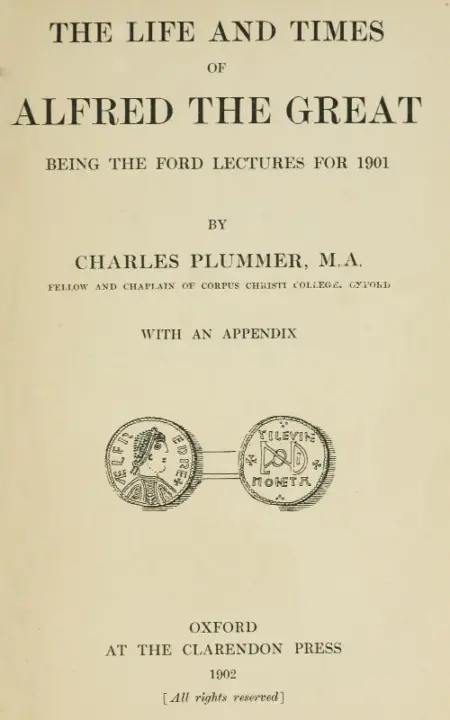
"The Life and Times of Alfred the Great" by Charles Plummer is a historical account written in the early 20th century. This work presents a detailed examination of the life and legacy of King Alfred the Great, highlighting his contributions as a military leader, administrator, and promoter of education in a time of Viking invasions. Plummer’s account aims to clarify misconceptions about Alfred's character and actions while presenting a comprehensive view of his historical context. At the start of the text, the author introduces the lectures and expresses gratitude to historical figures who influenced his work. Plummer outlines his goal to address the existing confusions and oversimplifications surrounding King Alfred by critically surveying the sources available. He emphasizes the challenges historians face when interpreting the limited and often incomplete historical records about Alfred and remarks on the importance of a careful and nuanced understanding of this pivotal figure in English history. Through a methodical approach, Plummer sets the stage for a deep dive into Alfred's campaigns, governance, cultural contributions, and lasting impact on England.
Introduction adapted from the source catalogue; source summaries may be automatically generated.
Free to read · English · 77,156 words · No account needed
MAKE TIME FOR A GOOD BOOK
On by default. Untick to stop anonymous reading totals. Each page counts after 10 seconds in view. How this works.
Anonymous counting is on unless you have switched it off.
[397] The genuine charters signed by Alfred prior to his own accession are, Birch, Nos. 467, 486, 502, 506, 515, 520, 522; K. C. D. Nos. 269, 276, 285, 287, 293, 1061, 298.
[398] Rolls Ed. i. 393.
[400] e.g. 487 B [46], 491 B [55], 492 A [56]. In one place, 485 D [43], it is used of reading both Latin and Saxon; only in one passage is it used of Saxon alone, 474 B [16]. Green, C. E. p. 158, rightly understands it in this sense.
[401] Preface to Cura Pastoralis; cf. Asser: ‘illo tempore lectores boni in toto regno Occidentalium Saxonum non erant,’ 474 B [17]. Here ‘lectores’ means teachers of Latin. Florence substitutes ‘grammatici.’ Ælfric, writing towards the end of the next century of his own youth, says: ‘a mass-priest who was my master could to some extent (be dæle, partly) understand Latin,’ Pref. to Heptateuch; and speaking of his own day he adds: ‘unlearned priests, if they understand just a little of Latin books, forthwith think themselves splendid teachers,’ ibid. p. 2.
[403] Alfred’s love of hunting comes out in one or two passages in his writings, e.g. Bede, i. 1 ad fin., where Ireland is said to be ‘mære on huntunge heorta ⁊ rana,’ ed. Miller, p. 30; cf. Boethius, xxxii. § 3, ed. Sedgefield, p. 73.
[404] König Ælfred, p. 68; so Green, C. E. p. 100.
[405] 474 B [16], 486 A [43], 487 A [46], 488 D [50] ter, 491 C [55]. To learn by heart is ‘memoriter retinere,’ ‘memoriter discere,’ 473 E [16], 486 A [43]. But apart from any question of the meaning of ‘recitare,’ Asser says distinctly in this case: ‘magistrum adiit et legit, quo lecto matri retulit et recitauit.’
[406] W. M. II. xlii.
[407] Biographia Liter. Britan., i. 385.
[408] i. 296, 311; modified in Thorpe’s translation, ii. 44. Pauli rightly protests against the theory, p. 67.
[409] Dict. Nat. Biog., i. 154.
[410] ‘nobilis ingenio, nobilis et genere,’ 469 A [4].
[411] cf. Pauli, u. s. p. 67.
[412] See Chron. ii. 81, where I have shown that the Chronicle’s (and Asser’s) two years is too long. The Roman historian on the other hand cuts him off too rapidly: ‘reuersus ad proprium regnum … post paucos dies uitam finiuit,’ Liber Pontificalis, ii. 148.
[413] Birch, No. 436; K. C. D. No. 254. In Sim. Dun. i. 204, ‘Australes Saxones’ has the same meaning.
[414] See above, § 30.
[415] Birch, No. 454; K. C. D. No. 261.
[416] Conquest of England, pp. 73, 74.
[417] Birch, No. 395; K. C. D. No. 223; Stubbs, C. H. i. 172.
[418] Malmesbury has an interesting passage on the effects of Egbert’s foreign sojourn, G. R. i. 105.
[420] Pauli, u. s. p. 79; following Lappenberg, i. 296; E. T. ii. 27. I think they have been misled by the Latin version of Alfred’s will, which, as I shall show (§ 64), is of no authority.
[421] ‘Ut iustum erat,’ adds Asser, 473 A [14].
[422] 477 C [24]; cf. Lib. de Hyda, p. 27: ‘Ethelredus, quem princeps gloriosus Alfredus coegit ante se regnare.’
[424] See p. 152.
Your reading position is saved on this browser. Take it to another device with a library code. Reading pages adapt to text, rather than matching a printed edition.
BEHIND THE BOOK
This eBook is for the use of anyone anywhere in the United States and most other parts of the world at no cost and with almost no restrictions whatsoever. You may copy it, give it away or re-use it under the terms of the Project Gutenberg License included with this eBook or online at www.gutenberg.org. If you are not located in the United States, you will have to check the laws of the country where you are located before using this eBook. Read the source licence.
The original source file, including credits and licence, is retained by this library. Request an original-format copy at no charge. Please include the book title and Project Gutenberg identifier #56557.
KEEP YOUR CURIOSITY GOING
Cécile Tormay

Moritz Busch
John L. Ransom
Frances Wright
Cécile Tormay

Mabel Potter Daggett