THE CLASSIC COLLECTION✦An outlaw’s diary: the CommuneCLASSIC FREE BOOKS
An outlaw’s diary: the Commune
Cécile Tormay
THE CLASSIC COLLECTION · 1902
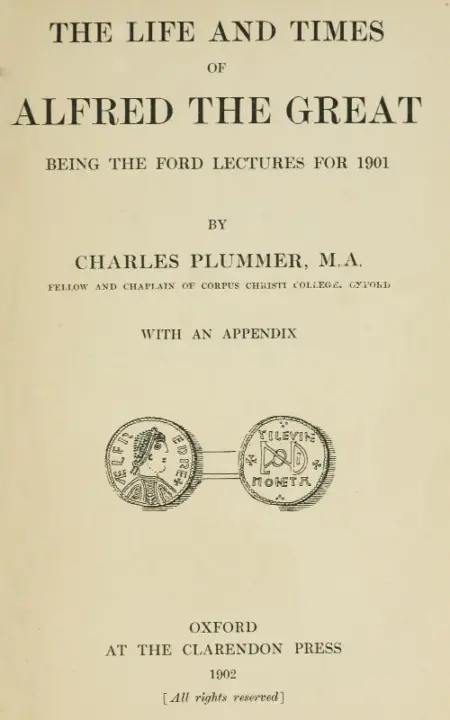
"The Life and Times of Alfred the Great" by Charles Plummer is a historical account written in the early 20th century. This work presents a detailed examination of the life and legacy of King Alfred the Great, highlighting his contributions as a military leader, administrator, and promoter of education in a time of Viking invasions. Plummer’s account aims to clarify misconceptions about Alfred's character and actions while presenting a comprehensive view of his historical context. At the start of the text, the author introduces the lectures and expresses gratitude to historical figures who influenced his work. Plummer outlines his goal to address the existing confusions and oversimplifications surrounding King Alfred by critically surveying the sources available. He emphasizes the challenges historians face when interpreting the limited and often incomplete historical records about Alfred and remarks on the importance of a careful and nuanced understanding of this pivotal figure in English history. Through a methodical approach, Plummer sets the stage for a deep dive into Alfred's campaigns, governance, cultural contributions, and lasting impact on England.
Introduction adapted from the source catalogue; source summaries may be automatically generated.
Free to read · English · 77,156 words · No account needed
MAKE TIME FOR A GOOD BOOK
On by default. Untick to stop anonymous reading totals. Each page counts after 10 seconds in view. How this works.
Anonymous counting is on unless you have switched it off.
[368] The eleventh or twelfth cent. Epitome of the Chron. known as MS. F. I may once more protest against the habit of citing this late authority as ‘the Saxon Chronicle,’ without qualification. Mr. Conybeare (u. s. p. 16) goes further, and misrepresents even this poor authority: ‘according to the Anglo-Saxon Chronicle it was on the news of [Æthelbald’s] incestuous union reaching Rome that Leo “hallowed Alfred to king.”’ Æthelbald’s marriage is not mentioned in any MS. of the Chronicle, not even in F.
[369] Gregorovius, iii. 112.
[370] Gesta Regum, i. 109, ii. xxxix.
[371] Lib. Pontif. ii. 111; or Muratori, SS. III. i. 233. For an earlier fire in the same quarter see Chron. 816 and notes. On these foreign ‘schools’ or hostelries at Rome cf. Chron. ii. 69; De’ Rossi, Un Tesoro di monete Anglo Sassoni (1884), pp. 6, 7.
[372] Gregorovius, iii. 87 ff. (a fine description); Ranke, Weltgesch. VI. ii. 1. Compare Alcuin’s fine lines on the state of Rome at the end of the eighth century:
Roma caput mundi, mundi decus, aurea Roma,
Nunc remanet tantum saeua ruina tibi,
De Clade Lindisfarnensis Monasterii, vv. 37, 38.
[373] Gregorovius, iii. 65, 66; Weber, Weltgesch. v. 186 f.
[374] Conybeare, u. s. p. 15.
[375] Weber, u. s. pp. 465 f., 505 ff. The Monk of St. Gallen actually identifies the Saracens and Northmen, see Ebert, u. s. iii. 220.
[376] Weber, u. s. pp. 192, 193.
[377] See above, § 34.
[378] Ranke, u. s.
[379] Gregorovius, u. s. pp. 97 ff.
[380] Chron. 855 and notes.
[381] cf. Ranke, u. s. VI. ii. 40 ff.
[382] ibid. VI. i. 207, 208; Weber, u. s. p. 553.
[384] Chron. 860 A.
[385] ibid.
[386] e.g. Pauli, u. s. p. 51; S. C. H. i. 204.
[387] Ranke, u. s. VI. i. 57 ff.; Weber, u. s. pp. 460, 461.
[388] At the beginning of the story the conspirators plot ‘ne unquam Æthelwulf rex a Roma reuertens iterum in regnum reciperetur,’ i.e. the conspiracy is hatched while Æthelwulf is still at Rome; at the end the story of Eadburh seems to imply that it was the marriage with Judith which provoked the conspiracy.
[390] Ranke, u. s. c. 2. Weber, u. s. pp. 450 ff.
[391] ‘renuntia … incesto … matrimonio; quia ista Iudith … proximo tibi affinis est sanguine,’ W. M. Gesta Pont. p. 13.
[392] See Chron. ii. 80, 81.
[393] Prudentius Trecensis, Pertz, i. 450. If his words are to be taken strictly it would seem that Æthelwulf placed the crown on the head of his child bride. (The marriage benediction of Judith is in Bouquet, vii. 621, 622, and is rather a satire on her subsequent history.) So Charles the Great crowned Louis the Pious when he associated him with himself in the imperial power, Sept. 813. Had this precedent been followed, the relations of Papacy and Empire might have been very different, Gregorovius, u. s. pp. 18, 19; Weber, u. s. p. 424.
[394] Birch, No. 495; K. C. D. No. 1058.
[395] H. E. ii. 5.
[396] Iohannes Longus, Pertz, xxv. 768.
Your reading position is saved on this browser. Take it to another device with a library code. Reading pages adapt to text, rather than matching a printed edition.
BEHIND THE BOOK
This eBook is for the use of anyone anywhere in the United States and most other parts of the world at no cost and with almost no restrictions whatsoever. You may copy it, give it away or re-use it under the terms of the Project Gutenberg License included with this eBook or online at www.gutenberg.org. If you are not located in the United States, you will have to check the laws of the country where you are located before using this eBook. Read the source licence.
The original source file, including credits and licence, is retained by this library. Request an original-format copy at no charge. Please include the book title and Project Gutenberg identifier #56557.
KEEP YOUR CURIOSITY GOING
Cécile Tormay

Moritz Busch
John L. Ransom
Frances Wright
Cécile Tormay

Mabel Potter Daggett