THE CLASSIC COLLECTION✦Letters on LiteratureCLASSIC FREE BOOKS
Letters on Literature
Andrew Lang
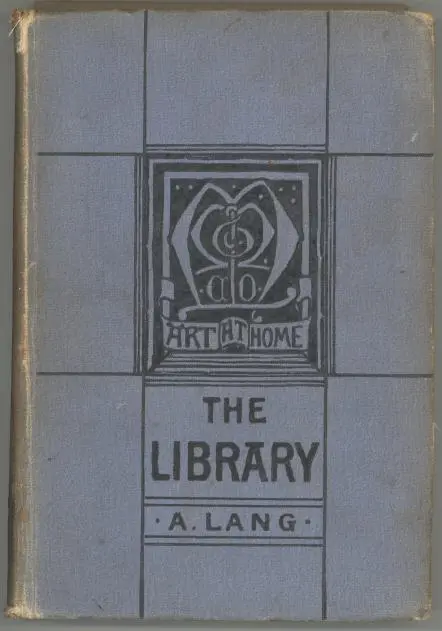
THE CLASSIC COLLECTION · 1881
"The Library" by Andrew Lang is a book published in the late 19th century as part of the "Art as Home" series. This charming guide explores the art of book-collecting for amateur bibliophiles, blending practical advice with passionate defense of the collector's craft. Lang examines book-hunting as both sport and obsession, offering wisdom on building collections, preserving treasured volumes, and understanding why books remain our most enduring friends. Through wit and warmth, he captures the joys, sorrows, and "gentle-madness" that define the bibliophile's world.
Introduction adapted from the source catalogue; source summaries may be automatically generated.
Free to read · English · 37,997 words · No account needed
MAKE TIME FOR A GOOD BOOK
On by default. Untick to stop anonymous reading totals. Each page counts after 10 seconds in view. How this works.
Anonymous counting is on unless you have switched it off.
[Picture: “The Music of the Past.” From “Punch’s Almanack,” 1877. Drawn by George du Maurier; engraved by Swain]
[Picture: Lion and Tub. From “Punch’s Pocket-Book,” 1879. Drawn by Linley Sambourne; engraved by Swain]
After the “Punch” school there are other lesser luminaries. Mr. W. S. Gilbert’s drawings to his own inimitable “Bab Ballads” have a perverse drollery which is quite in keeping with that erratic text. Mr. F. Barnard, whose exceptional talents have not been sufficiently recognised, is a master of certain phases of strongly marked character, and, like Mr. Charles Green, has contributed some excellent sketches to the “Household Edition” of Dickens. Mr. Sullivan of “Fun,” whose grotesque studies of the “British Tradesman” and “Workman” have recently been republished, has abounding vis comica, but he has hitherto done little in the way of illustrating books. For minute pictorial stocktaking and photographic retention of detail, Mr. Sullivan’s artistic memory may almost be compared to the wonderful literary memory of Mr. Sala. Mr. John Proctor, who some years ago (in “Will o’ the Wisp”) seemed likely to rival Tenniel as a cartoonist, has not been very active in this way; while Mr. Matthew Morgan, the clever artist of the “Tomahawk,” has transferred his services to the United States. Of Mr. Bowcher of “Judy,” and various other professedly humorous designers, space permits no further mention.
There remains, however, one popular branch of book-illustration, which has attracted the talents of some of the most skilful and original of modern draughtsmen, i.e. the embellishment of children’s books. From the days when Mulready drew the old “Butterfly’s Ball” and “Peacock at Home” of our youth, to those of the delightfully Blake-like fancies of E. V. B., whose “Child’s Play” has recently been re-published for the delectation of a new generation of admirers, this has always been a popular and profitable employment; but of late years it has been raised to the level of a fine art. Mr. H. S. Marks, Mr. J. D. Watson, Mr. Walter Crane, have produced specimens of nursery literature which, for refinement of colouring and beauty of ornament, cannot easily be surpassed. The equipments of the last named, especially, are of a very high order. He began as a landscapist on wood; he now chiefly devotes himself to the figure; and he seems to have the decorative art at his fingers’ ends as a natural gift. Such work as “King Luckieboy’s Party” was a revelation in the way of toy books, while the “Baby’s Opera” and “Baby’s Bouquet” are petits chefs d’oeuvre, of which the sagacious collector will do well to secure copies, not for his nursery, but his library. Nor can his “Mrs. Mundi at Home” be neglected by the curious in quaint and graceful invention. {14} Another book—the “Under the Window” of Miss Kate Greenaway—comes within the same category. Since Stothard, no one has given us such a clear-eyed, soft-faced, happy-hearted childhood; or so poetically “apprehended” the coy reticences, the simplicities, and the small solemnities of little people. Added to this, the old-world costume in which she usually elects to clothe her characters, lends an arch piquancy of contrast to their innocent rites and ceremonies. Her taste in tinting, too, is very sweet and spring-like; and there is a fresh, pure fragrance about all her pictures as of new-gathered nosegays; or, perhaps, looking to the fashions that she favours, it would be better to say “bow-pots.” But the latest “good genius” of this branch of book-illustrating is Mr. Randolph Caldecott, a designer assuredly of the very first order. There is a spontaneity of fun, an unforced invention about everything he does, that is infinitely entertaining. Other artists draw to amuse us; Mr. Caldecott seems to draw to amuse himself,—and this is his charm. One feels that he must have chuckled inwardly as he puffed the cheeks of his “Jovial Huntsmen;” or sketched that inimitably complacent dog in the “House that Jack Built;” or exhibited the exploits of the immortal “train-band captain” of “famous London town.” This last is his masterpiece. Cowper himself must have rejoiced at it,—and Lady Austen. There are two sketches in this book—they occupy the concluding pages—which are especially fascinating. On one, John Gilpin, in a forlorn and flaccid condition, is helped into the house by the sympathising (and very attractive) Betty; on the other he has donned his slippers, refreshed his inner man with a cordial, and over the heaving shoulder of his “spouse,” who lies dissolved upon his martial bosom, he is taking the spectators into his confidence with a wink worthy of the late Mr. Buckstone. Nothing more genuine, more heartily laughable, than this set of designs has appeared in our day. And Mr. Caldecott has few limitations. Not only does he draw human nature admirably, but he draws animals and landscapes equally well, so one may praise him without reserve. Though not children’s books, mention should here be made of his “Bracebridge Hall,” and “Old Christmas,” the illustrations to which are the nearest approach to that beau-ideal, perfect sympathy between the artist and the author, with which the writer is acquainted. The cut on page 173 is from the former of these works.
Your reading position is saved on this browser. Take it to another device with a library code. Reading pages adapt to text, rather than matching a printed edition.
Andrew Lang
Andrew Lang
Andrew Lang

Andrew Lang
BEHIND THE BOOK
This eBook is for the use of anyone anywhere in the United States and most other parts of the world at no cost and with almost no restrictions whatsoever. You may copy it, give it away or re-use it under the terms of the Project Gutenberg License included with this eBook or online at www.gutenberg.org. If you are not located in the United States, you will have to check the laws of the country where you are located before using this eBook. Read the source licence.
The original source file, including credits and licence, is retained by this library. Request an original-format copy at no charge. Please include the book title and Project Gutenberg identifier #2018.
KEEP YOUR CURIOSITY GOING

David Patterson (Spirit) Hatch

David Patterson (Spirit) Hatch

David Patterson (Spirit) Hatch

Ralph Waldo Emerson

Maurice Baring

Oscar Wilde & James McNeill Whistler