THE CLASSIC COLLECTION✦Letters on LiteratureCLASSIC FREE BOOKS
Letters on Literature
Andrew Lang
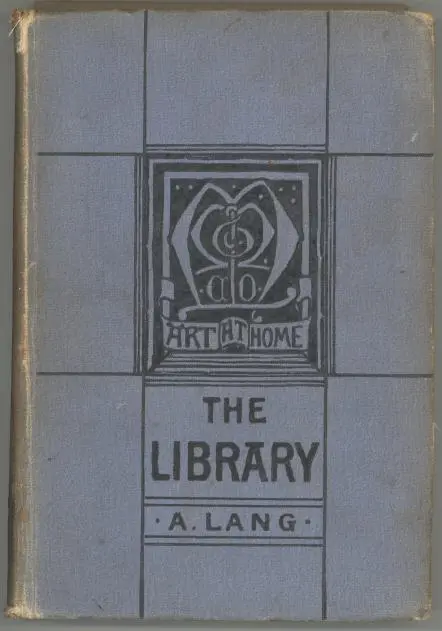
THE CLASSIC COLLECTION · 1881
"The Library" by Andrew Lang is a book published in the late 19th century as part of the "Art as Home" series. This charming guide explores the art of book-collecting for amateur bibliophiles, blending practical advice with passionate defense of the collector's craft. Lang examines book-hunting as both sport and obsession, offering wisdom on building collections, preserving treasured volumes, and understanding why books remain our most enduring friends. Through wit and warmth, he captures the joys, sorrows, and "gentle-madness" that define the bibliophile's world.
Introduction adapted from the source catalogue; source summaries may be automatically generated.
Free to read · English · 37,997 words · No account needed
MAKE TIME FOR A GOOD BOOK
On by default. Untick to stop anonymous reading totals. Each page counts after 10 seconds in view. How this works.
Anonymous counting is on unless you have switched it off.
[Picture: “The Mad Tea-Party.” From “Alice’s Adventures in Wonderland,” 1865. Drawn by John Tenniel; engraved by Dalziel Brothers]
[Picture: Black Kitten. From “Through the Looking-Glass,” 1871. Drawn by John Tenniel; engraved by Dalziel Brothers] Mr. Tenniel is a link between Leech and the younger school of “Punch” artists, of whom Mr. George du Maurier, Mr. Linley Sambourne, and Mr. Charles Keene are the most illustrious. The first is nearly as popular as Leech, and is certainly a greater favourite with cultivated audiences. He is not so much a humorist as a satirist of the Thackeray type,—unsparing in his denunciation of shams, affectations, and flimsy pretences of all kinds. A master of composition and accomplished draughtsman, he excels in the delineation of “society”—its bishops, its “professional beauties” and “æsthetes,” its nouveaux riches, its distinguished foreigners,—while now and then (but not too often) he lets us know that if he chose he could be equally happy in depicting the lowest classes. There was a bar-room scene not long ago in “Punch” which gave the clearest evidence of this. Some of those for whom no good thing is good enough complain, it is said, that he lacks variety—that he is too constant to one type of feminine beauty. But any one who will be at the pains to study a group of conventional “society” faces from any of his “At Homes” or “Musical Parties” will speedily discover that they are really very subtly diversified and contrasted. For a case in point, take the decorously sympathetic group round the sensitive German musician, who is “veeping” over one of his own compositions. Or follow the titter running round that amused assembly to whom the tenor warbler is singing “Me-e-e-et me once again,” with such passionate emphasis that the domestic cat mistakes it for a well-known area cry. As for his ladies, it may perhaps be conceded that his type is a little persistent. Still it is a type so refined, so graceful, so attractive altogether, that in the jarring of less well-favoured realities it is an advantage to have it always before our eyes as a standard to which we can appeal. Mr. du Maurier is a fertile book-illustrator, whose hand is frequently seen in the “Cornhill,” and elsewhere. Some of his best work of this kind is in Douglas Jerrold’s “Story of a Feather,” in Thackeray’s “Ballads,” and the large edition of the “Ingoldsby Legends,” to which Leech, Tenniel, and Cruikshank also contributed. One of his prettiest compositions is the group here reproduced from “Punch’s Almanack” for 1877. The talent of his colleague, Mr. Linley Sambourne, may fairly be styled unique. It is difficult to compare it with anything in its way, except some of the happier efforts of the late Mr. Charles Bennett, to which, nevertheless, it is greatly superior in execution. To this clever artist’s invention everything seems to present itself with a train of fantastic accessory so whimsically inexhaustible that it almost overpowers one with its prodigality. Each fresh examination of his designs discloses something overlooked or unexpected. Let the reader study for a moment the famous “Birds of a Feather” of 1875, or that ingenious skit of 1877 upon the rival Grosvenor Gallery and Academy, in which the late President of the latter is shown as the proudest of peacocks, the eyes of whose tail are portraits of Royal Academicians, and whose body-feathers are paint brushes and shillings of admission. Mr. Sambourne is excellent, too, at adaptations of popular pictures,—witness the more than happy parodies of Herrman’s “À Bout d’Arguments,” and “Une Bonne Histoire.” His book-illustrations have been comparatively few, those to Burnand’s laughable burlesque of “Sandford and Merton” being among the best. Rumour asserts that he is at present engaged upon Kingsley’s “Water Babies,” a subject which might almost be supposed to have been created for his pencil. There are indications, it may be added, that Mr. Sambourne’s talents are by no means limited to the domain in which for the present he chooses to exercise them, and it is not impossible that he may hereafter take high rank as a cartoonist. Mr. Charles Keene, a selection from whose sketches has recently been issued under the title of “Our People,” is unrivalled in certain bourgeois, military, and provincial types. No one can draw a volunteer, a monthly nurse, a Scotchman, an “ancient mariner” of the watering-place species, with such absolutely humorous verisimilitude. Personages, too, in whose eyes—to use Mr. Swiveller’s euphemism—“the sun has shone too strongly,” find in Mr. Keene a merciless satirist of their “pleasant vices.” Like Leech, he has also a remarkable power of indicating a landscape background with the fewest possible touches. His book-illustrations have been mainly confined to magazines and novels. Those in “Once a Week” to a “Good Fight,” the tale subsequently elaborated by Charles Reade into the “Cloister and the Hearth,” present some good specimens of his earlier work. One of these, in which the dwarf of the story is seen climbing up a wall with a lantern at his back, will probably be remembered by many.
Your reading position is saved on this browser. Take it to another device with a library code. Reading pages adapt to text, rather than matching a printed edition.
Andrew Lang
Andrew Lang
Andrew Lang

Andrew Lang
BEHIND THE BOOK
This eBook is for the use of anyone anywhere in the United States and most other parts of the world at no cost and with almost no restrictions whatsoever. You may copy it, give it away or re-use it under the terms of the Project Gutenberg License included with this eBook or online at www.gutenberg.org. If you are not located in the United States, you will have to check the laws of the country where you are located before using this eBook. Read the source licence.
The original source file, including credits and licence, is retained by this library. Request an original-format copy at no charge. Please include the book title and Project Gutenberg identifier #2018.
KEEP YOUR CURIOSITY GOING

David Patterson (Spirit) Hatch

David Patterson (Spirit) Hatch

David Patterson (Spirit) Hatch

Ralph Waldo Emerson

Maurice Baring

Oscar Wilde & James McNeill Whistler