THE CLASSIC COLLECTION✦Letters on LiteratureCLASSIC FREE BOOKS
Letters on Literature
Andrew Lang
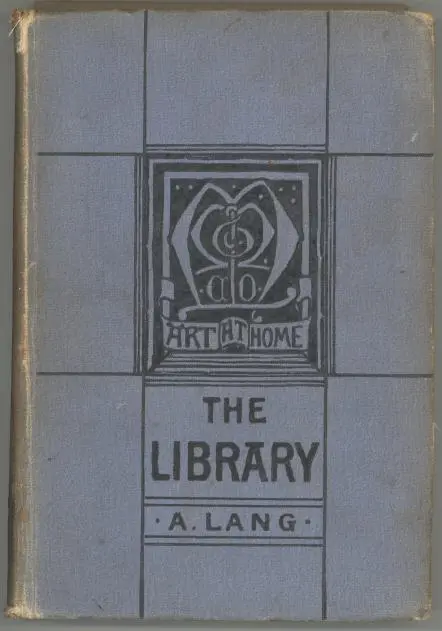
THE CLASSIC COLLECTION · 1881
"The Library" by Andrew Lang is a book published in the late 19th century as part of the "Art as Home" series. This charming guide explores the art of book-collecting for amateur bibliophiles, blending practical advice with passionate defense of the collector's craft. Lang examines book-hunting as both sport and obsession, offering wisdom on building collections, preserving treasured volumes, and understanding why books remain our most enduring friends. Through wit and warmth, he captures the joys, sorrows, and "gentle-madness" that define the bibliophile's world.
Introduction adapted from the source catalogue; source summaries may be automatically generated.
Free to read · English · 37,997 words · No account needed
MAKE TIME FOR A GOOD BOOK
On by default. Untick to stop anonymous reading totals. Each page counts after 10 seconds in view. How this works.
Anonymous counting is on unless you have switched it off.
[Picture: “Golden head by golden head.” From Christina Rossetti’s “Goblin Market and other Poems,” 1862. Drawn by D. G. Rossetti; engraved by W. J. Linton]
Not a few of the artists named in the preceding paragraph have also earned distinction in separate branches of the pictorial art, and specially in that of humorous design,—a department which has always been so richly recruited in this country that it deserves more than a passing mention. From the days of Hogarth onwards there has been an almost unbroken series of humorous draughtsmen, who, both on wood and metal, play a distinguished part in our illustrated literature. Rowlandson, one of the earliest, was a caricaturist of inexhaustible facility, and an artist who scarcely did justice to his own powers. He illustrated several books, but he is chiefly remembered in this way by his plates to Combe’s “Three Tours of Dr. Syntax.” Gillray, his contemporary, whose bias was political rather than social, is said to have illustrated “The Deserted Village” in his youth; but he is not famous as a book-illustrator. Another of the early men was Bunbury, whom “quality”-loving Mr. Walpole calls “the second Hogarth, and first imitator who ever fully equalled his original (!);” but whose prints to “Tristram Shandy,” are nevertheless completely forgotten, while, if he be remembered at all, it is by the plate of “The Long Minuet,” and the vulgar “Directions to Bad Horsemen.” With the first years of the century, however, appears the great master of modern humorists, whose long life ended only a few years since, “the veteran George Cruikshank”—as his admirers were wont to style him. He indeed may justly be compared to Hogarth, since, in tragic power and intensity he occasionally comes nearer to him than any artist of our time. It is manifestly impossible to mention here all the more important efforts of this indefatigable worker, from those far-away days when he caricatured “Boney” and championed Queen Caroline, to that final frontispiece for “The Rose and the Lily”—“designed and etched (according to the inscription) by George Cruikshank, age 83;” but the plates to the “Points of Humour,” to Grimm’s “Goblins,” to “Oliver Twist,” “Jack Sheppard,” Maxwell’s “Irish Rebellion,” and the “Table Book,” are sufficiently favourable and varied specimens of his skill with the needle, while the woodcuts to “Three Courses and a Dessert,” one of which is here given, are equally good examples of his work on the block. The “Triumph of Cupid,” which begins the “Table Book,” is an excellent instance of his lavish wealth of fancy, and it contains beside, one—nay more than one—of the many portraits of the artist. He is shown en robe de chambre, smoking (this was before his regenerate days!) in front of a blazing fire, with a pet spaniel on his knee. In the cloud which curls from his lips is a motley procession of sailors, sweeps, jockeys, Greenwich pensioners, Jew clothesmen, flunkies, and others more illustrious, chained to the chariot wheels of Cupid, who, preceded by cherubic acolytes and banner-bearers, winds round the top of the picture towards an altar of Hymen on the table. When, by the aid of a pocket-glass, one has mastered these swarming figures, as well as those in the foreground, it gradually dawns upon one that all the furniture is strangely vitalised. Masks laugh round the border of the tablecloth, the markings of the mantelpiece resolve themselves into rows of madly-racing figures, the tongs leers in a degagé and cavalier way at the artist, the shovel and poker grin in sympathy; there are faces in the smoke, in the fire, in the fireplace,—the very fender itself is a ring of fantastic creatures who jubilantly hem in the ashes. And it is not only in the grotesque and fanciful that Cruikshank excels; he is master of the strange, the supernatural, and the terrible. In range of character (the comparison is probably a hackneyed one), both by his gifts and his limitations, he resembles Dickens; and had he illustrated more of that writer’s works the resemblance would probably have been more evident. In “Oliver Twist,” for example, where Dickens is strong, Cruikshank is strong; where Dickens is weak, he is weak too. His Fagin, his Bill Sikes, his Bumble, and their following, are on a level with Dickens’s conceptions; his Monk and Rose Maylie are as poor as the originals. But as the defects of Dickens are overbalanced by his merits, so Cruikshank’s strength is far in excess of his weakness. It is not to his melodramatic heroes or wasp-waisted heroines that we must look for his triumphs; it is to his delineations, from the moralist’s point of view, of vulgarity and vice,—of the “rank life of towns,” with all its squalid tragedy and comedy. Here he finds his strongest ground, and possibly, notwithstanding his powers as a comic artist and caricaturist, his loftiest claim to recollection.
Your reading position is saved on this browser. Take it to another device with a library code. Reading pages adapt to text, rather than matching a printed edition.
Andrew Lang
Andrew Lang
Andrew Lang
Andrew Lang
BEHIND THE BOOK
This eBook is for the use of anyone anywhere in the United States and most other parts of the world at no cost and with almost no restrictions whatsoever. You may copy it, give it away or re-use it under the terms of the Project Gutenberg License included with this eBook or online at www.gutenberg.org. If you are not located in the United States, you will have to check the laws of the country where you are located before using this eBook. Read the source licence.
The original source file, including credits and licence, is retained by this library. Request an original-format copy at no charge. Please include the book title and Project Gutenberg identifier #2018.
KEEP YOUR CURIOSITY GOING

David Patterson (Spirit) Hatch

David Patterson (Spirit) Hatch

David Patterson (Spirit) Hatch

Ralph Waldo Emerson

Maurice Baring
Oscar Wilde & James McNeill Whistler