THE CLASSIC COLLECTION✦Letters on LiteratureCLASSIC FREE BOOKS
Letters on Literature
Andrew Lang
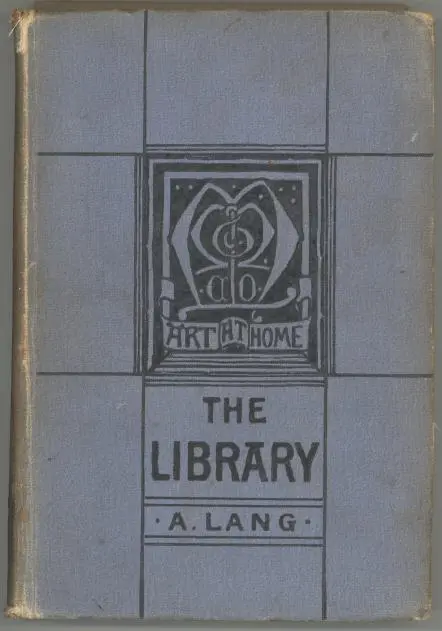
THE CLASSIC COLLECTION · 1881
"The Library" by Andrew Lang is a book published in the late 19th century as part of the "Art as Home" series. This charming guide explores the art of book-collecting for amateur bibliophiles, blending practical advice with passionate defense of the collector's craft. Lang examines book-hunting as both sport and obsession, offering wisdom on building collections, preserving treasured volumes, and understanding why books remain our most enduring friends. Through wit and warmth, he captures the joys, sorrows, and "gentle-madness" that define the bibliophile's world.
Introduction adapted from the source catalogue; source summaries may be automatically generated.
Free to read · English · 37,997 words · No account needed
MAKE TIME FOR A GOOD BOOK
On by default. Untick to stop anonymous reading totals. Each page counts after 10 seconds in view. How this works.
Anonymous counting is on unless you have switched it off.
[Picture: Headpiece. From Rogers’s “Pleasures of Memory, with other Poems,” 1810. Drawn by T. Stothard; engraved, after Luke Clennell, by O. Lacour]
Harvey came to London in 1817; Clennell had preceded him by some years; and Nesbit lived there for a considerable time. What distinguishes these pupils of Bewick especially is, that they were artists as well as engravers, capable of producing the designs they engraved. The “London School” of engravers, on the contrary, were mostly engravers, who depended upon others for their designs. The foremost of these was Robert Branston, a skilful renderer of human figures and indoor scenes. He worked in rivalry with Bewick and Nesbit; but he excelled neither, while he fell far behind the former. John Thompson, one of the very best of modern English engravers on wood, was Branston’s pupil. His range was of the widest, and he succeeded as well in engraving fishes and birds for Yarrell and Walton’s “Angler,” as in illustrations to Molière and “Hudibras.” He was, besides, a clever draughtsman, though he worked chiefly from the designs of Thurston and others. One of the most successful of his illustrated books is the “Vicar of Wakefield,” after Mulready, whose simplicity and homely feeling were well suited to Goldsmith’s style. Another excellent engraver of this date is Samuel Williams. There is an edition of Thomson’s “Seasons,” with cuts both drawn and engraved by him, which is well worthy of attention, and (like Thompson and Branston) he was very skilful in reproducing the designs of Cruikshank. Some of his best work in this way is to be found in Clarke’s “Three Courses and a Dessert,” published by Vizetelly in 1830.
From this time forth, however, one hears less of the engraver and more of the artist. The establishment of the “Penny Magazine” in 1832, and the multifarious publications of Charles Knight, gave an extraordinary impetus to wood-engraving. Ten years later came “Punch,” and the “Illustrated London News,” which further increased its popularity. Artists of eminence began to draw on or for the block, as they had drawn, and were still drawing, for the “Annuals.” In 1842–6 was issued the great “Abbotsford” edition of the “Waverley Novels,” which, besides 120 plates, contained nearly 2000 wood-engravings; and with the “Book of British Ballads,” 1843, edited by Mr. S. C. Hall, arose that long series of illustrated Christmas books, which gradually supplanted the “Annuals,” and made familiar the names of Gilbert, Birket Foster, Harrison Weir, John Absolon, and a crowd of others. The poems of Longfellow, Montgomery, Burns, “Barry Cornwall,” Poe, Miss Ingelow, were all successively “illustrated.” Besides these, there were numerous selections, such as Willmott’s “Poets of the Nineteenth Century,” Wills’s “Poets’ Wit and Humour,” and so forth. But the field here grows too wide to be dealt with in detail, and it is impossible to do more than mention a few of the books most prominent for merit or originality. Amongst these there is the “Shakespeare” of Sir John Gilbert. Regarded as an interpretative edition of the great dramatist, this is little more than a brilliant tour de force; but it is nevertheless infinitely superior to the earlier efforts of Kenny Meadows in 1843, and also to the fancy designs of Harvey in Knight’s “Pictorial Shakespeare.” The “Illustrated Tennyson” of 1858 is also a remarkable production. The Laureate, almost more than any other, requires a variety of illustrators; and here, for his idylls, he had Mulready and Millais, and for his romances Rossetti and Holman Hunt. His “Princess” was afterwards illustrated by Maclise, and his “Enoch Arden” by Arthur Hughes; but neither of these can be said to be wholly adequate. The “Lalla Rookh” of John Tenniel, 1860, albeit somewhat stiff and cold, after this artist’s fashion, is a superb collection of carefully studied oriental designs. With these may be classed the illustrations to Aytoun’s “Lays of the Scottish Cavaliers,” by Sir Noel Paton, which have the same finished qualities of composition and the same academic hardness. Several good editions of the “Pilgrim’s Progress” have appeared,—notably those of C. H. Bennett, J. D. Watson, and G. H. Thomas. Other books are Millais’s “Parables of our Lord,” Leighton’s “Romola,” Walker’s “Philip” and “Denis Duval,” the “Don Quixote,” “Dante,” “La Fontaine” and other works of Doré, Dalziel’s “Arabian Nights,” Leighton’s “Lyra Germanica” and “Moral Emblems,” and the “Spiritual Conceits” of W. Harry Rogers. These are some only of the number, which does not include books like Mrs. Hugh Blackburn’s “British Birds,” Wolf’s “Wild Animals,” Wise’s “New Forest,” Linton’s “Lake Country,” Wood’s “Natural History,” and many more. Nor does it take in the various illustrated periodicals which have multiplied so freely since, in 1859, “Once a Week” first began to attract and train such younger draughtsmen as Sandys, Lawless, Pinwell, Houghton, Morten, and Paul Grey, some of whose best work in this way has been revived in the edition of Thornbury’s “Ballads and Songs,” recently published by Chatto and Windus. Ten years later came the “Graphic,” offering still wider opportunities to wood-cut art, and bringing with it a fresh school of artists. Herkomer, Fildes, Small, Green, Barnard, Barnes, Crane, Caldecott, Hopkins, and others,—quos nunc perscribere longum est—have contributed good work to this popular rival of the older, but still vigorous, “Illustrated.” And now again, another promising serial, the “Magazine of Art,” affords a supplementary field to modern refinements and younger energies.
Your reading position is saved on this browser. Take it to another device with a library code. Reading pages adapt to text, rather than matching a printed edition.
Andrew Lang
Andrew Lang
Andrew Lang
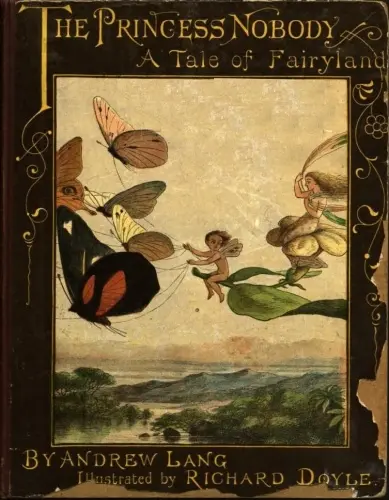
Andrew Lang
BEHIND THE BOOK
This eBook is for the use of anyone anywhere in the United States and most other parts of the world at no cost and with almost no restrictions whatsoever. You may copy it, give it away or re-use it under the terms of the Project Gutenberg License included with this eBook or online at www.gutenberg.org. If you are not located in the United States, you will have to check the laws of the country where you are located before using this eBook. Read the source licence.
The original source file, including credits and licence, is retained by this library. Request an original-format copy at no charge. Please include the book title and Project Gutenberg identifier #2018.
KEEP YOUR CURIOSITY GOING

David Patterson (Spirit) Hatch

David Patterson (Spirit) Hatch

David Patterson (Spirit) Hatch

Ralph Waldo Emerson

Maurice Baring

Oscar Wilde & James McNeill Whistler