THE CLASSIC COLLECTION✦Letters on LiteratureCLASSIC FREE BOOKS
Letters on Literature
Andrew Lang
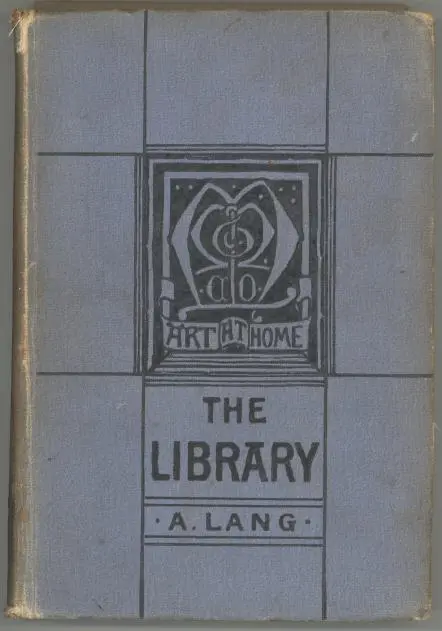
THE CLASSIC COLLECTION · 1881
"The Library" by Andrew Lang is a book published in the late 19th century as part of the "Art as Home" series. This charming guide explores the art of book-collecting for amateur bibliophiles, blending practical advice with passionate defense of the collector's craft. Lang examines book-hunting as both sport and obsession, offering wisdom on building collections, preserving treasured volumes, and understanding why books remain our most enduring friends. Through wit and warmth, he captures the joys, sorrows, and "gentle-madness" that define the bibliophile's world.
Introduction adapted from the source catalogue; source summaries may be automatically generated.
Free to read · English · 37,997 words · No account needed
MAKE TIME FOR A GOOD BOOK
On by default. Untick to stop anonymous reading totals. Each page counts after 10 seconds in view. How this works.
Anonymous counting is on unless you have switched it off.
M. Ambrose Firmin Didot has left some notes on a more serious topic,—the colours to be chosen when books are full-bound in morocco. Thus he would have the “Iliad” clothed in red, the “Odyssey” in blue, because the old Greek rhapsodists wore a scarlet cloak when they recited the Wrath of Achilles, a blue one when they chanted of the Return of Odysseus. The writings of the great dignitaries of the Church, M. Didot would array in violet; scarlet goes well with the productions of cardinals; philosophers have their sober suit of black morocco, poets like Panard may be dressed in rose colour. A collector of this sort would like, were it possible, to attire Goldsmith’s poems in a “coat of Tyrian bloom, satin grain.” As an antithesis to these extravagant fancies, we may add that for ordinary books no binding is cheaper, neater, and more durable, than a coat of buckram.
The conditions of a well bound book may be tersely enumerated. The binding should unite solidity and elegance. The book should open easily, and remain open at any page you please. It should never be necessary, in reading, to squeeze back the covers; and no book, however expensively bound, has been properly treated, if it does not open with ease. It is a mistake to send recently printed books to the binder, especially books which contain engravings. The printing ink dries slowly, and, in the process called “beating,” the text is often transferred to the opposite page. M. Rouveyre recommends that one or two years should pass before the binding of a newly printed book. The owner will, of course, implore the binder to, spare the margins; and, almost equally of course, the binder, durus arator, will cut them down with his abominable plough. One is almost tempted to say that margins should always be left untouched, for if once the binder begins to clip he is unable to resist the seductive joy, and cuts the paper to the quick, even into the printed matter. Mr. Blades tells a very sad story of a nobleman who handed over some Caxtons to a provincial binder, and received them back minus £500 worth of margin. Margins make a book worth perhaps £400, while their absence reduces the same volume to the box marked “all these at fourpence.” Intonsis capillis, with locks unshorn, as Motteley the old dealer used to say, an Elzevir in its paper wrapper may be worth more than the same tome in morocco, stamped with Longepierre’s fleece of gold. But these things are indifferent to bookbinders, new and old. There lies on the table, as I write, “Les Provinciales, ou Les Lettres Ecrites par Louis de Montalte à un Provincial de ses amis, & aux R.R. P.P. Jesuites. A Cologne, Ches PIERRE de la VALLÉE, M.DC.LVIII.” It is the Elzevir edition, or what passes for such; but the binder has cut down the margin so that the words “Les Provinciales” almost touch the top of the page. Often the wretch—he lived, judging by his style, in Derome’s time, before the Revolution—has sliced into the head-titles of the pages. Thus the book, with its old red morocco cover and gilded flowers on the back, is no proper companion for “Les Pensées de M. PASCAL (Wolfganck, 1672),” which some sober Dutchman has left with a fair allowance of margin, an inch “taller” in its vellum coat than its neighbour in morocco. Here once more, is “LES FASCHEUX, Comedie de I. B. P. MOLIÈRE, Representee sur Le Theatre du Palais Royal. A Paris, Chez GABRIEL QUINET, au Palais, dans la Galerie des Prisonniers, à l’Ange Gabriel, M.DCLXIII. Avec privilege du Roy.” What a crowd of pleasant memories the bibliophile, and he only, finds in these dry words of the title. Quinet, the bookseller, lived “au Palais,” in that pretty old arcade where Corneille cast the scene of his comedy, “La Galerie du Palais.” In the Geneva edition of Corneille, 1774, you can see Gravelot’s engraving of the place; it is a print full of exquisite charm (engraved by Le Mure in 1762). Here is the long arcade, in shape exactly like the galleries of the Bodleian Library at Oxford. The bookseller’s booth is arched over, and is open at front and side. Dorimant and Cléante are looking out; one leans on the books on the window-sill, the other lounges at the door, and they watch the pretty Hippolyte who is chaffering with the lace-seller at the opposite shop. “Ce visage vaut mieux que toutes vos chansons,” says Dorimant to the bookseller. So they loitered, and bought books, and flirted in their lace ruffles, and ribbons, and flowing locks, and wide canons, when Molière was young, and when this little old book was new, and lying on the shelves of honest Quinet in the Palace Gallery. The very title-page, and pagination, not of this second edition, but of the first of “Les Fascheux,” had their own fortunes, for the dedication to Fouquet was perforce withdrawn. That favourite entertained La Vallière and the King with the comedy at his house of Vaux, and then instantly fell from power and favour, and, losing his place and his freedom, naturally lost the flattery of a dedication. But retombons à nos coches, as Montaigne says. This pleasant little copy of the play, which is a kind of relic of Molière and his old world, has been ruthlessly bound up with a treatise, “Des Pierres Précieuses,” published by Didot in 1776. Now the play is naturally a larger book than the treatise on precious stones, so the binder has cut down the margins to the size of those of the work on amethysts and rubies. As the Italian tyrant chained the dead and the living together, as Procrustes maimed his victims on his cruel bed, so a hard-hearted French binder has tied up, and mutilated, and spoiled the old play, which otherwise would have had considerable value as well as interest.
Your reading position is saved on this browser. Take it to another device with a library code. Reading pages adapt to text, rather than matching a printed edition.
Andrew Lang
Andrew Lang
Andrew Lang
Andrew Lang
BEHIND THE BOOK
This eBook is for the use of anyone anywhere in the United States and most other parts of the world at no cost and with almost no restrictions whatsoever. You may copy it, give it away or re-use it under the terms of the Project Gutenberg License included with this eBook or online at www.gutenberg.org. If you are not located in the United States, you will have to check the laws of the country where you are located before using this eBook. Read the source licence.
The original source file, including credits and licence, is retained by this library. Request an original-format copy at no charge. Please include the book title and Project Gutenberg identifier #2018.
KEEP YOUR CURIOSITY GOING

David Patterson (Spirit) Hatch

David Patterson (Spirit) Hatch

David Patterson (Spirit) Hatch

Ralph Waldo Emerson

Maurice Baring
Oscar Wilde & James McNeill Whistler