THE CLASSIC COLLECTION✦Letters on LiteratureCLASSIC FREE BOOKS
Letters on Literature
Andrew Lang
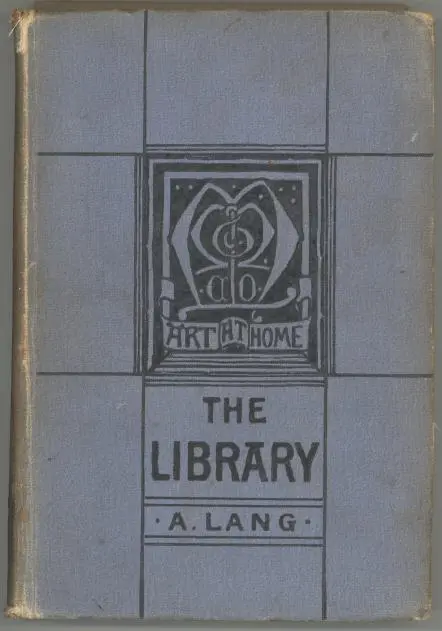
THE CLASSIC COLLECTION · 1881
"The Library" by Andrew Lang is a book published in the late 19th century as part of the "Art as Home" series. This charming guide explores the art of book-collecting for amateur bibliophiles, blending practical advice with passionate defense of the collector's craft. Lang examines book-hunting as both sport and obsession, offering wisdom on building collections, preserving treasured volumes, and understanding why books remain our most enduring friends. Through wit and warmth, he captures the joys, sorrows, and "gentle-madness" that define the bibliophile's world.
Introduction adapted from the source catalogue; source summaries may be automatically generated.
Free to read · English · 37,997 words · No account needed
MAKE TIME FOR A GOOD BOOK
On by default. Untick to stop anonymous reading totals. Each page counts after 10 seconds in view. How this works.
Anonymous counting is on unless you have switched it off.
[Picture: Pub. Virgilii Maronis Opera Parisiis. Apud Hieronymum de Marnef, sub Pelicano, Monte D’Hilurii. 1558]
Much has been written of late about book-binding. In a later part of this manual we shall have something to say about historical examples of the art, and the performances of the great masters. At present one must begin by giving the practical rule, that a book should be bound in harmony with its character and its value. The bibliophile, if he could give the rein to his passions, would bind every book he cares to possess in a full coat of morocco, or (if it did not age so fast) of Russia leather. But to do this is beyond the power of most of us. Only works of great rarity or value should be full bound in morocco. If we have the luck to light on a Shakespeare quarto, on some masterpiece of Aldus Manutius, by all means let us entrust it to the most competent binder, and instruct him to do justice to the volume. Let old English books, as More’s “Utopia,” have a cover of stamped and blazoned calf. Let the binder clothe an early Rabelais or Marot in the style favoured by Grolier, in leather tooled with geometrical patterns. Let a Molière or Corneille be bound in the graceful contemporary style of Le Gascon, where the lace-like pattern of the gilding resembles the Venetian point-lace, for which La Fontaine liked to ruin himself. Let a binding, à la fanfare, in the style of Thouvenin, denote a novelist of the last century, let panelled Russia leather array a folio of Shakespeare, and let English works of a hundred years ago be clothed in the sturdy fashion of Roger Payne. Again, the bibliophile may prefer to have the leather stamped with his arms and crest, like de Thou, Henri III., D’Hoym, Madame du Barry, and most of the collectors of the seventeenth and eighteenth centuries. Yet there are books of great price which one would hesitate to bind in new covers. An Aldine or an Elzevir, in its old vellum or paper wrapper, with uncut leaves, should be left just as it came from the presses of the great printers. In this condition it is a far more interesting relic. But a morocco case may be made for the book, and lettered properly on the back, so that the volume, though really unbound, may take its place with the bound books on the shelves. A copy of any of Shelley’s poems, in the original wrappers, should I venture to think be treated thus, and so should the original editions of Keats’s and of Mr. Tennyson’s works. A collector, who is also an author, will perhaps like to have copies of his own works in morocco, for their coats will give them a chance of surviving the storms of time. But most other books, not of the highest rarity and interest, will be sufficiently clothed in half-bindings, that is, with leather backs and corners, while the rest of the cover is of cloth or paper, or whatever other substance seems most appropriate. An Oxford tutor used to give half-binding as an example of what Aristotle calls Μικροπρέπεια, or “shabbiness,” and when we recommend such coverings for books it is as a counsel of expediency, not of perfection. But we cannot all be millionaires; and, let it be remembered, the really wise amateur will never be extravagant, nor let his taste lead him into “the ignoble melancholy of pecuniary embarrassment.” Let the example of Charles Nodier be our warning; nay, let us remember that while Nodier could get out of debt by selling his collection, ours will probably not fetch anything like what we gave for it. In half-bindings there is a good deal of room for the exercise of the collector’s taste. M. Octave Uzanne, in a tract called “Les Caprices d’un Bibliophile,” gives some hints on this topic, which may be taken or let alone. M. Uzanne has noticed the monotony, and the want of meaning and suggestion in ordinary half-bindings. The paper or cloth which covers the greater part of the surface of half-bound books is usually inartistic and even ugly. He proposes to use old scraps of brocade, embroidery, Venice velvet, or what not; and doubtless a covering made of some dead fair lady’s train goes well with a romance by Crébillon, and engravings by Marillier. “Voici un cartonnage Pompadour de notre invention,” says M. Uzanne, with pride; but he observes that it needs a strong will to make a bookbinder execute such orders. For another class of books, which our honest English shelves reject with disgust, M. Uzanne proposes a binding of the skin of the boa constrictor; undoubtedly appropriate and “admonishing.” The leathers of China and Japan, with their strange tints and gilded devices may be used for books of fantasy, like “Gaspard de la Nuit,” or the “Opium Eater,” or Poe’s poems, or the verses of Gérard de Nerval. Here, in short, is an almost unexplored field for the taste of the bibliophile, who, with some expenditure of time, and not much of money, may make half-binding an art, and give modern books a peculiar and appropriate raiment.
Your reading position is saved on this browser. Take it to another device with a library code. Reading pages adapt to text, rather than matching a printed edition.
Andrew Lang
Andrew Lang
Andrew Lang
Andrew Lang
BEHIND THE BOOK
This eBook is for the use of anyone anywhere in the United States and most other parts of the world at no cost and with almost no restrictions whatsoever. You may copy it, give it away or re-use it under the terms of the Project Gutenberg License included with this eBook or online at www.gutenberg.org. If you are not located in the United States, you will have to check the laws of the country where you are located before using this eBook. Read the source licence.
The original source file, including credits and licence, is retained by this library. Request an original-format copy at no charge. Please include the book title and Project Gutenberg identifier #2018.
KEEP YOUR CURIOSITY GOING

David Patterson (Spirit) Hatch

David Patterson (Spirit) Hatch

David Patterson (Spirit) Hatch

Ralph Waldo Emerson

Maurice Baring

Oscar Wilde & James McNeill Whistler