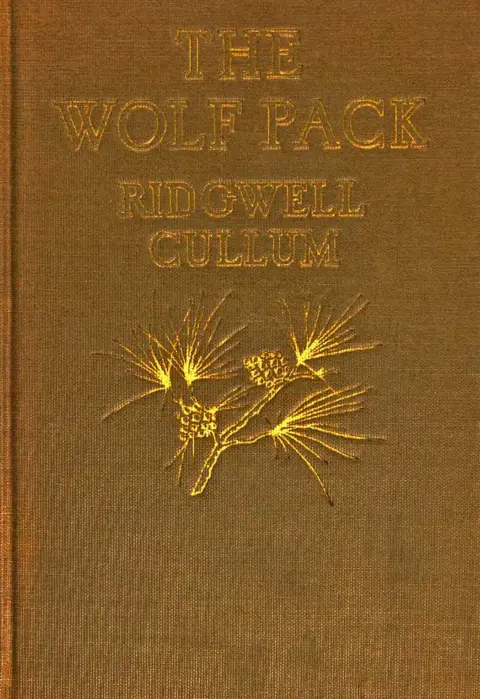
The wolf pack
Ridgwell Cullum
THE CLASSIC COLLECTION · 1914
"The Law-Breakers" by Ridgwell Cullum is a novel written in the early 20th century. The narrative is set against the backdrop of the Canadian prairie during a time of lawlessness and prohibition, focusing on the struggles between law enforcement and criminals. Most prominently, the story revolves around Inspector Stanley Fyles, who is determined to uphold the law in a territory rife with contraband and illicit activities. The opening of the novel introduces Inspector Fyles as he patrols a dusty train platform in a harsh summer heat, awaiting the arrival of a freight train carrying contraband liquor. He engages in a conversation with the railroad agent, Huntly, establishing the tense atmosphere of both comical and serious elements as they discuss the unreliable schedules of local freights and the increasing challenges posed by illegal traffic. We also glimpse the motivations and personalities of other characters, including the outlaws who intend to execute a daring robbery on the moving cargo. The stage is set for a gripping story of crime, duty, and the chase that will entangle both lawmen and outlaws in their relentless pursuit of justice and survival in the wild Prairie landscape.
Introduction adapted from the source catalogue; source summaries may be automatically generated.
Free to read · English · 133,013 words · No account needed
MAKE TIME FOR A GOOD BOOK
On by default. Untick to stop anonymous reading totals. Each page counts after 10 seconds in view. How this works.
Anonymous counting is on unless you have switched it off.
Helen nodded with a great show of seriousness which the twitching corners of her pretty mouth belied.
"I always thought you'd got a trouble back of your--head. But you'd best tell me. You see, I don't get enough pressure of thinking to hatch anything. Maybe between us we can fix your mental eggs right."
Bill's big eyes lit with relief and hope.
"That's bright of you. You surely are the cutest girl ever. You must have got a heap of brain to spare."
Helen could no longer restrain her laughter.
"It's mostly all--spare. Now, then, tell me all your troubles."
The great creature at her side looked doubtful and puzzled.
"I don't know just where to begin. There's such a heap, and I've worried thinking about it, till--till----"
Helen sat up and propped her chin in her hands with her elbows on her
knees.
"When you don't know where to begin just start with the first thought in your head, and--and--ramble."
Bill brightened up.
"Sure that's best?"
"Sure."
The man sighed in relief.
"That's made a heap of difference," he cried. Then he took a handkerchief from his pocket, removed his panama and mopped his forehead. He gave a big gulp in the midst of the process, and spoke as though he were defying an enemy. "Will you marry me?" he demanded, and sat up glaring at her, with his hat and handkerchief poised in either hand.
The girl gave him a quick look. Then she flung herself back in her
chair and laughed.
"We--we are talking of troubles," she protested.
Bill replaced his hat, and restored his handkerchief to its pocket.
"Troubles? Troubles? Isn't that trouble enough to start with? It's--it's the root of it all," he declared. "I'm--I'm just crazy about you. And every time I try to think about Charlie and the police, and--and the scallywags of the valley, I--I find you mixed up with it all, and get so tangled up that I don't know where I am, or--or why. Say, have you ever been crazy about anybody? Some feller, for instance? It's the worst worrying muddle ever happened. First you're pleased--then you cuss them. Then you sort of sit dreaming all sorts of fool things that haven't any sense at all. Then you want to make rhymes and things about eyes, and flowers, and moons, and feet, and laces and bits. You feel all over that everything else has got no sense to it, and is just so much waste of time thinking about it. You sort of feel that all men are fools but yourself, and other females aren't women, but just images. You sort of get the notion the world's on a pivot, and that pivot's just yourself, and if you weren't there there'd be a bust up, and most everything would get chasing glory, and you don't care a darn, anyway, if they did. Say, when you get clean crazy about anybody, same as I am about you, you find yourself hating everybody that comes near them. You get notions that every man is conspiring to tell the girl what a perfect fool you are, that they're worrying to boost you right out with her. You hate her, because you think she thinks you are a simpleton, and can't see your good points, which are so obvious to yourself. You hate yourself, you hate life, you hate the sunlight and the trees, and your food, and--and everything. And you wouldn't have things different, or stop making such a fool of yourself, no--not if hell froze over. Will--will you marry me?"
Your reading position is saved on this browser. Take it to another device with a library code. Reading pages adapt to text, rather than matching a printed edition.
Ridgwell Cullum
Ridgwell Cullum
Ridgwell Cullum
Ridgwell Cullum
BEHIND THE BOOK
This eBook is for the use of anyone anywhere in the United States and most other parts of the world at no cost and with almost no restrictions whatsoever. You may copy it, give it away or re-use it under the terms of the Project Gutenberg License included with this eBook or online at www.gutenberg.org. If you are not located in the United States, you will have to check the laws of the country where you are located before using this eBook. Read the source licence.
The original source file, including credits and licence, is retained by this library. Request an original-format copy at no charge. Please include the book title and Project Gutenberg identifier #29958.
KEEP YOUR CURIOSITY GOING
Coulson Kernahan

Maurice Baring
Frances Wright
Cécile Tormay

Frederic Jesup Stimson

W. H. P. (William Henry Pope) Jarvis