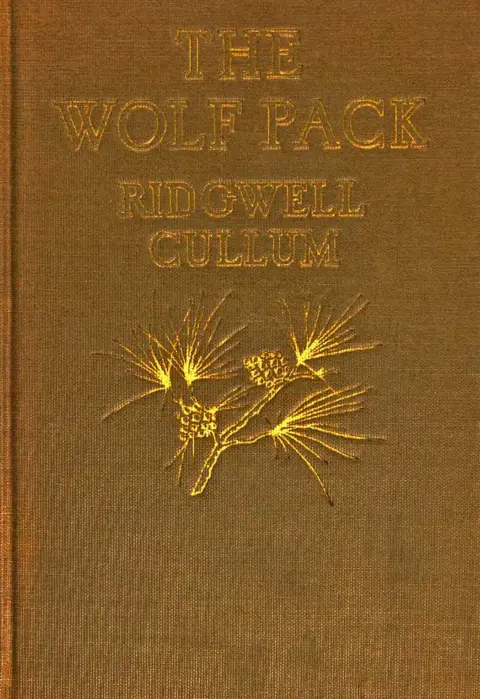
The wolf pack
Ridgwell Cullum
THE CLASSIC COLLECTION · 1914
"The Law-Breakers" by Ridgwell Cullum is a novel written in the early 20th century. The narrative is set against the backdrop of the Canadian prairie during a time of lawlessness and prohibition, focusing on the struggles between law enforcement and criminals. Most prominently, the story revolves around Inspector Stanley Fyles, who is determined to uphold the law in a territory rife with contraband and illicit activities. The opening of the novel introduces Inspector Fyles as he patrols a dusty train platform in a harsh summer heat, awaiting the arrival of a freight train carrying contraband liquor. He engages in a conversation with the railroad agent, Huntly, establishing the tense atmosphere of both comical and serious elements as they discuss the unreliable schedules of local freights and the increasing challenges posed by illegal traffic. We also glimpse the motivations and personalities of other characters, including the outlaws who intend to execute a daring robbery on the moving cargo. The stage is set for a gripping story of crime, duty, and the chase that will entangle both lawmen and outlaws in their relentless pursuit of justice and survival in the wild Prairie landscape.
Introduction adapted from the source catalogue; source summaries may be automatically generated.
Free to read · English · 133,013 words · No account needed
MAKE TIME FOR A GOOD BOOK
On by default. Untick to stop anonymous reading totals. Each page counts after 10 seconds in view. How this works.
Anonymous counting is on unless you have switched it off.
The girl smiled her delight.
"Maybe I do understand," she said. "You see, I don't always sit around in this sort of fancy frock. Then, no girl of sense musses herself into an awkward pose when six foot odd of manhood's getting around her way. No, no Big Brother Bill. That chair didn't get there by itself. Two carefully manicured hands put it there, after their owner had satisfied herself that her mirror hadn't made a mistake, and that she was looking quite her most attractive. You see, you'd promised to come to see me this evening, and--well, I'm woman enough to be very pleased. That's all."
Bill's sun-scorched face deepened its ruddy hue with youthful delight.
"Say, you did all this for--for me?"
Helen laughed.
"Why, yes, and told you the various details to be appreciated, because I was scared to death you wouldn't get them right."
Bill sat himself down, and set the chair creaking as he turned it about facing her. He held out his hands.
"I haven't seen the manicuring racket right, yet," he laughed.
Helen stretched out her two hands toward him for inspection. He promptly seized them in his, and pretended to examine them.
"The prettiest, softest, jolliest----"
But the girl snatched them away.
"That's not inspection. That's----"
"Sure it's not," retorted Bill easily. "It's true."
"And absurd."
"What--the truth?"
Bill's blue eyes were widely inquiring.
"Sometimes."
The smile died out of the man's eyes, and his big face became doleful.
"Yes, I s'pose it is."
Helen set up.
"What's gone wrong--now? What truth is--absurd?" she demanded.
The man shrugged.
"Oh, everything. Say, have you ever heard of a disease of the--the brain called 'partly hatched'?"
The girl's eyes twinkled.
"I don't kind of remember it."
"No, I don't s'pose you do. I don't think anybody ever has it but me. I've got it bad. This valley's given it me, and--and if it isn't careful it's going to get fatal."
Helen looked around at him in pretended sympathy.
"What's the symptoms? Nothing outward? I mean that tie--that's not a
symptom, is it?"
Bill shook his head. He was smiling, but beneath his smile there was a
certain seriousness.
"No. There's no outward signs--yet. I got it through thinking too--too young. You see, I've done so much thinking in the last week. If it had been spread over, say six months, the hatching might have got fixed right. But it's been too quick, and things have got addled. You see, if a hen turned on too much pressure of heat her eggs would get fried--or addled. That's how my brain is. It's addled."
Your reading position is saved on this browser. Take it to another device with a library code. Reading pages adapt to text, rather than matching a printed edition.
Ridgwell Cullum
Ridgwell Cullum
Ridgwell Cullum
Ridgwell Cullum
BEHIND THE BOOK
This eBook is for the use of anyone anywhere in the United States and most other parts of the world at no cost and with almost no restrictions whatsoever. You may copy it, give it away or re-use it under the terms of the Project Gutenberg License included with this eBook or online at www.gutenberg.org. If you are not located in the United States, you will have to check the laws of the country where you are located before using this eBook. Read the source licence.
The original source file, including credits and licence, is retained by this library. Request an original-format copy at no charge. Please include the book title and Project Gutenberg identifier #29958.
KEEP YOUR CURIOSITY GOING
Coulson Kernahan

Maurice Baring
Frances Wright
Cécile Tormay

Frederic Jesup Stimson

W. H. P. (William Henry Pope) Jarvis