Southern Soldier Stories
George Cary Eggleston
THE CLASSIC COLLECTION · 1900
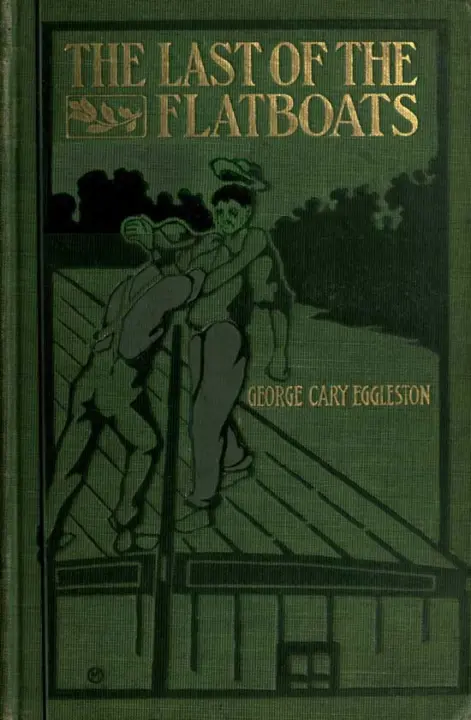
"The Last of the Flatboats" by George Cary Eggleston is a novel written in the early 20th century. The story begins in a vibrant small town along the Ohio River, Vevay, Indiana, and follows a group of resourceful boys led by young Phil Lowry, as they embark on an adventurous journey down the Mississippi River on a self-built flatboat. Their adventure is both a quest for profit and a tale of camaraderie, focusing on themes of friendship, tenacity, and the spirit of adventure in the face of challenges. At the start of the novel, we are introduced to the spirited and intelligent lowry brothers, Ed and Phil, along with their friends, who are engaged in a salvage operation recovering pig-iron from a wrecked barge. Phil's persistence leads them to discover valuable artifacts underwater. As they celebrate their success, the boys hatch a plan to build a flatboat and take it down to New Orleans for profit. They are joined by Jim Hughes, a mysterious figure who expresses an eagerness to serve as a pilot. Tension arises as they grapple with Hughes's questionable behavior and intentions, setting the stage for their journey filled with excitement, unexpected challenges, and the vibrant environment of the Mississippi River.
Introduction adapted from the source catalogue; source summaries may be automatically generated.
Free to read · English · 72,871 words · No account needed
MAKE TIME FOR A GOOD BOOK
On by default. Untick to stop anonymous reading totals. Each page counts after 10 seconds in view. How this works.
Anonymous counting is on unless you have switched it off.
“Listen,” said Ed, “and I’ll explain. The wheat out of which this toast was made was grown probably in Dakota or Minnesota. There was a farmer there, and perhaps there were some farm-hands also, who ploughed the ground, sowed the seed, reaped the wheat, threshed it, winnowed it, and all that. Then--”
“Yes, but all that wouldn’t include more than half a dozen,” said Phil.
“Yes, it would,” said Irv, “for there’s all the womenfolk who cooked the men’s meals and--”
“Never mind them,” said Ed, “though of course they helped to give me my toast. Let’s count only those that contributed directly to that kindly end. These farmer people used ploughs, harrows, drills, reapers, threshing-machines, wagons, and all that, and somebody must have made them. And back of those who made them were those who dug the iron for them out of the ground, and cut the wood in them out of the forest, and the men who made the tools with which they did all this, and--”
“I see,” said Irv. “It’s the biggest endless chain imaginable. Thousands? Why, thousands had a hand in it before you even get to the farmer--the men who made the tools, and the men who made the tools that made the tools, and so on back to the very beginnings of creation. And if we face about, there are the men that ran the railroads which hauled the wheat to mill, and the millers, and all that. Oh, the thousand are easy enough to make out.”
“Yes,” said Ed, “and then the railroads and the mills had to be built. The men that built them, the engineers, mechanics, and laborers, all helped to give me my two slices of toast. So did the men behind them, the men who made their tools and their materials, the woodsmen who chopped trees for ties, the miners who dug the iron, the smelters, the puddlers, the rolling-mill men, who wrought the crude ore into steel rails; then there are all the men who made the locomotives, and the cars, and the machinery of the mills, and--”
“Oh, stop for mercy’s sake,” said Will. “It’s no use to count. There aren’t thousands, but millions of them. And of course the same thing is true of our clothes, our shoes, and everything else.”
“But with so many people’s work represented in it,” asked Irv, reflectively, “why isn’t that piece of toast an enormously costly affair?”
Your reading position is saved on this browser. Take it to another device with a library code. Reading pages adapt to text, rather than matching a printed edition.
George Cary Eggleston
George Cary Eggleston
George Cary Eggleston
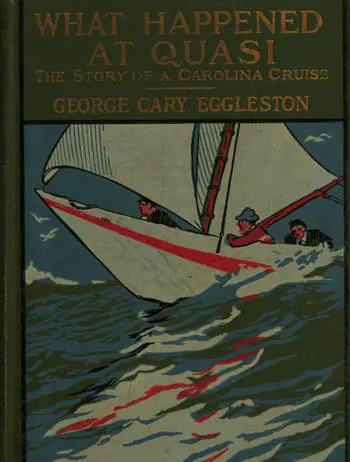
George Cary Eggleston
BEHIND THE BOOK
This eBook is for the use of anyone anywhere in the United States and most other parts of the world at no cost and with almost no restrictions whatsoever. You may copy it, give it away or re-use it under the terms of the Project Gutenberg License included with this eBook or online at www.gutenberg.org. If you are not located in the United States, you will have to check the laws of the country where you are located before using this eBook. Read the source licence.
The original source file, including credits and licence, is retained by this library. Request an original-format copy at no charge. Please include the book title and Project Gutenberg identifier #44922.
KEEP YOUR CURIOSITY GOING
Coulson Kernahan

Maurice Baring
Frances Wright
Cécile Tormay

Frederic Jesup Stimson

W. H. P. (William Henry Pope) Jarvis