Southern Soldier Stories
George Cary Eggleston
THE CLASSIC COLLECTION · 1900
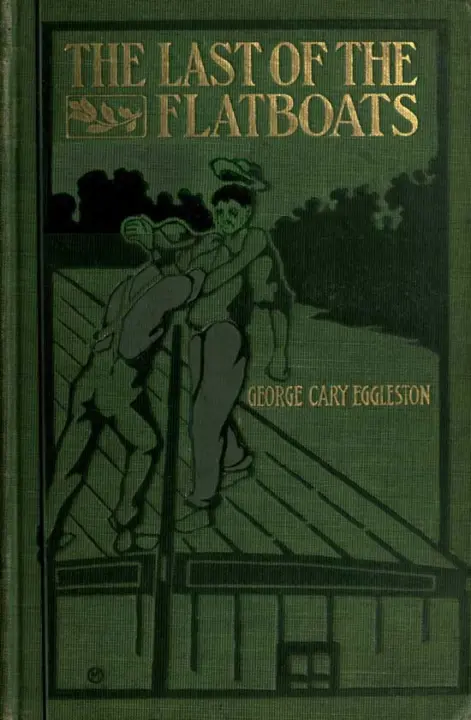
"The Last of the Flatboats" by George Cary Eggleston is a novel written in the early 20th century. The story begins in a vibrant small town along the Ohio River, Vevay, Indiana, and follows a group of resourceful boys led by young Phil Lowry, as they embark on an adventurous journey down the Mississippi River on a self-built flatboat. Their adventure is both a quest for profit and a tale of camaraderie, focusing on themes of friendship, tenacity, and the spirit of adventure in the face of challenges. At the start of the novel, we are introduced to the spirited and intelligent lowry brothers, Ed and Phil, along with their friends, who are engaged in a salvage operation recovering pig-iron from a wrecked barge. Phil's persistence leads them to discover valuable artifacts underwater. As they celebrate their success, the boys hatch a plan to build a flatboat and take it down to New Orleans for profit. They are joined by Jim Hughes, a mysterious figure who expresses an eagerness to serve as a pilot. Tension arises as they grapple with Hughes's questionable behavior and intentions, setting the stage for their journey filled with excitement, unexpected challenges, and the vibrant environment of the Mississippi River.
Introduction adapted from the source catalogue; source summaries may be automatically generated.
Free to read · English · 72,871 words · No account needed
MAKE TIME FOR A GOOD BOOK
On by default. Untick to stop anonymous reading totals. Each page counts after 10 seconds in view. How this works.
Anonymous counting is on unless you have switched it off.
Utterly worn out as he was, it was not a part of Phil’s purpose--it was not in his nature, indeed--to neglect any duty. He ate a hearty supper with the boys, during which he talked very little. Once he said, suddenly:--
“I suspect it’s the Tallahatchie.”
“What do you mean?” asked Ed.
“Why, the river we’ve reached. It lies to the left of our course. If it was the Sunflower, it would lie to the right. Anyhow, it runs into the Yazoo, and that’s all we ask of it.”
“By the way, Ed,” said Irv, “how long is the Yazoo?”
“I don’t know, I’m sure,” said Ed. “I’ll get the map after supper, and
look.”
“Don’t bother,” said Phil. “The navigable part of it is one hundred and seventy-five miles long.”
“How did you come to know that?” asked Will. “I thought Ed was the geographer of this expedition.”
“So he is. But I’m captain, worse luck to it, and it’s my first business to know what lies ahead. So I looked this thing up on the map. The Yalobusha and Tallahatchie run together somewhere near a village called Greenwood, which is probably a hundred feet or so under water just now,--we may even float over the highest steeple in that interesting town, when we get to it,--and those two streams form the Yazoo. By the way, that little side issue of a river happens to be considerably longer, in its navigable part, than one of the most celebrated rivers in the world--the Hudson.”
“You don’t mean it?” exclaimed Irv, for once surprised out of his drawl.
“Maybe I don’t. But I think I do. Ask Ed to study it out. I’m too tired to talk. I’m going to sleep for ten minutes now. Wake me up at the end of that time. Don’t fail!”
With that the exhausted boy rolled into a bunk, and in an instant was
asleep again.
Ed got out his maps and studied them for a while.
“He’s right, boys,” said the older one, after some measurements on the
map.
“Of course he is,” said Constant. “He’s got into the habit of being right since we chose him to be ‘IT’ for this trip. But go on, Ed. Tell us about it.”
“Well,” said Ed, still scrutinizing the map, “the navigable part of the Hudson, from New York to Troy, is about one hundred and fifty-six miles long. The navigable part of the Yazoo is, as Phil said, one hundred and seventy-five miles long. Oh, by the way--”
Your reading position is saved on this browser. Take it to another device with a library code. Reading pages adapt to text, rather than matching a printed edition.
George Cary Eggleston
George Cary Eggleston
George Cary Eggleston
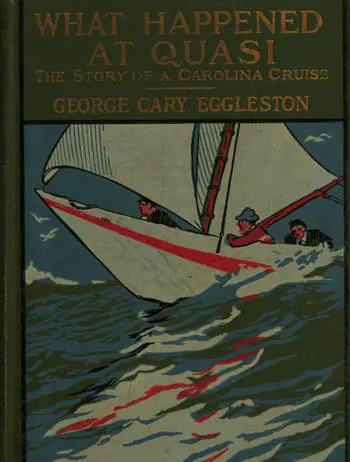
George Cary Eggleston
BEHIND THE BOOK
This eBook is for the use of anyone anywhere in the United States and most other parts of the world at no cost and with almost no restrictions whatsoever. You may copy it, give it away or re-use it under the terms of the Project Gutenberg License included with this eBook or online at www.gutenberg.org. If you are not located in the United States, you will have to check the laws of the country where you are located before using this eBook. Read the source licence.
The original source file, including credits and licence, is retained by this library. Request an original-format copy at no charge. Please include the book title and Project Gutenberg identifier #44922.
KEEP YOUR CURIOSITY GOING
Coulson Kernahan

Maurice Baring
Frances Wright
Cécile Tormay

Frederic Jesup Stimson

W. H. P. (William Henry Pope) Jarvis