Southern Soldier Stories
George Cary Eggleston
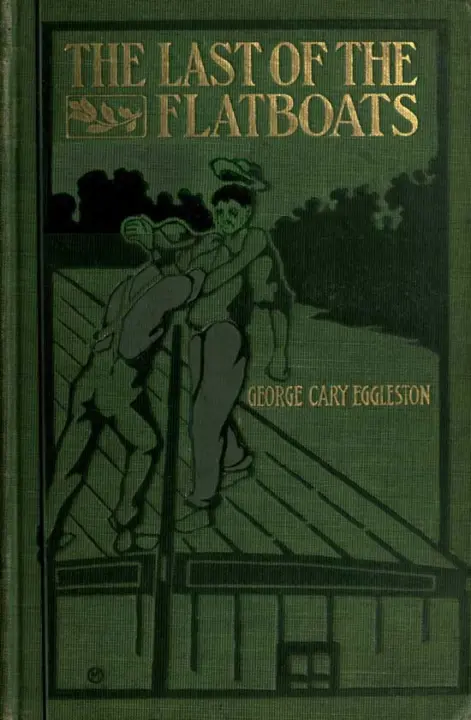
THE CLASSIC COLLECTION · 1900
"The Last of the Flatboats" by George Cary Eggleston is a novel written in the early 20th century. The story begins in a vibrant small town along the Ohio River, Vevay, Indiana, and follows a group of resourceful boys led by young Phil Lowry, as they embark on an adventurous journey down the Mississippi River on a self-built flatboat. Their adventure is both a quest for profit and a tale of camaraderie, focusing on themes of friendship, tenacity, and the spirit of adventure in the face of challenges. At the start of the novel, we are introduced to the spirited and intelligent lowry brothers, Ed and Phil, along with their friends, who are engaged in a salvage operation recovering pig-iron from a wrecked barge. Phil's persistence leads them to discover valuable artifacts underwater. As they celebrate their success, the boys hatch a plan to build a flatboat and take it down to New Orleans for profit. They are joined by Jim Hughes, a mysterious figure who expresses an eagerness to serve as a pilot. Tension arises as they grapple with Hughes's questionable behavior and intentions, setting the stage for their journey filled with excitement, unexpected challenges, and the vibrant environment of the Mississippi River.
Introduction adapted from the source catalogue; source summaries may be automatically generated.
Free to read · English · 72,871 words · No account needed
MAKE TIME FOR A GOOD BOOK
On by default. Untick to stop anonymous reading totals. Each page counts after 10 seconds in view. How this works.
Anonymous counting is on unless you have switched it off.
It was quickly brought, though none of the boys could guess what Ed intended to do. He took the auger, and quickly bored an inch hole in the scuttle. A flash and a bullet came through it, but nobody was hurt.
“Now, give me an extinguisher,” said Ed.
Putting the nozzle of the hose through the hole, he turned the apparatus upside down, and allowed its contents to be driven violently into the little cabin. When the first extinguisher was exhausted he turned on the hose of another, and after that of a third.
For a while the imprisoned man, shut up in a box ten feet by twelve and not over five or six feet high, indulged in lusty yells, but these soon became husky, and presently ceased entirely. The moment they did, Ed called out:--
“Rip off the scuttle quick, boys; he’s suffocated.”
The boys did not at all understand what had happened, but they acted promptly in obedience to their wisest comrade’s order. When the scuttle was opened and a lantern brought, Jim was seen lying limp at the foot of the little ladder.
“Now, be careful,” said Ed. “Irving, you and Phil--you’re the strongest--go down, hold your breath, and drag him up. Be sure to hold your breath. Do just as you do when you’re diving.”
They made an effort, but almost instantly came back, gasping for air, sneezing, and with eyes and noses tingling.
“Catch your breath quick,” said Ed, “and go down again. You must get him out, or he will be dead, if he isn’t dead already.”
They made another dash, this time acting more carefully upon the instruction to treat the descent as if it were a dive, and carefully holding their breath. In a brief while they dragged the body of the pilot out upon the deck, and Ed gave directions for restoring life by artificial respiration.
“You see, he’s practically a drowned man,” he said.
“Drowned?” said Will Moreraud. “Why, he’s not even been in the water, and that little dash with the hose wouldn’t drown a kitten.”
“Never mind that,” said Ed; “quick now; he’s drowned, or just the same thing. We must bring him to life.”
“Well, slip that rope around his arms and legs while we do it,” said Phil, “or we’ll have trouble when he comes to.”
This was a suggestion which they all recognized as altogether timely, and so the apparent corpse was carefully secured by two of the boys, while the rest worked at the task of restoring him to life.
Your reading position is saved on this browser. Take it to another device with a library code. Reading pages adapt to text, rather than matching a printed edition.
George Cary Eggleston
George Cary Eggleston
George Cary Eggleston
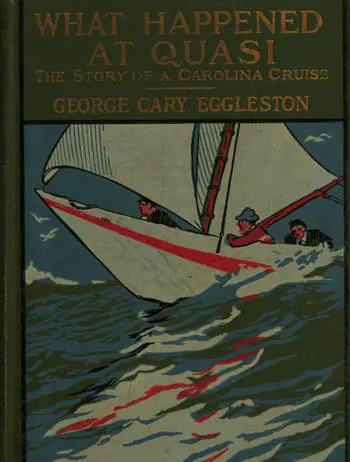
George Cary Eggleston
BEHIND THE BOOK
This eBook is for the use of anyone anywhere in the United States and most other parts of the world at no cost and with almost no restrictions whatsoever. You may copy it, give it away or re-use it under the terms of the Project Gutenberg License included with this eBook or online at www.gutenberg.org. If you are not located in the United States, you will have to check the laws of the country where you are located before using this eBook. Read the source licence.
The original source file, including credits and licence, is retained by this library. Request an original-format copy at no charge. Please include the book title and Project Gutenberg identifier #44922.
KEEP YOUR CURIOSITY GOING
Coulson Kernahan

Maurice Baring
Frances Wright
Cécile Tormay

Frederic Jesup Stimson

W. H. P. (William Henry Pope) Jarvis