
The Residuary Legatee; Or, The Posthumous Jest of the Late John Austin
Frederic Jesup Stimson
THE CLASSIC COLLECTION · 1884
"The King's Men: A Tale of To-morrow" by Robert Grant and others is a novel written in the late 19th century. The story unfolds in an alternate historical setting where England is reeling from the consequences of political upheaval, particularly after the abdication of King George V and the establishment of a republic. The primary character, Geoffrey Ripon, finds himself in a precarious position as the last heir of a once-great lineage, living in diminished circumstances and reflecting on the social changes around him. The beginning of the book introduces Geoffrey Ripon, who is living in a lodge once associated with his noble family, troubled by financial ruin and pondering the shifting social landscape of post-monarchical England. Through his interactions and observations, readers glimpse a society grappling with the consequences of radical change. The narrative sets up significant themes of class, nostalgia for the past, and the social dynamics of a world where titles and power are in disarray, hinting at more personal and political conflicts to come as various characters enter his life, including Margaret Windsor, the daughter of a wealthy American businessman who has taken residence in Ripon House. The opening chapters establish the tone and atmosphere, immersing the reader in a rich tapestry of historical context and character intrigue.
Introduction adapted from the source catalogue; source summaries may be automatically generated.
Free to read · English · 75,041 words · No account needed
MAKE TIME FOR A GOOD BOOK
On by default. Untick to stop anonymous reading totals. Each page counts after 10 seconds in view. How this works.
Anonymous counting is on unless you have switched it off.
"Mr. Dacre is not insolent," said Mary, warmly. "I have met him several times. He is a most remarkable man."
"He couldn't well be insolent to you, Mary," the wily Patterson answered, with a smile for his favorite, who usually agreed with his radicalism, "but his tone to the public is a different thing."
"You extremists are at least responsible for one of these--for the demagogue--" said Richard Lincoln.
"Yes; I admit it. The election of Bagshaw for Liverpool was a terrible mistake. But, if we had had our way, the other evil should have lost its head--O, I beg your pardon, Mary; I did not mean your friend, Mr. Dacre, but the principle he represents."
Mary Lincoln had exclaimed as if shocked, which brought out the concluding words from Mr. Patterson.
"If one were gone, would not the danger be greater?" asked Richard Lincoln. "They keep each other in check. They are useful enemies."
"Take care they don't some day turn round and be useful friends," retorted Patterson. "I believe they did so in Derby yesterday. If they were to do it in Nottingham they would sweep the city."
Mr. Patterson had scored his mark. The ex-Minister was silent and
thoughtful.
"The Republic is like an iceberg," he said presently, "a dozen years above water, but a century below. We shall be able to handle our difficulties--Don't you think so, Mary?" he added lightly, as they went out.
"Papa," said Mary, as they walked across the main street, "I met Sir John Dacre at Arundel House when I was visiting Lucy Arundel last year, and I can assure you he is not an evil-minded man."
"Indeed!" answered the father, rather amused at the relation; "you like
him, then?"
"Very much, indeed. He is a perfect old-fashioned cavalier, and the most distinguished-looking man I ever saw, except you."
Her father laughed at the unconscious flattery.
"And the very oldest men are constantly consulting him," continued Mary, who was on a subject which evidently interested her.
There was something in Mary's voice that made her father glance down at her face. But he did not pursue the subject.
The months rolled on in this unrestful peace, and day by day it grew clear that the internal troubles of the Republic were forming a dangerous congestion.
Richard Lincoln again became an attentive reader of the newspapers. No man in England studied more carefully the signs of the times. Daily, too, he listened to the denunciation of the aristocrats by his radical old friend.
"They ought to be banished!" exclaimed Mr. Patterson, one morning. "I said it would come to this."
Your reading position is saved on this browser. Take it to another device with a library code. Reading pages adapt to text, rather than matching a printed edition.
Frederic Jesup Stimson
Robert Grant
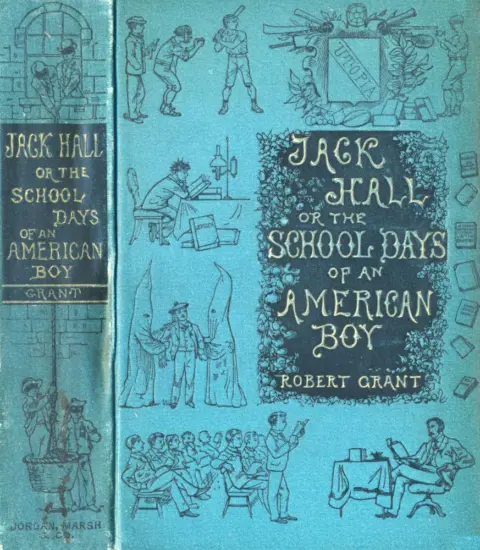
Robert Grant
John T. (John Tyler) Wheelwright
BEHIND THE BOOK
This eBook is for the use of anyone anywhere in the United States and most other parts of the world at no cost and with almost no restrictions whatsoever. You may copy it, give it away or re-use it under the terms of the Project Gutenberg License included with this eBook or online at www.gutenberg.org. If you are not located in the United States, you will have to check the laws of the country where you are located before using this eBook. Read the source licence.
The original source file, including credits and licence, is retained by this library. Request an original-format copy at no charge. Please include the book title and Project Gutenberg identifier #18960.
KEEP YOUR CURIOSITY GOING
Cécile Tormay

Moritz Busch
Coulson Kernahan
John L. Ransom

Maurice Baring
Frances Wright