
The Residuary Legatee; Or, The Posthumous Jest of the Late John Austin
Frederic Jesup Stimson
THE CLASSIC COLLECTION · 1884
"The King's Men: A Tale of To-morrow" by Robert Grant and others is a novel written in the late 19th century. The story unfolds in an alternate historical setting where England is reeling from the consequences of political upheaval, particularly after the abdication of King George V and the establishment of a republic. The primary character, Geoffrey Ripon, finds himself in a precarious position as the last heir of a once-great lineage, living in diminished circumstances and reflecting on the social changes around him. The beginning of the book introduces Geoffrey Ripon, who is living in a lodge once associated with his noble family, troubled by financial ruin and pondering the shifting social landscape of post-monarchical England. Through his interactions and observations, readers glimpse a society grappling with the consequences of radical change. The narrative sets up significant themes of class, nostalgia for the past, and the social dynamics of a world where titles and power are in disarray, hinting at more personal and political conflicts to come as various characters enter his life, including Margaret Windsor, the daughter of a wealthy American businessman who has taken residence in Ripon House. The opening chapters establish the tone and atmosphere, immersing the reader in a rich tapestry of historical context and character intrigue.
Introduction adapted from the source catalogue; source summaries may be automatically generated.
Free to read · English · 75,041 words · No account needed
MAKE TIME FOR A GOOD BOOK
On by default. Untick to stop anonymous reading totals. Each page counts after 10 seconds in view. How this works.
Anonymous counting is on unless you have switched it off.
"The country. See here; there are two rocks ahead, the aristocrats and the demagogues, and which is worse no one can say. They are getting ready for something or other, and the good sense and patriotism of England stand by and do nothing."
"Has anything particular happened?"
"Yes; at West Derby yesterday, the Duke of Bayswater was elected to Parliament, getting a large majority over Tyler, a sound Republican."
"Pooh! You don't take that as a specimen of all our elections? The Derby voters are mainly farmers, and the farmers retain their old respect for the lords of the manor."
"And that means something," rejoined Patterson; "it is not as if those aristocrats had accepted the Republic, which they don't even pretend to do. There are now over forty of them in the lower house."
"Well," answered the ex-Minister, "they have been elected by the
people."
"Yes; by the uninstructed people," said Patterson, warmly. "The people are talked to by these fellows with empty titles on one hand and by the demagogues on the other, and they think the only choice lies between the two."
"Surely, papa," said Mary, who was interested in the conversation, "the people will not be so easily deceived?"
"Deceived!" interrupted Mr. Patterson. "Why, Mary, here was an election in which the people were led to vote against one of the best Republicans in England, and for a lord who is nearly seventy, who has never done any good for himself or the country--an old pauper, who goes to Parliament for the salary and the chance to plot against the people."
Mary looked at her father as if she wished him to speak.
"These men," he said, "do not regain power as lords, but as commoners. That is good, instead of bad--their withdrawal would be more dangerous. We must remember that those who have lost by the revolution are still as much a part of the English people as those who have gained."
"I don't know about that," said Patterson, stubbornly. "I believe those aristocrats are actually plotting treason; and a traitor separates himself from his people."
Richard Lincoln's silence only stirred up the old Radical. He shot home
next time.
"I believe we shall have a lord returned for Nottingham next election."
A slow flush rose in Lincoln's face, and he unconsciously raised his
head.
"For the last two years," continued Patterson, seeing the effect of his words, "only two Englishmen have been heard of to any extent--the demagogue leader, Bagshaw, and Sir John Dacre, the insolent young leader of the aristocrats."
This time it was the daughter that flushed at Mr. Patterson's words.
Your reading position is saved on this browser. Take it to another device with a library code. Reading pages adapt to text, rather than matching a printed edition.
Frederic Jesup Stimson
Robert Grant
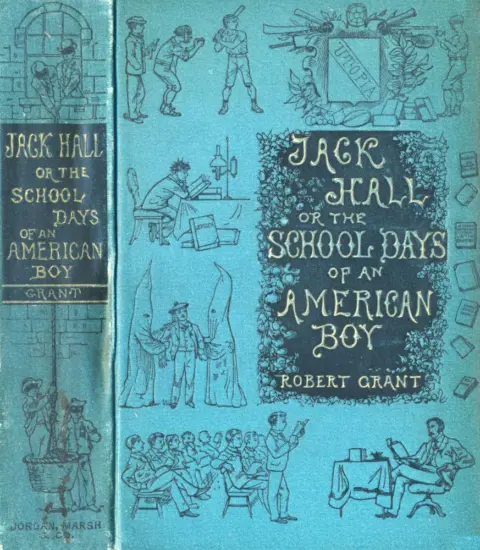
Robert Grant
John T. (John Tyler) Wheelwright
BEHIND THE BOOK
This eBook is for the use of anyone anywhere in the United States and most other parts of the world at no cost and with almost no restrictions whatsoever. You may copy it, give it away or re-use it under the terms of the Project Gutenberg License included with this eBook or online at www.gutenberg.org. If you are not located in the United States, you will have to check the laws of the country where you are located before using this eBook. Read the source licence.
The original source file, including credits and licence, is retained by this library. Request an original-format copy at no charge. Please include the book title and Project Gutenberg identifier #18960.
KEEP YOUR CURIOSITY GOING
Cécile Tormay

Moritz Busch
Coulson Kernahan
John L. Ransom

Maurice Baring
Frances Wright