The lost dirigible
Ralph Henry Barbour
THE CLASSIC COLLECTION · 1913
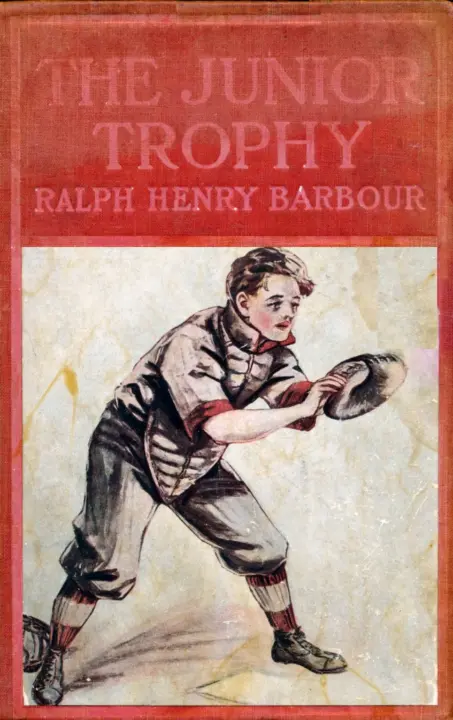
"The Junior Trophy" by Ralph Henry Barbour is a coming-of-age novel written in the early 20th century. The story revolves around Bert Bryant, a new junior student at Mt. Pleasant Academy, as he navigates the challenges of school life, friendships, and the often harsh realities of class dynamics among students. The book likely explores themes of independence, camaraderie, and the spirit of competition, especially among schoolboys. At the start of the narrative, Bert arrives at Mt. Pleasant Academy after a delayed train journey, feeling both excitement and trepidation. He soon meets a fellow student, Nan Merton, who introduces him to the academy and its social hierarchy. As Bert settles in, he faces initial hostility from his room-mate, Benson Holden, leading him to assert his independence in unexpected ways. The opening chapters hint at the evolving dynamics between Bert and his peers, setting the stage for camaraderie, rebellion, and the spirit of competition that will likely unfold in the battles for social standing and athletic prowess within the school.
Introduction adapted from the source catalogue; source summaries may be automatically generated.
Free to read · English · 62,019 words · No account needed
MAKE TIME FOR A GOOD BOOK
On by default. Untick to stop anonymous reading totals. Each page counts after 10 seconds in view. How this works.
Anonymous counting is on unless you have switched it off.
A week later the Junior Four met in extraordinary session. Strange to relate, it had been the Honorary Member who had issued the call for the meeting, but instead of resenting what looked like usurpation of authority the others welcomed the summons.
It was a Saturday morning and a dull one. A February thaw had set in, the snow was fit only for snowballs, the rinks were awash and the second game of the hockey series had been postponed for another week. The day had stretched ahead of them featureless and unpromising, and the summons to the meeting had reached them at a moment when life seemed tame and somber.
Having brought about the gathering, it was Nan’s place to explain the purpose of it, and this she was doing from the only chair the harness room afforded. (It was really a stool with one broken leg, but by careful balancing it was possible to keep seated.)
“It seems to me,” Nan was explaining, “that when you’ve got a perfectly good secret society like this you ought to――to do something with it. We started it to――to resist the tyranny of the upper classes――”
“All for one and one for all!” droned Kid in a sing-song voice.
Nan frowned down the interruption and proceeded. “And now that we have accomplished that――that purpose――”
A muffled giggle from Kid. The others looked elaborately unconscious.
“――I think we ought to find another purpose, something――something
worthy and noble.”
“Let’s turn it into an athletic club,” suggested Lanny.
“Or a debating society,” offered Small, who was the literary member of
the coterie.
“Let’s make it an eating club like they have in college,” said Kid. “We could have some dandy feeds out here.”
“What were you thinking of, Nan?” Bert asked.
“Well, how would it do to have it a Benevolent Society?”
“What’s that?” asked Lanny finally after prolonged silence.
“A Benevolent Society,” explained Nan vaguely, “is a society that――that does good to people.”
“Who?” asked Kid suspiciously.
“Why, anyone. You present beds to hospitals or endow something, you know. Any worthy cause――”
“That takes money, doesn’t it?” asked Small.
“Of course. We save our money――”
“That’s a silly game!” jeered Kid. “Save your money! Gee, I don’t have
enough now.”
“Or we can earn it,” continued Nan. “That would be more fun, wouldn’t
it?”
“How could we earn any money?” Bert inquired.
“Oh, lots of ways! We must think up ways, of course.”
“Earn money and then give it away to a hospital!” exclaimed Kid. “I
guess not!”
Your reading position is saved on this browser. Take it to another device with a library code. Reading pages adapt to text, rather than matching a printed edition.
Ralph Henry Barbour
Ralph Henry Barbour
Ralph Henry Barbour
Ralph Henry Barbour
BEHIND THE BOOK
This eBook is for the use of anyone anywhere in the United States and most other parts of the world at no cost and with almost no restrictions whatsoever. You may copy it, give it away or re-use it under the terms of the Project Gutenberg License included with this eBook or online at www.gutenberg.org. If you are not located in the United States, you will have to check the laws of the country where you are located before using this eBook. Read the source licence.
The original source file, including credits and licence, is retained by this library. Request an original-format copy at no charge. Please include the book title and Project Gutenberg identifier #66055.
KEEP YOUR CURIOSITY GOING
Coulson Kernahan

Maurice Baring
Frances Wright
Cécile Tormay

Frederic Jesup Stimson

W. H. P. (William Henry Pope) Jarvis