The lost dirigible
Ralph Henry Barbour
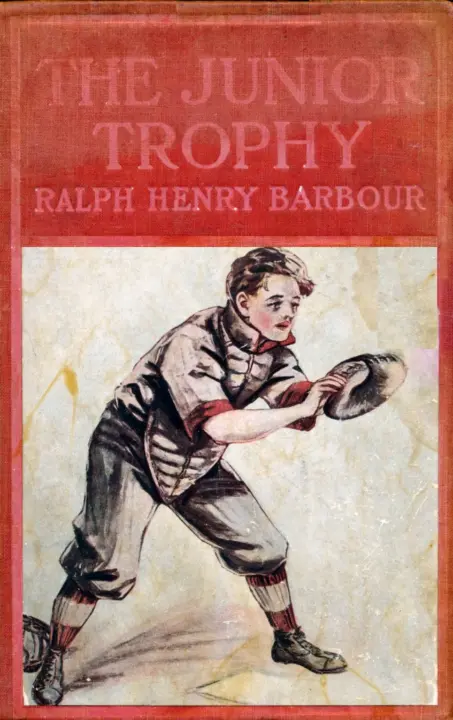
THE CLASSIC COLLECTION · 1913
"The Junior Trophy" by Ralph Henry Barbour is a coming-of-age novel written in the early 20th century. The story revolves around Bert Bryant, a new junior student at Mt. Pleasant Academy, as he navigates the challenges of school life, friendships, and the often harsh realities of class dynamics among students. The book likely explores themes of independence, camaraderie, and the spirit of competition, especially among schoolboys. At the start of the narrative, Bert arrives at Mt. Pleasant Academy after a delayed train journey, feeling both excitement and trepidation. He soon meets a fellow student, Nan Merton, who introduces him to the academy and its social hierarchy. As Bert settles in, he faces initial hostility from his room-mate, Benson Holden, leading him to assert his independence in unexpected ways. The opening chapters hint at the evolving dynamics between Bert and his peers, setting the stage for camaraderie, rebellion, and the spirit of competition that will likely unfold in the battles for social standing and athletic prowess within the school.
Introduction adapted from the source catalogue; source summaries may be automatically generated.
Free to read · English · 62,019 words · No account needed
MAKE TIME FOR A GOOD BOOK
On by default. Untick to stop anonymous reading totals. Each page counts after 10 seconds in view. How this works.
Anonymous counting is on unless you have switched it off.
Bert, without replying, washed for supper, and a moment later the bell rang. Ben went down to the dining-room in his shoes. The twelve boys sat at two tables, the seniors and upper middlers at one, presided over by Mr. Folsom, and the lower middlers and juniors at the other, under the supervision of Mr. Crane. Doctor Merton, with his wife and daughter, occupied a small table at the end of the room. Whispering was not countenanced, and so the mutineers could not compare notes. Lanny looked flustered and defiant, Kid excited and happy and Small worried. Once Bert encountered Nan’s eyes across the room and received a look that he couldn’t fathom, not knowing that Nan had learned of the mutiny and was doing her best to convey to him that she was just terribly excited and was dying to hear all about it. Then Mr. Crane, helping the last portion of cold roast beef, remarked:
“Well, you boys want to eat plenty, you know. There’s hard work ahead
this evening.”
This pleasantry elicited no response and he pretended to be surprised. As a matter of fact, Mr. Crane had found the proclamation on the mantel, had laughed over it with Mr. Folsom and had subsequently taken it to Doctor Merton.
“Eh?” he went on. “Isn’t this the night we fix the slide, Crandall?”
“Yes, sir, I believe so,” replied Crandall.
“I thought so. Well, there’s plenty of snow. Last year you had rather hard work, if I remember.”
“Yes, sir, we did.”
“How are you with a snow shovel, Bryant; pretty husky?”
“Only fair, sir. No good at all after dark.”
“How’s that?”
Bert shook his head. “I hardly know how to explain it, sir,” he replied, “but I can’t seem to hold a shovel in the evening.”
“Dear, dear! Quite remarkable, Bryant. You must have a new sort of disease.” Kid was grinning delightedly. “Well, you haven’t any trouble of that sort, have you, Fairchild?”
“I’m afraid I have,” piped the boy. “The thought of a snow-shovel makes me quite ill, sir.”
“Good gracious! The disease is catching! And you, Grey? Are you experiencing the symptoms, too?”
“Yes, sir,” muttered Lanny.
“What? Why, this is――is surprising! I must ask the Doctor to look into it. Frye, you――don’t tell me you have it, too!”
Small looked at his plate and nodded silently. Mr. Crane leaned back in
his chair astounded.
“Well, well! But let’s learn the worst, Crandall?”
“No, sir,” replied Crandall with a grin.
“Ah! And Cupples?”
“Not yet, sir.”
Your reading position is saved on this browser. Take it to another device with a library code. Reading pages adapt to text, rather than matching a printed edition.
Ralph Henry Barbour
Ralph Henry Barbour
Ralph Henry Barbour
Ralph Henry Barbour
BEHIND THE BOOK
This eBook is for the use of anyone anywhere in the United States and most other parts of the world at no cost and with almost no restrictions whatsoever. You may copy it, give it away or re-use it under the terms of the Project Gutenberg License included with this eBook or online at www.gutenberg.org. If you are not located in the United States, you will have to check the laws of the country where you are located before using this eBook. Read the source licence.
The original source file, including credits and licence, is retained by this library. Request an original-format copy at no charge. Please include the book title and Project Gutenberg identifier #66055.
KEEP YOUR CURIOSITY GOING
Coulson Kernahan

Maurice Baring
Frances Wright
Cécile Tormay

Frederic Jesup Stimson

W. H. P. (William Henry Pope) Jarvis