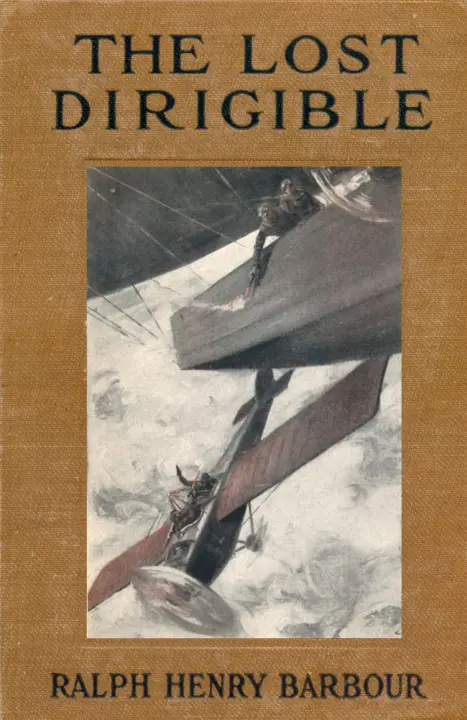
The lost dirigible
Ralph Henry Barbour
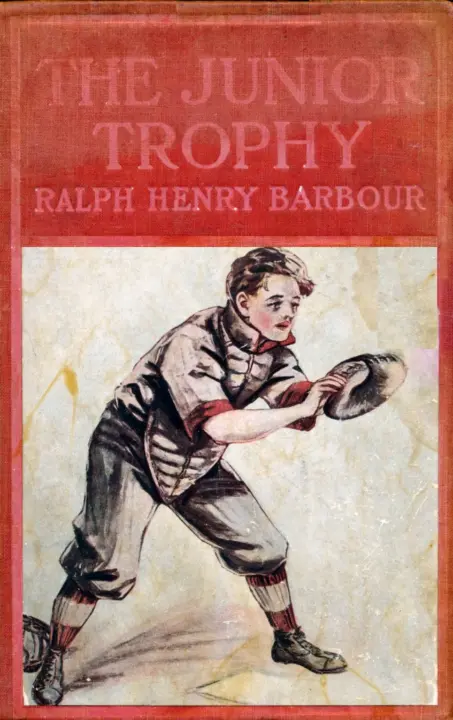
THE CLASSIC COLLECTION · 1913
"The Junior Trophy" by Ralph Henry Barbour is a coming-of-age novel written in the early 20th century. The story revolves around Bert Bryant, a new junior student at Mt. Pleasant Academy, as he navigates the challenges of school life, friendships, and the often harsh realities of class dynamics among students. The book likely explores themes of independence, camaraderie, and the spirit of competition, especially among schoolboys. At the start of the narrative, Bert arrives at Mt. Pleasant Academy after a delayed train journey, feeling both excitement and trepidation. He soon meets a fellow student, Nan Merton, who introduces him to the academy and its social hierarchy. As Bert settles in, he faces initial hostility from his room-mate, Benson Holden, leading him to assert his independence in unexpected ways. The opening chapters hint at the evolving dynamics between Bert and his peers, setting the stage for camaraderie, rebellion, and the spirit of competition that will likely unfold in the battles for social standing and athletic prowess within the school.
Introduction adapted from the source catalogue; source summaries may be automatically generated.
Free to read · English · 62,019 words · No account needed
MAKE TIME FOR A GOOD BOOK
On by default. Untick to stop anonymous reading totals. Each page counts after 10 seconds in view. How this works.
Anonymous counting is on unless you have switched it off.
Dead silence greeted this suggestion. Lanny whistled softly and seemed to be giving the plan careful consideration. Small became deeply interested in the snow-covered and lamp-lighted drive and Kid, catching Bert’s eye, winked mischievously.
“Sure,” he said, “let’s go up and defy them!”
“That’s all well enough for you,” said Small. “You’re such a little fellow that they won’t hurt you!”
“I’m only a year younger than you are,” replied Kid warmly, “and I’m ’most as big. You’re afraid, that’s what’s the matter with you!”
“Cut it out, you two,” said Lanny. “What time is it?”
Bert peered at the ornate clock on the mantel. “’Most six,” he answered. “We’ve got to go up pretty soon, whether we want to or not.”
That couldn’t be denied.
“Perhaps we’d better go now,” said Lanny. “It will look better. I kind of wish, though, we hadn’t added that postscript at the last; it sounds awfully cheeky.”
“Well, whose idea was it?” demanded Small. “I told you not to do it.”
“Oh, we might as well be killed for sheep as lambs,” remarked Bert cheerfully. “Come on, fellows; brace up; they can’t kill us. But remember, now, no shacking!”
“Let’s talk about something on the way up,” said Lanny. “It――it’ll sound as though we weren’t scared.”
“Talk about me,” chirped up Kid pertly. “I’m awfully interesting.”
“Talk about the skating races Saturday,” said Lanny. “There’s a race for juniors, you know. Who’s going in for it?”
With that Bert opened the door and the four crossed the hall with a bit of a swagger and mounted the stairs, talking volubly but very much at random.
“It’s a quarter of a mile,” said Lanny, “and I think that’s too short,
don’t you?”
“I must have my skates ground,” said Kid.
“Why don’t they have a handicap race?” asked Bert.
“The mile is sure to go to Ben,” said Small. “He’s a peach of a skater.” Small’s voice was unnecessarily loud and Bert turned to him with a frown.
“Quit swiping, Frye,” he hissed, adding in an equally penetrating voice: “I shouldn’t think Holden could skate much; he looks so awkward.”
Small shuddered. Then they parted to seek their own rooms.
“Well, where have you been?” growled Ben as Bert entered Number 2. “I’ve been waiting for you for half an hour.”
“Oh, just around,” replied Bert vaguely.
“Well, find my slippers for me.”
“Oh, no,” answered Bert. “We’re not doing that any more. It’s out of
fashion.”
Your reading position is saved on this browser. Take it to another device with a library code. Reading pages adapt to text, rather than matching a printed edition.
Ralph Henry Barbour
Ralph Henry Barbour
Ralph Henry Barbour
Ralph Henry Barbour
BEHIND THE BOOK
This eBook is for the use of anyone anywhere in the United States and most other parts of the world at no cost and with almost no restrictions whatsoever. You may copy it, give it away or re-use it under the terms of the Project Gutenberg License included with this eBook or online at www.gutenberg.org. If you are not located in the United States, you will have to check the laws of the country where you are located before using this eBook. Read the source licence.
The original source file, including credits and licence, is retained by this library. Request an original-format copy at no charge. Please include the book title and Project Gutenberg identifier #66055.
KEEP YOUR CURIOSITY GOING
Coulson Kernahan

Maurice Baring
Frances Wright
Cécile Tormay

Frederic Jesup Stimson

W. H. P. (William Henry Pope) Jarvis