THE CLASSIC COLLECTION✦The sprightly romance of MarsacCLASSIC FREE BOOKS
The sprightly romance of Marsac
Molly Elliot Seawell
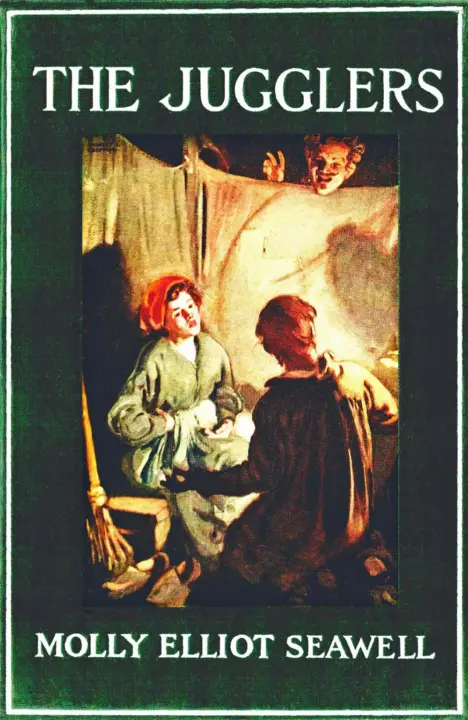
THE CLASSIC COLLECTION · 1911
"The Jugglers: A Story" by Molly Elliot Seawell is a novel written in the early 20th century. The narrative centers around Diane Dorian, a talented but ambitious singer in a theatrical troupe, who finds herself at a crossroads when the dashing Marquis Egmont de St. Angel proposes to her. As she navigates her rise in society and her artistic aspirations, the story explores themes of love, ambition, and the complexities of personal identity. At the start of the narrative, the reader is introduced to the modest traveling life of a group of performers as they contemplate where to spend the winter. Set against the backdrop of a picturesque autumn, the initial chapter focuses on Diane, her dreams of stardom, and the dynamics within their theatrical company—particularly her relationships with Jean Leroux and François le Bourgeois. As the scene unfolds, Diane's yearning for a better life becomes evident, culminating in her acceptance of the Marquis’ marriage proposal, which she believes will fulfill her dreams. However, her ambition and the implications of her newfound status create tension, hinting at deeper emotional conflicts that will be explored throughout the story.
Introduction adapted from the source catalogue; source summaries may be automatically generated.
Free to read · English · 38,468 words · No account needed
MAKE TIME FOR A GOOD BOOK
On by default. Untick to stop anonymous reading totals. Each page counts after 10 seconds in view. How this works.
Anonymous counting is on unless you have switched it off.
“Now,” said he to his prisoners, addressing them both, “this young woman once treated me with great scorn. I tell her, and I tell you, Jean Leroux, that you shall be shot anyhow, and so shall Mademoiselle Diane Dorian, unless she agrees now and here to become my mistress.”
Neither Diane nor Jean turned pale. They had lived through so many horrors in the last frightful ten months, that they had come to regard terrible catastrophies as the every-day incidents of life.
Jean fixed his eyes on Diane, who turned to him with a radiant smile.
“You see, Jean,” she said, “how little this wretch knows me! I would rather die ten times over than be his mistress. People are dying all around us all the time, and we shall go anyhow, a little sooner or a little later, and it doesn’t matter, particularly as you are to go too.”
“Certainly,” replied Jean with equal coolness. “You never were a coward, Diane, and most women, I think, would die rather than become this man’s mistress. As for myself”--Jean snapped his fingers in the air--“I have been looking death in the eye for ten months. It isn’t so bad, I assure you.”
Egmont, looking at them, flew into a maniacal rage. He reviled them, using horrible language. He cursed them; he laughed at them like a fiend. His revenge was not complete, because he could not conquer their souls and destroy their courage as he could kill and mutilate their bodies.
Two raps on the floor brought the guards.
“Take this scoundrel,” he said, “and put him in a cell. Lock this woman up. Twenty-four hours will see the end of all of them.”
“Have courage, Jean,” cried Diane, as she walked away between her jailers. “I promise you to die before I become the mistress of this man or any other man.”
The next day at noon a shuffling procession of a jailer and two National Guards opened the door of François’ cell, and walked in. The jailer, a good-natured ruffian, read the name and number written on the door, and then said to François:
“You, Jean Leroux, are to be shot at six o’clock this evening.”
“All right,” answered François, cheerfully. “I ask one thing--I should like to see the Bishop of Bienville, who is in this corridor. He can’t help me to escape, he is too fat, but I should like to see him.”
There are as many kinds of murderers as there are murders, and the jailer in this case was an amiable murderer.
Your reading position is saved on this browser. Take it to another device with a library code. Reading pages adapt to text, rather than matching a printed edition.
Molly Elliot Seawell
Molly Elliot Seawell
Molly Elliot Seawell
Molly Elliot Seawell
BEHIND THE BOOK
This eBook is for the use of anyone anywhere in the United States and most other parts of the world at no cost and with almost no restrictions whatsoever. You may copy it, give it away or re-use it under the terms of the Project Gutenberg License included with this eBook or online at www.gutenberg.org. If you are not located in the United States, you will have to check the laws of the country where you are located before using this eBook. Read the source licence.
The original source file, including credits and licence, is retained by this library. Request an original-format copy at no charge. Please include the book title and Project Gutenberg identifier #62927.
KEEP YOUR CURIOSITY GOING
Cécile Tormay

Moritz Busch
Coulson Kernahan
John L. Ransom

Maurice Baring
Frances Wright