THE CLASSIC COLLECTION✦The sprightly romance of MarsacCLASSIC FREE BOOKS
The sprightly romance of Marsac
Molly Elliot Seawell
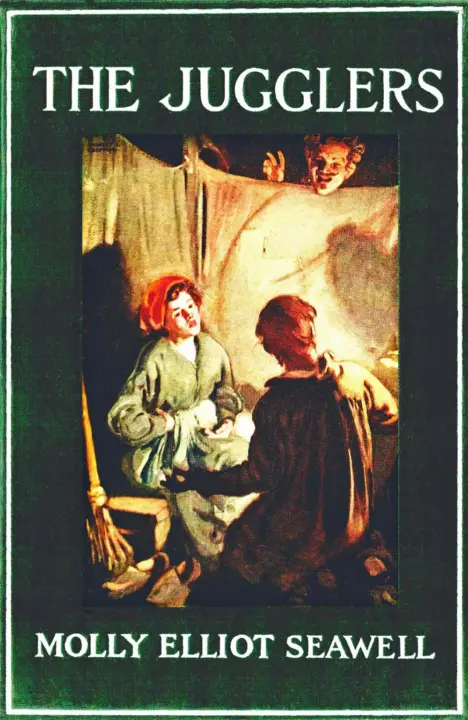
THE CLASSIC COLLECTION · 1911
"The Jugglers: A Story" by Molly Elliot Seawell is a novel written in the early 20th century. The narrative centers around Diane Dorian, a talented but ambitious singer in a theatrical troupe, who finds herself at a crossroads when the dashing Marquis Egmont de St. Angel proposes to her. As she navigates her rise in society and her artistic aspirations, the story explores themes of love, ambition, and the complexities of personal identity. At the start of the narrative, the reader is introduced to the modest traveling life of a group of performers as they contemplate where to spend the winter. Set against the backdrop of a picturesque autumn, the initial chapter focuses on Diane, her dreams of stardom, and the dynamics within their theatrical company—particularly her relationships with Jean Leroux and François le Bourgeois. As the scene unfolds, Diane's yearning for a better life becomes evident, culminating in her acceptance of the Marquis’ marriage proposal, which she believes will fulfill her dreams. However, her ambition and the implications of her newfound status create tension, hinting at deeper emotional conflicts that will be explored throughout the story.
Introduction adapted from the source catalogue; source summaries may be automatically generated.
Free to read · English · 38,468 words · No account needed
MAKE TIME FOR A GOOD BOOK
On by default. Untick to stop anonymous reading totals. Each page counts after 10 seconds in view. How this works.
Anonymous counting is on unless you have switched it off.
The lazy blue river and the wide, brown plains of Picardy lay basking in the still splendor of the November afternoon. The mysterious hush of the autumn lay upon the fields and the farmsteads. A flock of herons in a near-by marsh meditated gravely, standing one-legged, and watching the cows kneedeep in the muddy meadows. High in the sunny air, a vulture sailed, majestically evil, watching both the cows and the herons. The world was saying farewell softly to the sunny hours.
The only sound that broke the deep silence was the steady trot of the big Normandy horses on the flinty towpath, as they drew a covered boat along the narrow and shallow stream, and the faint echo of the voices of five persons sitting on the roof of the boat in the sunshine. The herons cocked their eyes toward the boat, and listened attentively, though they could not understand a word of these strange, noisy, laughing, weeping, fighting, dancing, talking creatures, called men and women. Sometimes, so the herons thought, these odd beings were a little kind; sometimes they were very cruel, but always they were formidable, and were masters of life and death.
The great question under discussion on the roof of the boat was, where the theatrical company of jugglers and singers should spend the winter. Grandin, the proprietor of the show, a tall, handsome, boastful man, with a big voice like a church organ and a backbone made of brown paper, always gave his opinion first, but was generally overruled by Madame Grandin, also tall, handsome, easily wheedled or bullied, but inexorably truthful. Decisions really rested with the three subordinates, Diane Dorian, the prima donna, Jean Leroux, her partner, and the individual known as François le Bourgeois, juggler.
“I have determined upon Bienville,” roared Grandin, in his big, rich voice. “We wintered there nine years ago, and my lithograph was in some of the best shops in the place.”
“Oh, what a lie!” cried Madame Grandin, amiably. “They only put your picture in three butcher shops and the bake shop across the street, and I am sure you paid enough for it. But Bienville is my choice too.”
Grandin took this with the utmost good nature. Between his propensity to tell agreeable lies, and Madame Grandin’s natural inability to let a lie go uncontradicted, the couple struck a very good average of truth.
The manager and his wife having spoken, the real discussion was now on.
“I should say Bienville,” said Jean Leroux, quietly.
He, too, was big--an ugly, resolute man with an indomitable eye, and as honest as the day was long.
Your reading position is saved on this browser. Take it to another device with a library code. Reading pages adapt to text, rather than matching a printed edition.
Molly Elliot Seawell
Molly Elliot Seawell
Molly Elliot Seawell
Molly Elliot Seawell
BEHIND THE BOOK
This eBook is for the use of anyone anywhere in the United States and most other parts of the world at no cost and with almost no restrictions whatsoever. You may copy it, give it away or re-use it under the terms of the Project Gutenberg License included with this eBook or online at www.gutenberg.org. If you are not located in the United States, you will have to check the laws of the country where you are located before using this eBook. Read the source licence.
The original source file, including credits and licence, is retained by this library. Request an original-format copy at no charge. Please include the book title and Project Gutenberg identifier #62927.
KEEP YOUR CURIOSITY GOING
Cécile Tormay

Moritz Busch
Coulson Kernahan
John L. Ransom

Maurice Baring
Frances Wright