
Uncanny Stories
May Sinclair
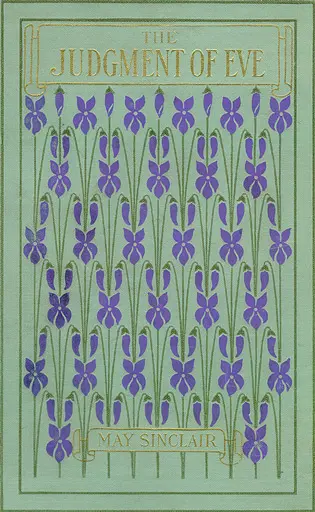
THE CLASSIC COLLECTION · 1907
"The Judgment of Eve" by May Sinclair is a novel written in the early 20th century, reflecting the intricate emotional landscapes of its characters. The story primarily centers around the character of Aggie Purcell, who grapples with the societal expectations of womanhood and motherhood in a small English town. The narrative explores themes of choice, sacrifice, and the quest for personal fulfillment against the backdrop of domestic life and romantic entanglements. The novel follows Aggie Purcell as she navigates her feelings towards two suitors: John Hurst, a well-to-do farmer, and Arthur Gatty, a gentle clerk with artistic aspirations. Initially drawn to John's stability and societal approval, Aggie eventually realizes her deeper connection with Arthur, who understands her intellectual and artistic yearnings. The turning point comes when Aggie chooses Arthur, leading to marriage and motherhood. However, as years pass, the pressures of motherhood and the sacrifices required for family life take their toll on her spirit and identity. The novel concludes poignantly with Aggie’s passing, leaving Arthur to confront the reality of their life together and the impact of her loss on their children, ultimately emphasizing the complexities of love, sacrifice, and the often unacknowledged struggles of women in society.
Introduction adapted from the source catalogue; source summaries may be automatically generated.
Free to read · English · 15,481 words · No account needed
MAKE TIME FOR A GOOD BOOK
On by default. Untick to stop anonymous reading totals. Each page counts after 10 seconds in view. How this works.
Anonymous counting is on unless you have switched it off.
Mr. Hurst had been taking tea with Aggie one market-day. The others were all out, and he had the field to himself. She always remembered just how he looked when he did it. He was standing on the white mohair rag in the drawing-room, and was running his fingers through his hair for the third time. He had been telling her how he had first taken up sheep-farming in Australia, how he'd been a farm-hand before that in California, how he'd always set his mind on that one thing--sheep-farming--because he had been born and bred in the Cotswolds. Aggie's dark-blue eyes were fixed on him, serious and intent. That flattered him, and the gods, for his undoing, dowered him with a disastrous fluency.
He had a way of thrusting out his jaw when he talked, and Aggie noted the singular determination of his chin. It was so powerful as to be almost brutal. (The same could certainly not be said of Mr. Gatty's.)
Then, in the light of his reminiscences, a dreadful thought came to her.
"John," she said, suddenly, "did you ever kill a pig?"
He answered, absently, as was his way when directly addressed.
"A pig? Yes, I've killed one or two in California."
She drew back in her chair; but, as she still gazed at him, he went on,
well pleased:
"I can't tell you much about California. It was in Australia I learned
sheep-farming."
"So, of course," said Aggie, frigidly, "you killed sheep, too?"
"For our own consumption--yes."
He said it a little haughtily. He wished her to understand the difference between a grazier and a butcher.
"And lambs? Little lambs?"
"Well, yes. I'm afraid the little lambs had to go, too, sometimes."
"How could you? How could you?"
"How could I? Well, you see, I just had to. I couldn't shirk when the other fellows didn't. In time you get not to mind."
"Not to mind?"
"Well, I never exactly enjoyed doing it."
"No. But you did it. And you didn't mind."
She saw him steeped in butcheries, in the blood of little lambs, and her tender heart revolted against him. She tried to persuade herself that it was the lambs she minded most; but it was the pig she minded. There was something so low about killing a pig. It seemed to mark him.
And it was marked, stained abominably, that he went from her presence. He said to himself: "I've dished myself now with my silly jabber. Damn those lambs!"
Your reading position is saved on this browser. Take it to another device with a library code. Reading pages adapt to text, rather than matching a printed edition.
May Sinclair

May Sinclair

May Sinclair

May Sinclair
BEHIND THE BOOK
This eBook is for the use of anyone anywhere in the United States and most other parts of the world at no cost and with almost no restrictions whatsoever. You may copy it, give it away or re-use it under the terms of the Project Gutenberg License included with this eBook or online at www.gutenberg.org. If you are not located in the United States, you will have to check the laws of the country where you are located before using this eBook. Read the source licence.
The original source file, including credits and licence, is retained by this library. Request an original-format copy at no charge. Please include the book title and Project Gutenberg identifier #19658.
KEEP YOUR CURIOSITY GOING
Coulson Kernahan

Maurice Baring
Frances Wright
Cécile Tormay

Frederic Jesup Stimson

W. H. P. (William Henry Pope) Jarvis