
Uncanny Stories
May Sinclair
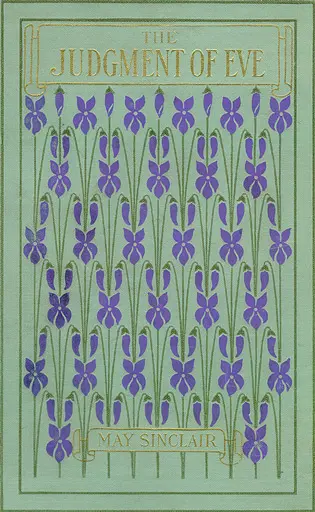
THE CLASSIC COLLECTION · 1907
"The Judgment of Eve" by May Sinclair is a novel written in the early 20th century, reflecting the intricate emotional landscapes of its characters. The story primarily centers around the character of Aggie Purcell, who grapples with the societal expectations of womanhood and motherhood in a small English town. The narrative explores themes of choice, sacrifice, and the quest for personal fulfillment against the backdrop of domestic life and romantic entanglements. The novel follows Aggie Purcell as she navigates her feelings towards two suitors: John Hurst, a well-to-do farmer, and Arthur Gatty, a gentle clerk with artistic aspirations. Initially drawn to John's stability and societal approval, Aggie eventually realizes her deeper connection with Arthur, who understands her intellectual and artistic yearnings. The turning point comes when Aggie chooses Arthur, leading to marriage and motherhood. However, as years pass, the pressures of motherhood and the sacrifices required for family life take their toll on her spirit and identity. The novel concludes poignantly with Aggie’s passing, leaving Arthur to confront the reality of their life together and the impact of her loss on their children, ultimately emphasizing the complexities of love, sacrifice, and the often unacknowledged struggles of women in society.
Introduction adapted from the source catalogue; source summaries may be automatically generated.
Free to read · English · 15,481 words · No account needed
MAKE TIME FOR A GOOD BOOK
On by default. Untick to stop anonymous reading totals. Each page counts after 10 seconds in view. How this works.
Anonymous counting is on unless you have switched it off.
Aggie always sang that song the same way. When she sang "for Baby" she gave the baby a little squeeze that made him laugh; when she sang "for me" she gave Arthur a little look that made him smile.
"'There were raisins in the cabin, sugared kisses in the hold.'"
Here the baby was kissed crescendo, prestissimo, till he laughed more than
ever.
"'The sails were made of silver and the masts were made of gold. The captain was a duck, and he cried--'"
"Quack, quack!" said Arthur. It was Daddy's part in the great play, and it made the baby nearly choke with laughter.
Arthur was on the floor, in a posture of solemn adoration somewhat out of keeping with his utterances.
"Oh, Baby!" cried Aggie, "what times we'll have when Daddy's ship comes
home!"
The intellectual life had lapsed; but only for a period. Not for a moment could they contemplate its entire extinction. It was to be resumed with imperishable energy later on; they had pledged themselves to that. Meanwhile they had got beyond the stage when Aggie would call to her husband a dozen times a day:
"Oh, Arthur, look! If you poke him in the cheek like that, he'll smile."
And Arthur would poke him in the cheek, very gently, and say: "Why, I never! What a rum little beggar he is! He's got some tremendous joke against us, you bet."
And a dialogue like this would follow: "Oh, Arthur, look, look, look, at
his little feet!"
"I say--do you think you ought to squeeze him like that?"
"Oh, he doesn't mind. He likes it. Doesn't he? My beauty--my bird!"
"He'll have blue eyes, Aggie."
"No, they'll change; they always do. And his nose is just like yours."
"I only wish I had his head of hair."
It was a terrible day for Arthur when the baby's head of hair began to come off, till Aggie told him it always did that, and it would grow again.
To-day they were celebrating the first birthday of the little son. At supper that night a solemn thought came to Aggie.
"Oh, Arthur, only think. On Arty's birthday" (they had been practising calling him "Arty" for the last fortnight) "he won't be a baby any more."
"Never mind; Arty's little sister will be having her first birthday very
soon after."
Aggie blushed for pure joy, and smiled. She hadn't thought of that. But how sad it would be for poor baby not to be the baby any more!
Your reading position is saved on this browser. Take it to another device with a library code. Reading pages adapt to text, rather than matching a printed edition.
May Sinclair

May Sinclair

May Sinclair

May Sinclair
BEHIND THE BOOK
This eBook is for the use of anyone anywhere in the United States and most other parts of the world at no cost and with almost no restrictions whatsoever. You may copy it, give it away or re-use it under the terms of the Project Gutenberg License included with this eBook or online at www.gutenberg.org. If you are not located in the United States, you will have to check the laws of the country where you are located before using this eBook. Read the source licence.
The original source file, including credits and licence, is retained by this library. Request an original-format copy at no charge. Please include the book title and Project Gutenberg identifier #19658.
KEEP YOUR CURIOSITY GOING
Coulson Kernahan

Maurice Baring
Frances Wright
Cécile Tormay

Frederic Jesup Stimson

W. H. P. (William Henry Pope) Jarvis