
Uncanny Stories
May Sinclair
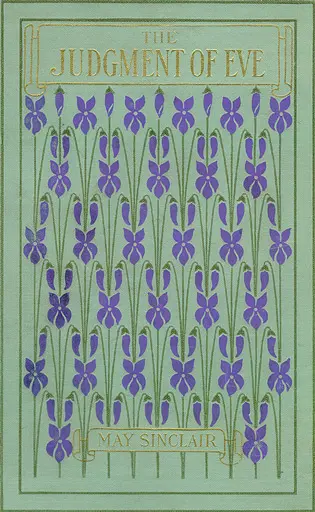
THE CLASSIC COLLECTION · 1907
"The Judgment of Eve" by May Sinclair is a novel written in the early 20th century, reflecting the intricate emotional landscapes of its characters. The story primarily centers around the character of Aggie Purcell, who grapples with the societal expectations of womanhood and motherhood in a small English town. The narrative explores themes of choice, sacrifice, and the quest for personal fulfillment against the backdrop of domestic life and romantic entanglements. The novel follows Aggie Purcell as she navigates her feelings towards two suitors: John Hurst, a well-to-do farmer, and Arthur Gatty, a gentle clerk with artistic aspirations. Initially drawn to John's stability and societal approval, Aggie eventually realizes her deeper connection with Arthur, who understands her intellectual and artistic yearnings. The turning point comes when Aggie chooses Arthur, leading to marriage and motherhood. However, as years pass, the pressures of motherhood and the sacrifices required for family life take their toll on her spirit and identity. The novel concludes poignantly with Aggie’s passing, leaving Arthur to confront the reality of their life together and the impact of her loss on their children, ultimately emphasizing the complexities of love, sacrifice, and the often unacknowledged struggles of women in society.
Introduction adapted from the source catalogue; source summaries may be automatically generated.
Free to read · English · 15,481 words · No account needed
MAKE TIME FOR A GOOD BOOK
On by default. Untick to stop anonymous reading totals. Each page counts after 10 seconds in view. How this works.
Anonymous counting is on unless you have switched it off.
"I am," said Aggie, stoutly, and there was silence.
"Anyhow," she said, presently, "whatever happens, we're not going to let
it drop."
"Rather not," said he, with incorruptible enthusiasm.
Then, just because he had left off thinking about it, he was told that in the autumn of that year he might expect a rise.
And in the autumn they were married.
Aggie left the sweet gardens, the white roads and green fields of Queningford, to live in a side street in Camden Town, in a creaking little villa built of sulphurous yellow brick furred with soot.
They had come back from their brilliant fortnight on the south coast, and were standing together in the atrocious bow-window of their little sitting room looking out on the street. A thick gray rain was falling, and a dust-cart was in sight.
"Aggie," he said, "I'm afraid you'll miss the country."
She said nothing; she was lost in thought.
"It looks rather a brute of a place, doesn't it? But it won't be so bad when the rain clears off. And you know, dear, there are the museums and picture-galleries in town, and there'll be the concerts, and lectures on all sorts of interesting subjects, two or three times a week. Then there's our Debating Society at Hampstead--just a few of us who meet together to discuss big questions. Every month it meets, and you'll get to know all the intellectual people--"
Aggie nodded her head at each exciting item of the programme as he reeled it off. His heart smote him; he felt that he hadn't prepared her properly for Camden Town. He thought she was mourning the first perishing of her illusions.
His voice fell, humbly. "And I really think, in time, you know, you won't
find it quite so bad."
She turned on him the face of one risen rosy from the embraces of her dream. She put a hand on each of his shoulders, and looked at him with shining eyes.
"Oh, Arthur, dear, it's all too beautiful. I couldn't say anything, because I was so happy. Come, and let's look at everything all over again."
And they went, and looked at everything all over again, reviving the delight that had gone to the furnishing of that innocent interior. She cried out with joy over the cheap art serges, the brown-paper backgrounds, the blue-and-gray drugget, the oak chairs with their rush bottoms, the Borne-Jones photogravures, the "Hope" and the "Love Leading Life," and the "Love Triumphant." Their home would be the home of a material poverty, but to Aggie's mind it was also a shrine whose austere beauty sheltered the priceless spiritual ideal.
Your reading position is saved on this browser. Take it to another device with a library code. Reading pages adapt to text, rather than matching a printed edition.
May Sinclair

May Sinclair

May Sinclair

May Sinclair
BEHIND THE BOOK
This eBook is for the use of anyone anywhere in the United States and most other parts of the world at no cost and with almost no restrictions whatsoever. You may copy it, give it away or re-use it under the terms of the Project Gutenberg License included with this eBook or online at www.gutenberg.org. If you are not located in the United States, you will have to check the laws of the country where you are located before using this eBook. Read the source licence.
The original source file, including credits and licence, is retained by this library. Request an original-format copy at no charge. Please include the book title and Project Gutenberg identifier #19658.
KEEP YOUR CURIOSITY GOING
Coulson Kernahan

Maurice Baring
Frances Wright
Cécile Tormay

Frederic Jesup Stimson

W. H. P. (William Henry Pope) Jarvis