
Uncanny Stories
May Sinclair
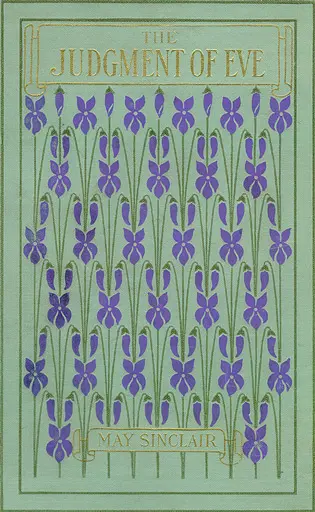
THE CLASSIC COLLECTION · 1907
"The Judgment of Eve" by May Sinclair is a novel written in the early 20th century, reflecting the intricate emotional landscapes of its characters. The story primarily centers around the character of Aggie Purcell, who grapples with the societal expectations of womanhood and motherhood in a small English town. The narrative explores themes of choice, sacrifice, and the quest for personal fulfillment against the backdrop of domestic life and romantic entanglements. The novel follows Aggie Purcell as she navigates her feelings towards two suitors: John Hurst, a well-to-do farmer, and Arthur Gatty, a gentle clerk with artistic aspirations. Initially drawn to John's stability and societal approval, Aggie eventually realizes her deeper connection with Arthur, who understands her intellectual and artistic yearnings. The turning point comes when Aggie chooses Arthur, leading to marriage and motherhood. However, as years pass, the pressures of motherhood and the sacrifices required for family life take their toll on her spirit and identity. The novel concludes poignantly with Aggie’s passing, leaving Arthur to confront the reality of their life together and the impact of her loss on their children, ultimately emphasizing the complexities of love, sacrifice, and the often unacknowledged struggles of women in society.
Introduction adapted from the source catalogue; source summaries may be automatically generated.
Free to read · English · 15,481 words · No account needed
MAKE TIME FOR A GOOD BOOK
On by default. Untick to stop anonymous reading totals. Each page counts after 10 seconds in view. How this works.
Anonymous counting is on unless you have switched it off.
They found a sheltered place for Aggie to sit in, while Arthur lay at her feet and read aloud to her. He read "Abt Vogler," "Prospice," selections from "The Death in the Desert" (the day being Sunday); and then, with a pause and a shy turning of the leaves, and a great break in his voice, "Oh, Lyric Love, Half Angel and Half Bird," through to the end.
Their hearts beat very fast in the silence afterwards.
He turned to the fly-leaf where he had inscribed her name.
"I should like to have written something more. May I?"
"Oh yes. Please write anything you like."
And now the awful question for young Arthur was: Whatever should he write? "With warmest regards" was too warm; "kind regards" were too cold; "good wishes" sounded like Christmas or a birthday; "remembrances" implied that things were at an end instead of a beginning. All these shades, the warmth, the reticence, the inspired audacity, might be indicated under the veil of verse. If he dared--
"I wish," said Aggie, "you'd write me something of your own." (She knew he
did it.)
What more could he want than that she should divine him thus?
For twenty minutes (he thought they were only seconds), young Arthur lay flat on his stomach and brooded over the Browning. Aggie sat quiet as a mouse, lest the rustle of her gown should break the divine enchantment. At last it came.
"Dear, since you loved this book, it is your own--" That was how it began. Long afterwards Arthur would turn pale when he thought of how it went on; for it was wonderful how bad it was, especially the lines that had to rhyme.
He did not know it when he gave her back the book.
She read it over and over again, seeing how bad it was, and not caring. For her the beginning, middle, and end of that delicate lyric were in the one word "Dear."
"Do you mind?" He had risen and was standing over her as she read.
"Mind?"
"What I've called you?"
She looked up suddenly. His face met hers, and before she knew it Aggie's
initiation came.
"Ah," said Arthur, rising solemn from the consecration of the primal kiss, and drawing himself up like a man for the first time aware of his full stature, "that makes that seem pretty poor stuff, doesn't it?"
Young Arthur had just looked upon Love himself, and for that moment his vision was purged of vanity.
"Not Browning?" asked Aggie, a little anxiously.
"No--Not Browning. Me. Browning could write poetry. I can't. I know that
now."
Your reading position is saved on this browser. Take it to another device with a library code. Reading pages adapt to text, rather than matching a printed edition.
May Sinclair

May Sinclair

May Sinclair

May Sinclair
BEHIND THE BOOK
This eBook is for the use of anyone anywhere in the United States and most other parts of the world at no cost and with almost no restrictions whatsoever. You may copy it, give it away or re-use it under the terms of the Project Gutenberg License included with this eBook or online at www.gutenberg.org. If you are not located in the United States, you will have to check the laws of the country where you are located before using this eBook. Read the source licence.
The original source file, including credits and licence, is retained by this library. Request an original-format copy at no charge. Please include the book title and Project Gutenberg identifier #19658.
KEEP YOUR CURIOSITY GOING
Coulson Kernahan

Maurice Baring
Frances Wright
Cécile Tormay

Frederic Jesup Stimson

W. H. P. (William Henry Pope) Jarvis