THE CLASSIC COLLECTION✦My diaries, being a personal narrative of events 1888-1914, Part 2 (1900-1914)CLASSIC FREE BOOKS
My diaries, being a personal narrative of events 1888-1914, Part 2 (1900-1914)
Wilfrid Scawen Blunt
THE CLASSIC COLLECTION · 1898
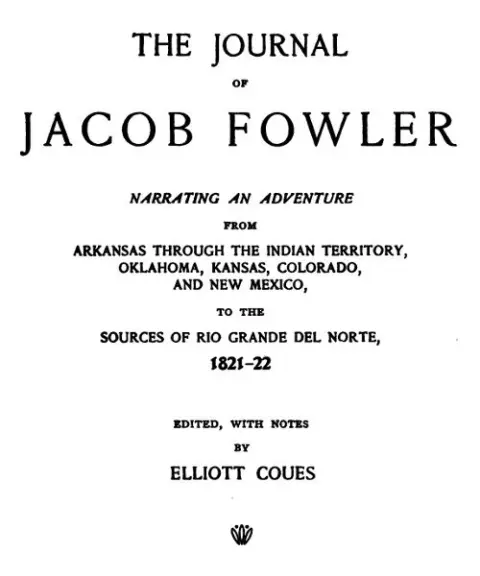
"The Journal of Jacob Fowler" by Jacob Fowler is a historical account documenting a remarkable journey through the American West during the early 19th century. The narrative covers Fowler's expedition from Fort Smith through various territories, including Arkansas, Oklahoma, Kansas, Colorado, and New Mexico, in 1821-22. The text provides a firsthand account of the challenges faced and observations made by the author and his companions as they navigate uncharted territories and encounter both natural obstacles and indigenous peoples. The opening of the journal introduces readers to the initial stages of this adventurous journey, beginning on September 6, 1821. Jacob Fowler describes crossing rivers, traversing rich lands, and encountering both wildlife and challenging terrain, often while battling harsh weather conditions. As the party progresses, they set up camps, forage for food, and contend with the perils of travel, such as losing pack animals and maintaining supplies. The narrative is characterized by Fowler's detailed descriptions and personal reflections, immersing readers in the hardships and triumphs of early American exploration.
Introduction adapted from the source catalogue; source summaries may be automatically generated.
Free to read · English · 48,766 words · No account needed
MAKE TIME FOR A GOOD BOOK
On by default. Untick to stop anonymous reading totals. Each page counts after 10 seconds in view. How this works.
Anonymous counting is on unless you have switched it off.
[62] Timpas creek, about midway between La Junta and Rocky Ford, Otero Co. See Pike, ed. of 1895, p. 448.
[63] In the wide low bottom some 4 or 5 m. below Catlin, Otero Co., and about twice that distance short of the Apishapa river. See Pike, ed. of 1895, p. 448.
[64] Apishapa river, now crossed by the railroad 4½ m. above the station Catlin, already named. Camp said to be 5 m. above this river. See Pike, ed. of 1895, p. 448.
[65] This Indian camp, of which we shall hear more, appears from the indications given to have been on the N. side of the Arkansaw, a little over the border of Otero Co., about half way between Fowler’s last camp and Nepesta, Pueblo Co.
[66] Ietans—Comanches.
[67] James Monroe, then President of the United States.
[68] San Antonio, Tex.
[69] Pueblo de Taos, N. M.
[70] Major S. H. Long, whose expedition came down the Arkansaw and Canadian rivers in 1820. The “Predesent” above said is of course President Monroe.
[71] To a position 2 or 3 m. beyond Nepesta, and about 5 m. short of
Huerfano river.
[72] The Huerfano or Orphan river, falling into the Arkansaw as said, opposite the station Booneville on the railroad. See Pike, ed. of 1895, p. 448, for this river, which is his “2nd Fork.” Among the mangled names found in print are Rio Walfano of Farnham, Travels, 1843, p. 41; and, most curious of all, Wharf creek of Long’s Exped., ii, 1823, p. 59, where the innocent reader is informed that the Rio Huerfano “is called by the Spaniards Wharf creek, probably from the circumstance of its washing perpendicular precipices of moderate height”!
[73] From camp at a point given on the 25th as 3 m. above the Huerfano, to-day’s 5 m. would take Fowler about 3 m. short of St. Charles river. He passes opposite the mouth of Chico creek, as duly noted on the 27th. See Pike, ed. of 1895, p. 451.
[74] At this point in the MS. the handwriting changes, Fowler’s giving way to that of Colonel Glenn, who writes in a firm and clear hand. The reader will also notice the difference in the spelling and syntax of what now follows, to the middle of the account of Dec. 31.
[75] At this point Fowler resumes his own pen, but Colonel Glenn’s story continues, apparently by dictation to Fowler, to the end of the entry for Jan. 1, 1822.
[76] Santa Fé, N. M.—End of Colonel Glenn’s story, in Fowler’s
handwriting.
[77] Fontaine qui Bouille of the French, Boiling Spring river or creek, present Fountain river or creek, site of the city of Pueblo. This river is Fontaine-qui-bouit in Frémont, Fontequebouir in Farnham, Rio Almagre of the Spanish, and forms one of the Grand Forks of Pike. See Pike, ed. of 1895, p. 452, etc.
Your reading position is saved on this browser. Take it to another device with a library code. Reading pages adapt to text, rather than matching a printed edition.
BEHIND THE BOOK
This eBook is for the use of anyone anywhere in the United States and most other parts of the world at no cost and with almost no restrictions whatsoever. You may copy it, give it away or re-use it under the terms of the Project Gutenberg License included with this eBook or online at www.gutenberg.org. If you are not located in the United States, you will have to check the laws of the country where you are located before using this eBook. Read the source licence.
The original source file, including credits and licence, is retained by this library. Request an original-format copy at no charge. Please include the book title and Project Gutenberg identifier #62018.
KEEP YOUR CURIOSITY GOING
Wilfrid Scawen Blunt
Wilfrid Scawen Blunt

E. W. (Edgar Watson) Howe
Cécile Tormay

Moritz Busch
John L. Ransom