THE CLASSIC COLLECTION✦My diaries, being a personal narrative of events 1888-1914, Part 2 (1900-1914)CLASSIC FREE BOOKS
My diaries, being a personal narrative of events 1888-1914, Part 2 (1900-1914)
Wilfrid Scawen Blunt
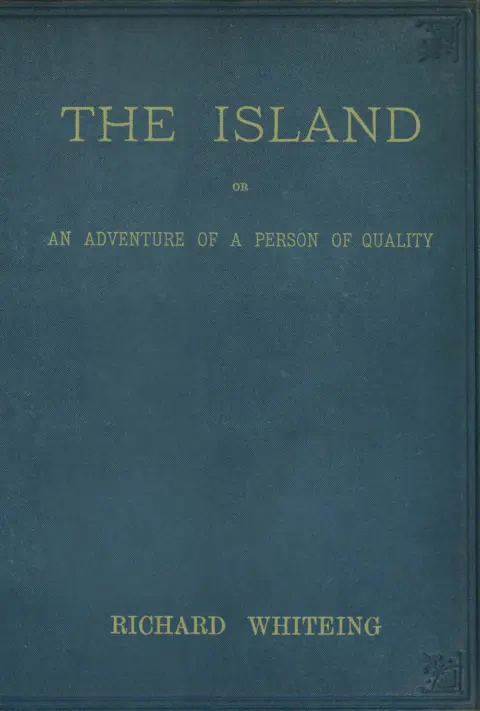
THE CLASSIC COLLECTION · 1899
"The Island: Or, An Adventure of a Person of Quality" by Richard Whiteing is a novel written in the late 19th century. The story begins with an unnamed protagonist who finds himself awash in existential discontent and escapes London for a journey across Europe, ultimately leading to his landing on a deserted Pacific island. There, he encounters a woman named Victoria, and together they navigate the complexities of civilization and their relationship. The opening of the novel introduces us to the narrator, who experiences a crisis of identity amid the bustling life of London. Feeling out of focus and disconnected from the world around him, he decides to leave, traveling first to Paris before eventually finding himself shipwrecked on an uncharted island. As he grapples with his isolation and the existential weight of civilization's burdens, he meets Victoria, a striking native woman, and begins to explore the new dynamics of life, culture, and connection in this secluded paradise. This beginning sets the stage for a deeper exploration of human nature, societal constructs, and the yearning for meaning beyond the confines of societal expectations.
Introduction adapted from the source catalogue; source summaries may be automatically generated.
Free to read · English · 55,053 words · No account needed
MAKE TIME FOR A GOOD BOOK
On by default. Untick to stop anonymous reading totals. Each page counts after 10 seconds in view. How this works.
Anonymous counting is on unless you have switched it off.
He had now settled himself for a long night’s talk, and, all things considered, I was not loath to find him a listener. There might be still more in it, I thought, than even he perceived; and, as he had looked beyond the showman, others, who were not without a lingering tenderness for a beauty of life fast perishing of the malady of use, might look beyond him. Besides, now that one was fairly awake, it was so sweet to feel alive again. For, beyond the gleam of his candle, I caught a glimpse of the starry sky, and his monotone was sometimes tempered to the ear by the note of a night bird.
The bird seemed to put him in a rage. ‘Just so! Just so!’ he said with severity, apostrophising the unseen musician through the open casement. ‘How should you know better, when those who ought to know have been encouraging you all their lives? Did you ever read a book called “The Birds of the Poets,” my friend? It is just heart-breaking, if you take it from the point of view of an employer of labour. All this singing--why do they do it? Just because there’s nobody to set them to work. Who does most whistling? The loafer at the street corner. It’s pent up energy, sir, that must find a vent. That’s why there’s so much fuss about feathered love-making: they’ve got to kill time. Develop industry, and you’ll soon have less billing and cooing. Look at Spain and Italy--why it was nothing but that sort of thing till they went into manufactures. There ain’t much guitar playing in Catalonia now; and you’d better not go to Bilbao, if you’ve a taste for the castanets. Men have got to keep themselves employed; and, if they are not making cottons, or smelting iron, they’ll be fighting duels, or running off with one another’s wives. The animal kingdom is full of wasted power, that’s my point. You can’t use all of it: we haven’t got to that pitch of intelligence; but you can begin to try. Did you ever notice a cloud hanging low over the water, not a yard away, and stretching, perhaps, for miles and miles? What do you think it is? Young shrimps bounding up and down, just to show they’re glad--millions, billions, trillions of ’em. There’s power for you, if you could work it up. I don’t say you could, in this case; I don’t want to be fanciful. I only say what a fine thing, if you could: let us talk like practical men. See how the dog has sneaked out of industry. One time he used to earn his own dinner by roasting his master’s; but that’s all over now. I don’t say he costs less than the roasting-jack, but I’m talking of the principle of the thing. What is he now? A machine for licking the hand of his owner, and for barking when visitors pull the bell. It ain’t as though he washed your hand--you’ve got to wash it after him, instead--and if the help is too deaf to hear the bell, she will be too deaf to hear the dog. The dog is a humbug, and his show of affection is only a way of fooling us out of a free lunch. What does it amount to--all this running to and fro after nothing, and all this jumping about? Sheer waste of power. The Dutchmen and the Esquimaux are the only wise people; they turn it to account. Put him in harness, and he’ll soon leave off pawing your pants. As for cats, I am ashamed of them, and I am more ashamed of the human beings that encourage them in their profitless ways. In most houses, they don’t even catch the mice: it’s all done with traps. A pet animal of any kind is an economic monstrosity. Do you know how I interpret the singing of birds in their cages? They are sniggering at man to think they have done him out of their board. There’s a use for everything; why, even tortoises, if you know how to manage them, will tell you when it’s going to rain. Sir, I want to make idleness a caution to the whole animal creation--even a caution to snakes. The bloodhound--send him back into the Police service, and give him a blue overcoat for uniform, if you like. There’s power everywhere; why you’ve a perfect sledge hammer in every alligator’s tail! How about the weight of the hippopotamus for crushing cane? I’d just turn your Zoological Gardens into a factory, by thunder I would! and make every blessed animal do something for his living. No song, no supper. The squirrels would do for thread winders; the giraffes, for reaching things off shelves. You’d lose by it at starting, just as you do by prison labour, but you’d soon find out how to make it pay.’
Your reading position is saved on this browser. Take it to another device with a library code. Reading pages adapt to text, rather than matching a printed edition.
BEHIND THE BOOK
This eBook is for the use of anyone anywhere in the United States and most other parts of the world at no cost and with almost no restrictions whatsoever. You may copy it, give it away or re-use it under the terms of the Project Gutenberg License included with this eBook or online at www.gutenberg.org. If you are not located in the United States, you will have to check the laws of the country where you are located before using this eBook. Read the source licence.
The original source file, including credits and licence, is retained by this library. Request an original-format copy at no charge. Please include the book title and Project Gutenberg identifier #73620.
KEEP YOUR CURIOSITY GOING
Wilfrid Scawen Blunt
Wilfrid Scawen Blunt

E. W. (Edgar Watson) Howe
Coulson Kernahan

Maurice Baring
Frances Wright