THE CLASSIC COLLECTION✦My diaries, being a personal narrative of events 1888-1914, Part 2 (1900-1914)CLASSIC FREE BOOKS
My diaries, being a personal narrative of events 1888-1914, Part 2 (1900-1914)
Wilfrid Scawen Blunt
THE CLASSIC COLLECTION · 1899
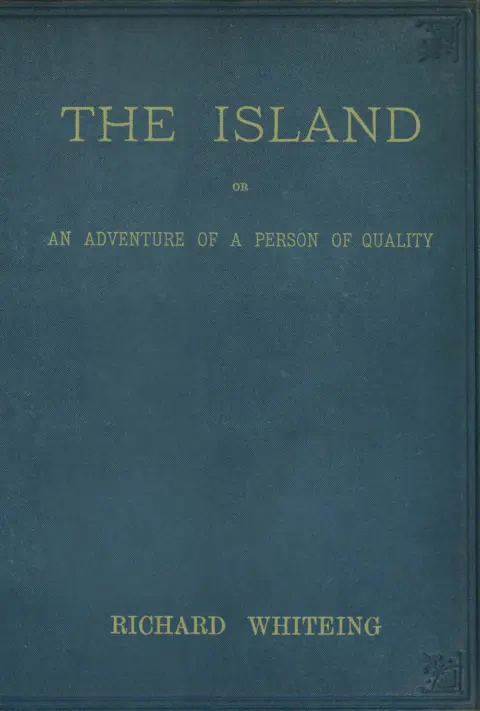
"The Island: Or, An Adventure of a Person of Quality" by Richard Whiteing is a novel written in the late 19th century. The story begins with an unnamed protagonist who finds himself awash in existential discontent and escapes London for a journey across Europe, ultimately leading to his landing on a deserted Pacific island. There, he encounters a woman named Victoria, and together they navigate the complexities of civilization and their relationship. The opening of the novel introduces us to the narrator, who experiences a crisis of identity amid the bustling life of London. Feeling out of focus and disconnected from the world around him, he decides to leave, traveling first to Paris before eventually finding himself shipwrecked on an uncharted island. As he grapples with his isolation and the existential weight of civilization's burdens, he meets Victoria, a striking native woman, and begins to explore the new dynamics of life, culture, and connection in this secluded paradise. This beginning sets the stage for a deeper exploration of human nature, societal constructs, and the yearning for meaning beyond the confines of societal expectations.
Introduction adapted from the source catalogue; source summaries may be automatically generated.
Free to read · English · 55,053 words · No account needed
MAKE TIME FOR A GOOD BOOK
On by default. Untick to stop anonymous reading totals. Each page counts after 10 seconds in view. How this works.
Anonymous counting is on unless you have switched it off.
‘See here,’ he said, propping himself up with his pillow, and, to my dismay, preparing for a long talk. ‘See here: I’ll tell you something; that insect is undeveloped Power.’
‘Well, what of that?’
‘Can’t you see?’ he asked in a tone expressive of his certainty that I
could not.
I gave him the desired negative, and he went on.
‘That insect means half the motive power in Nature clean thrown away.’
‘I do not follow you, as yet.’
‘I dare say, but you will come to it. How about all the beasts of the field and the rest of them being created for the service of man?’
‘How about it!’ I was still only half awake.
‘Well, they skulk their work, that’s all. Half of them do nothing for their keep; do you begin to follow me now?’
‘How should they?’
‘Set them to work; that’s the idea.’
I was wide awake now. It seemed like a disclosure of some new invention in crime; and, so far, it was appropriate to the midnight hour, the darkness, and the deadly quiet of the scene.
‘You surely never mean to say that you want to put the song birds into
factories?’
‘That is just what I do mean. It is only a fad of mine at present, but I shall work it out to something by-and-by. Did you ever see the performing fleas?’
‘No; it is the only thing I have not seen.’
‘Well, sir, I have, and, from that moment, I was a changed man. It is a mere toy with the showmen; to a man that can put two and two together, it is what the fall of the apple was to Newton. The first time I saw it, I did not sleep for three nights. I went into a dime show in Broadway, and there were these things, along with a Circassian lady, and, I believe, a calculating boy. I began with the fleas, and I never gave another thought to the rest. There were a dozen of them, of various sizes and nationalities--English fleas, Russian fleas, American, and so on; and there was a good deal of patter, that meant nothing, as to what each nationality could do, all winding up, of course, in honour of the Stars and Stripes. The Russian flea was big, but lazy; the English flea tough, but obstinate; the American flea all sprightliness, audacity, energy, and good sense. I soon stopped that, by making believe I was a Scotchman, when he produced a creature from its bed of wadding in a pill-box, and said it came from Mull, and was the smartest thing in his stables. I gave him a dollar, and asked him not to play the fool, and he fell to business at once. I wanted to get at the principle of the thing, you understand. The creatures were harnessed with a woman’s hair--a man’s would have been too coarse--tied round that dip in their bodies that makes a natural waist. Then, when you had them fast in this way by one end of the hair, you put the other end to whatever you wanted to set going--Queen Victoria’s coach, in cardboard, or the miller’s cart. The flea naturally tried to get away, and that was your motive power. When you wanted him to turn the treadmill, you put him up against the wheel, just like his betters and, the faster he tried to run away, the faster the thing went round. That was always the principle of it; utilise the movement of flight--a new escapement beyond anything in the watchmaker’s art. Well, sir, this showman saw nothing beyond his fleas, but, at a glance, I saw ahead of them to all animal life. Make the animals earn their living, I said to myself; work up your reflex action for the benefit of man. It would solve the labour problem: no more strikes! When once I had got my thoughts in that groove, I seemed to see nothing but loafing idleness in all Nature. Take even the working animals; what do many of them do for Man? There’s nothing serious in beaver dams, for instance, from that point of view. They are generally a mere obstruction, for want of an intelligent foreman of the works. And as for the ants, though I admit they are too small to count in business, why flatter them up? I say nothing of their useless fighting; but did an ant ever make anything to eat, or anything to wear? There, sir, when I got that idea into my head, I couldn’t read the poets, for sheer disgust at the way in which they wrote about these creatures, and missed the real point. It was the same when I went to a menagerie, and I always went when I could. It made me real sad. Think of the waste of power in a cage of apes! Nothing to be done with them but nut-cracking, and swinging on the horizontal bar--never tell me!’
Your reading position is saved on this browser. Take it to another device with a library code. Reading pages adapt to text, rather than matching a printed edition.
BEHIND THE BOOK
This eBook is for the use of anyone anywhere in the United States and most other parts of the world at no cost and with almost no restrictions whatsoever. You may copy it, give it away or re-use it under the terms of the Project Gutenberg License included with this eBook or online at www.gutenberg.org. If you are not located in the United States, you will have to check the laws of the country where you are located before using this eBook. Read the source licence.
The original source file, including credits and licence, is retained by this library. Request an original-format copy at no charge. Please include the book title and Project Gutenberg identifier #73620.
KEEP YOUR CURIOSITY GOING
Wilfrid Scawen Blunt
Wilfrid Scawen Blunt

E. W. (Edgar Watson) Howe
Coulson Kernahan

Maurice Baring
Frances Wright