THE CLASSIC COLLECTION✦A dead man’s diaryCLASSIC FREE BOOKS
A dead man’s diary
Coulson Kernahan
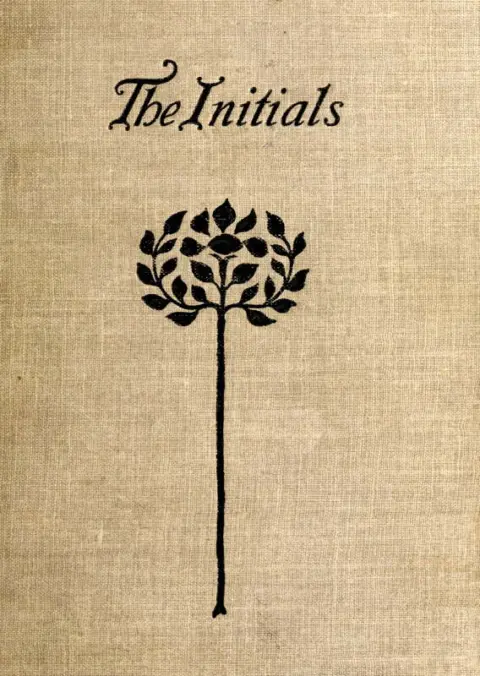
THE CLASSIC COLLECTION · 1892
"The Initials: A Story of Modern Life" by Baroness Jemima Montgomery Tautphoeus is a novel written in the mid-19th century. The narrative is likely to explore themes of travel, identity, and the intricacies of social interactions among characters navigating the cultural landscape of Germany. The main character appears to be Hamilton, a young English traveler whose journey becomes intertwined with the lives of several German characters, including a mysterious person or family denoted by the initials "A. Z." At the start of the novel, we meet Hamilton, who is staying at a prestigious hotel in Munich but feels discontent with his travels, likening them to a lack of excitement due to the absence of true adventures. After receiving a letter from an enigmatic "A. Z." inviting him to visit Seon, Hamilton decides to follow up on this intriguing correspondence, unsure about the identity of the writer. His journey takes an unexpected turn when he meets the Rosenberg family, including two attractive sisters, and realizes that his acquaintance with them may lead to romantic entanglements. As Hamilton grapples with misunderstandings around the letter, he finds himself entering a vibrant world of social connections and German traditions, setting the stage for further explorations of character dynamics and cultural exchanges.
Introduction adapted from the source catalogue; source summaries may be automatically generated.
Free to read · English · 184,899 words · No account needed
MAKE TIME FOR A GOOD BOOK
On by default. Untick to stop anonymous reading totals. Each page counts after 10 seconds in view. How this works.
Anonymous counting is on unless you have switched it off.
“Because I have not courage; I am always afraid in the dark.”
“But it is not dark in the cloisters; there is the most beautiful moonlight imaginable! Come.”
“Would not to-morrow at six o’clock, in the garden, do as well?”
“I cannot hear you,” answered Hamilton, becoming suddenly deaf; “and you had better not speak too distinctly, as you may be heard by some one crossing the passage.”
“To-morrow morning in the garden,” she softly repeated, descending close
to where he stood.
“I have been waiting nearly an hour!” was the answer which he gave, in order to change her thoughts.
“I could not help it; Hildegarde has only just fallen asleep.”
“We must not remain here, or we shall certainly be overheard. Come,” he whispered, drawing her arm within his.
“I cannot—I cannot—to-morrow before breakfast, or when you will; but not now. Let me go! oh, let me go!”
And he would have let her go; but the thoughts of Zedwitz’s raillery made him resolute. His first thought was to carry her off; but that appearing too strong a measure, he contented himself with holding her hand fast while pouring forth a volley of reproaches.
“And now,” he concluded with an affectation of reasoning, “now that you are so far, why retreat? Everyone is in bed; no human being in the cloisters. I ask but five minutes, but I would speak with you alone—unrestrained.”
And while he was speaking he had contrived to make her move along the passage. A moment after, they had reached the quadrangle, and stood in silent admiration of the calm seclusion of the spot. The echo of their footsteps was the only sound they heard; and the bright moonbeams not only lighted the monuments erected against the wall, but rendered almost legible the epitaphs of those whose tombstones composed the pavement.
He led Crescenz to a seat near the monument to the founder of the monastery, Count Aribo, and waited for her to speak; she had, however, no inclination to begin, but sat in a deep revery, looking fixedly on the ground; and, as it seemed, more inclined to be sentimental than communicative.
Hamilton, more conscious than she was of the impropriety of her situation, and fearing that they might be seen by some of the servants, at length exclaimed, with some impatience:
“Do not let us lose these precious moments, but tell me at once what has
occurred.”
Crescenz became agitated, covered her face with her hands, but remained
silent.
“For heaven’s sake tell me what is the matter?”
“I am very, very unhappy!” sobbed the poor girl.
“But why—why are you unhappy?”
Your reading position is saved on this browser. Take it to another device with a library code. Reading pages adapt to text, rather than matching a printed edition.
BEHIND THE BOOK
This eBook is for the use of anyone anywhere in the United States and most other parts of the world at no cost and with almost no restrictions whatsoever. You may copy it, give it away or re-use it under the terms of the Project Gutenberg License included with this eBook or online at www.gutenberg.org. If you are not located in the United States, you will have to check the laws of the country where you are located before using this eBook. Read the source licence.
The original source file, including credits and licence, is retained by this library. Request an original-format copy at no charge. Please include the book title and Project Gutenberg identifier #58908.
KEEP YOUR CURIOSITY GOING
Coulson Kernahan

Maurice Baring
Frances Wright
Cécile Tormay

Frederic Jesup Stimson

W. H. P. (William Henry Pope) Jarvis