THE CLASSIC COLLECTION✦A dead man’s diaryCLASSIC FREE BOOKS
A dead man’s diary
Coulson Kernahan
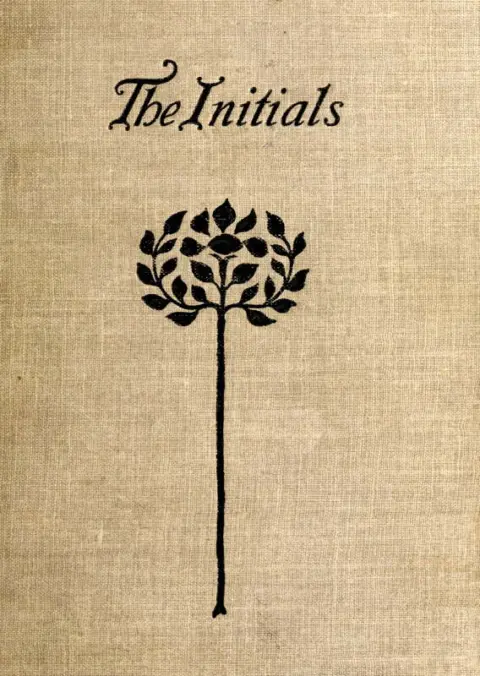
THE CLASSIC COLLECTION · 1892
"The Initials: A Story of Modern Life" by Baroness Jemima Montgomery Tautphoeus is a novel written in the mid-19th century. The narrative is likely to explore themes of travel, identity, and the intricacies of social interactions among characters navigating the cultural landscape of Germany. The main character appears to be Hamilton, a young English traveler whose journey becomes intertwined with the lives of several German characters, including a mysterious person or family denoted by the initials "A. Z." At the start of the novel, we meet Hamilton, who is staying at a prestigious hotel in Munich but feels discontent with his travels, likening them to a lack of excitement due to the absence of true adventures. After receiving a letter from an enigmatic "A. Z." inviting him to visit Seon, Hamilton decides to follow up on this intriguing correspondence, unsure about the identity of the writer. His journey takes an unexpected turn when he meets the Rosenberg family, including two attractive sisters, and realizes that his acquaintance with them may lead to romantic entanglements. As Hamilton grapples with misunderstandings around the letter, he finds himself entering a vibrant world of social connections and German traditions, setting the stage for further explorations of character dynamics and cultural exchanges.
Introduction adapted from the source catalogue; source summaries may be automatically generated.
Free to read · English · 184,899 words · No account needed
MAKE TIME FOR A GOOD BOOK
On by default. Untick to stop anonymous reading totals. Each page counts after 10 seconds in view. How this works.
Anonymous counting is on unless you have switched it off.
HILDEGARDE did not appear the next morning, and Hamilton breakfasted with Madame Rosenberg sitting opposite to him in a striped red and white dressing-gown; her hair, as usual, twisted up to the very roots with hair-pins, to prepare curls which, however, seldom made their appearance at home, excepting on the evenings which the Hoffmanns spent with her. She sat opposite to him, and watched while he vainly endeavoured to improve his coffee by adding alternately cream and sugar. “One never enjoys a breakfast at this early hour,” she observes at length, “the coffee is, however, quite as good as usual; I made it myself.”
“I have no doubt of it,” said Hamilton, “but the fact is, I am so accustomed to your daughter Hildegarde’s preparing it for me, that I do not know the quantity of cream and sugar necessary—by-the-by, I hope her headache is better this morning?”
“She said so,” replied Madame Rosenberg, “but I found her so feverish, and looking so wretchedly ill, that I have forbidden her getting up until Doctor Berger sees her.”
“You do not apprehend any serious illness, I hope?”
“Oh, no—but Crescenz tells me that she slept very uneasily—had frightful dreams, and at one time during the night fancied someone intended to stab her! Such an idea! I suppose,” she added, after a pause, “you expect Count Zedwitz to call for you?”
“I believe so,” said Hamilton, absently.
“I am beginning rather to like him,” observed Madame Rosenberg.
Hamilton did not appear to hear her.
“You are going to a gay house,” she added, “at least it will be gay on such an occasion.”
“What occasion?” asked Hamilton, looking up.
“Why, did you not tell me that the only daughter was going to be married? And is not a wedding a very gay thing?”
“Not always,” said Hamilton, “for brides generally shed tears and infect the bridesmaids, and the mamma half faints, and the papa is agitated, and when the bridal party leave, the house is immensely dull, until it fill with new people again. Altogether, a wedding is a very deadly-lively festivity, excepting to the two principal actors.”
“I will prove the contrary,” said Madame Rosenberg, “you shall see how gay our wedding will be—that is, Crescenz’s! Did I tell you that it must be deferred until the carnival?”
“Not a word—I thought it was to take place before Christmas.”
“Marriages are seldom or never celebrated before Advent,” said Madame Rosenberg, “but at all events, Major Stultz’s sister has died suddenly, and he must leave for Nuremberg to-morrow.”
“I am sorry he has lost his sister,” said Hamilton, compassionately.
Your reading position is saved on this browser. Take it to another device with a library code. Reading pages adapt to text, rather than matching a printed edition.
BEHIND THE BOOK
This eBook is for the use of anyone anywhere in the United States and most other parts of the world at no cost and with almost no restrictions whatsoever. You may copy it, give it away or re-use it under the terms of the Project Gutenberg License included with this eBook or online at www.gutenberg.org. If you are not located in the United States, you will have to check the laws of the country where you are located before using this eBook. Read the source licence.
The original source file, including credits and licence, is retained by this library. Request an original-format copy at no charge. Please include the book title and Project Gutenberg identifier #58908.
KEEP YOUR CURIOSITY GOING
Coulson Kernahan

Maurice Baring
Frances Wright
Cécile Tormay

Frederic Jesup Stimson

W. H. P. (William Henry Pope) Jarvis