THE CLASSIC COLLECTION✦A dead man’s diaryCLASSIC FREE BOOKS
A dead man’s diary
Coulson Kernahan
THE CLASSIC COLLECTION · 1892
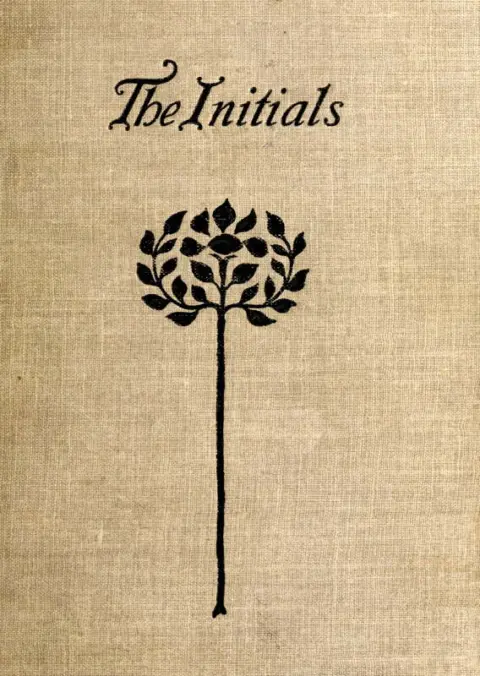
"The Initials: A Story of Modern Life" by Baroness Jemima Montgomery Tautphoeus is a novel written in the mid-19th century. The narrative is likely to explore themes of travel, identity, and the intricacies of social interactions among characters navigating the cultural landscape of Germany. The main character appears to be Hamilton, a young English traveler whose journey becomes intertwined with the lives of several German characters, including a mysterious person or family denoted by the initials "A. Z." At the start of the novel, we meet Hamilton, who is staying at a prestigious hotel in Munich but feels discontent with his travels, likening them to a lack of excitement due to the absence of true adventures. After receiving a letter from an enigmatic "A. Z." inviting him to visit Seon, Hamilton decides to follow up on this intriguing correspondence, unsure about the identity of the writer. His journey takes an unexpected turn when he meets the Rosenberg family, including two attractive sisters, and realizes that his acquaintance with them may lead to romantic entanglements. As Hamilton grapples with misunderstandings around the letter, he finds himself entering a vibrant world of social connections and German traditions, setting the stage for further explorations of character dynamics and cultural exchanges.
Introduction adapted from the source catalogue; source summaries may be automatically generated.
Free to read · English · 184,899 words · No account needed
MAKE TIME FOR A GOOD BOOK
On by default. Untick to stop anonymous reading totals. Each page counts after 10 seconds in view. How this works.
Anonymous counting is on unless you have switched it off.
“Is, then, the country so very ugly?” asked Hamilton, anticipating nothing less than an American prairie.
“Flat—very flat; but in the evening we shall have the mountains nearer.”
“You seem fond of the mountains!”
“I am a Tyrolean, and used to them. Life is not the same thing in these plains,” he answered, cracking his whip, but not touching his horses.
“A Tyrolean!” exclaimed Hamilton; “oh, then you can sing your national songs, of course. Do, pray, let me hear one of them.”
“What’s the use?” he said, shrugging his shoulders; “there’s no echo for the jodel.”
“No matter; try it at all events, and you shall have an additional glass of beer at dinner-time.”
On the strength of this promise he “lifted up his voice in song,” and shouted out a melody which there was no manner of doubt would have been “by distance made more sweet;” but which, as he leaned on the door of the carriage, and poured the whole force of his stentorian lungs into Hamilton’s face, almost made him vibrate on his seat.
“Thank you,” cried Hamilton, hastily, “thank you—that will do. I have long wished to hear a Tyrolean jodel, and am sure it must sound very well in the mountains!”
“There’s no music like it in the world,” said the man, as he seated himself again on the box; and laying aside his pipe, he continued singing for more than an hour, interrupted only by an occasional “Ho—he—hot!” addressed to his horses.
The country was indeed flat, but highly cultivated, and thickly wooded alternately—the absence of all walls or fences giving to German scenery in general the appearance of a domain; they passed through, and saw in the distance, many pretty villages, while the mountains were becoming more distinct and the scenery more interesting every hour. Had not the day been intensely sultry, Hamilton would have insisted on the head of the carriage being thrown back, and the odious rattling windows opposite to him being removed; as it was, however, the shade was agreeable, and the almost imperceptible current of air, produced by the motion of the carriage, as it blew on his face, had the somniferous effect attributed to the vampire’s wing—he slept, and so soundly that until the carriage stopped suddenly before a house on the roadside, not all the jolting and consequent thumping of his head against the hard side of the carriage could waken him; he then rubbed his eyes, stretched out his legs, and was endeavouring once more to compose himself to sleep, when the coachman informed him that they were to remain there two hours to rest and dine. He looked at his watch—it was twelve o’clock; then at the inn; it did not promise much; but near the door he caught a glimpse of a carriage in form and colour exactly resembling his own, containing, however, a number of packages which denoted female travellers. The blue bandboxes and embroidered bags decided his movements. He sprang from the carriage, and almost unconsciously ran his fingers through his hair as he entered the house. Passing through a large room filled with peasants, he reached a smaller apartment containing some narrow tables furnished at each side with benches covered with black leather cushions. At one of these tables sat three ladies, and an equal number of little boys. Hamilton had learned to bow civilly on entering a room to any persons who might be in it; after which he generally contrived to commence a conversation, and let people know that he was an Englishman; having ascertained that being one was a sort of recommendation, or at least an excuse for all sorts of eccentricity. On the present occasion his bow was returned, but no further notice taken; scarcely even a look bestowed on him; this was, however, not at all what he wished, for two of the party were young and remarkably pretty.
Your reading position is saved on this browser. Take it to another device with a library code. Reading pages adapt to text, rather than matching a printed edition.
BEHIND THE BOOK
This eBook is for the use of anyone anywhere in the United States and most other parts of the world at no cost and with almost no restrictions whatsoever. You may copy it, give it away or re-use it under the terms of the Project Gutenberg License included with this eBook or online at www.gutenberg.org. If you are not located in the United States, you will have to check the laws of the country where you are located before using this eBook. Read the source licence.
The original source file, including credits and licence, is retained by this library. Request an original-format copy at no charge. Please include the book title and Project Gutenberg identifier #58908.
KEEP YOUR CURIOSITY GOING
Coulson Kernahan

Maurice Baring
Frances Wright
Cécile Tormay

Frederic Jesup Stimson

W. H. P. (William Henry Pope) Jarvis