THE CLASSIC COLLECTION✦A dead man’s diaryCLASSIC FREE BOOKS
A dead man’s diary
Coulson Kernahan
THE CLASSIC COLLECTION · 1892
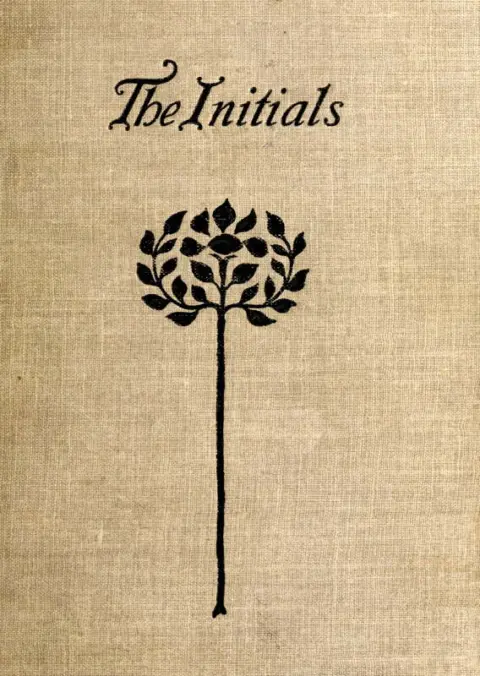
"The Initials: A Story of Modern Life" by Baroness Jemima Montgomery Tautphoeus is a novel written in the mid-19th century. The narrative is likely to explore themes of travel, identity, and the intricacies of social interactions among characters navigating the cultural landscape of Germany. The main character appears to be Hamilton, a young English traveler whose journey becomes intertwined with the lives of several German characters, including a mysterious person or family denoted by the initials "A. Z." At the start of the novel, we meet Hamilton, who is staying at a prestigious hotel in Munich but feels discontent with his travels, likening them to a lack of excitement due to the absence of true adventures. After receiving a letter from an enigmatic "A. Z." inviting him to visit Seon, Hamilton decides to follow up on this intriguing correspondence, unsure about the identity of the writer. His journey takes an unexpected turn when he meets the Rosenberg family, including two attractive sisters, and realizes that his acquaintance with them may lead to romantic entanglements. As Hamilton grapples with misunderstandings around the letter, he finds himself entering a vibrant world of social connections and German traditions, setting the stage for further explorations of character dynamics and cultural exchanges.
Introduction adapted from the source catalogue; source summaries may be automatically generated.
Free to read · English · 184,899 words · No account needed
MAKE TIME FOR A GOOD BOOK
On by default. Untick to stop anonymous reading totals. Each page counts after 10 seconds in view. How this works.
Anonymous counting is on unless you have switched it off.
“But,” she continued, bending still lower, to conceal her heightened colour, “but suppose I were not here, would you still remain?”
“Can you doubt it?” cried Hamilton, ironically. “How could I ever willingly quit this tranquil retreat? The pastoral beauties of these grounds! The society in every way so suited to my tastes and habits! The——”
“Enough, enough!” cried Hildegarde, seizing her pen, and with burning cheeks, but steady hand, she rapidly wrote a letter, while Hamilton, standing at the entrance, watched her with an odd mixture of anger and admiration. He waited until she had signed her name, and then placing his hand on the paper, asked if the letter concerned him.
“I might easily equivocate, and say no, as you are neither directly nor indirectly mentioned in it; but that would not be the truth. The letter is to Madame Hortense. I am now quite resolved to leave——this place.”
“May I read it?”
“If you insist——”
He took the letter; it was in French, short and forcibly written, as most letters are when composed under the influence of excited feelings. Hamilton’s anger increased as he read; her proud determination of manner irritated him beyond measure, and, ashamed of the agitation which his trembling hands betrayed, he first crushed and then tore it to pieces.
“My letter!” cried Hildegarde, starting up with all her former vehemence of manner. “How dare you——” she stopped and sat down, breathing quickly and audibly.
“You are in a passion,” said Hamilton.
“I was,” she replied, taking a long breath; “it is over.”
“Oh, no; be angry, I entreat; say—do something outrageous or I can have no hope of forgiveness. We have changed characters; you have learned to control your anger, and have me now in your power; be merciful!”
“Rather tell me to be candid,” she replied, rising; “writing that letter in your presence was an unnecessary display of self-control; I was not so calm as I wished you to suppose me.”
“Well, you certainly are the most honourable——”
“Don’t praise me,” she said, hastily; “I cannot listen to you when I am so dissatisfied with myself. I fancied my temper was corrected; I find it has merely not been tried.”
“Your temper is a very good one,” said Hamilton. “That you doubt yourself, and are on your guard, is rather an advantage than otherwise. I always have been considered so good-tempered, that when I feel angry it never occurs to me to conceal it, and the consequence is that you have seen me forget myself more than once.”
Your reading position is saved on this browser. Take it to another device with a library code. Reading pages adapt to text, rather than matching a printed edition.
BEHIND THE BOOK
This eBook is for the use of anyone anywhere in the United States and most other parts of the world at no cost and with almost no restrictions whatsoever. You may copy it, give it away or re-use it under the terms of the Project Gutenberg License included with this eBook or online at www.gutenberg.org. If you are not located in the United States, you will have to check the laws of the country where you are located before using this eBook. Read the source licence.
The original source file, including credits and licence, is retained by this library. Request an original-format copy at no charge. Please include the book title and Project Gutenberg identifier #58908.
KEEP YOUR CURIOSITY GOING
Coulson Kernahan

Maurice Baring
Frances Wright
Cécile Tormay

Frederic Jesup Stimson

W. H. P. (William Henry Pope) Jarvis