THE CLASSIC COLLECTION✦A dead man’s diaryCLASSIC FREE BOOKS
A dead man’s diary
Coulson Kernahan
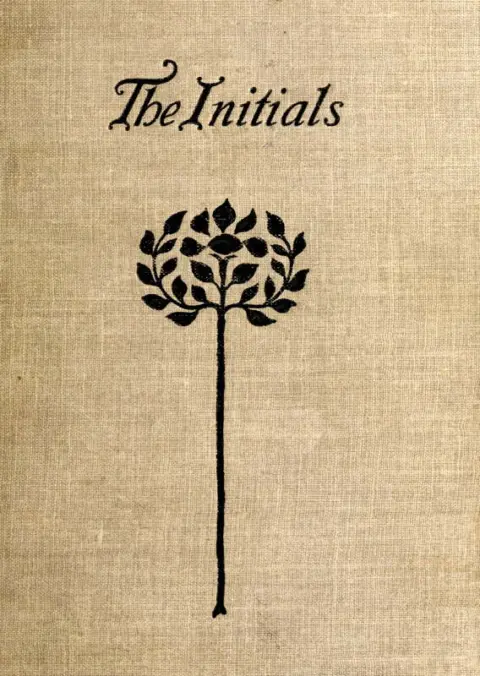
THE CLASSIC COLLECTION · 1892
"The Initials: A Story of Modern Life" by Baroness Jemima Montgomery Tautphoeus is a novel written in the mid-19th century. The narrative is likely to explore themes of travel, identity, and the intricacies of social interactions among characters navigating the cultural landscape of Germany. The main character appears to be Hamilton, a young English traveler whose journey becomes intertwined with the lives of several German characters, including a mysterious person or family denoted by the initials "A. Z." At the start of the novel, we meet Hamilton, who is staying at a prestigious hotel in Munich but feels discontent with his travels, likening them to a lack of excitement due to the absence of true adventures. After receiving a letter from an enigmatic "A. Z." inviting him to visit Seon, Hamilton decides to follow up on this intriguing correspondence, unsure about the identity of the writer. His journey takes an unexpected turn when he meets the Rosenberg family, including two attractive sisters, and realizes that his acquaintance with them may lead to romantic entanglements. As Hamilton grapples with misunderstandings around the letter, he finds himself entering a vibrant world of social connections and German traditions, setting the stage for further explorations of character dynamics and cultural exchanges.
Introduction adapted from the source catalogue; source summaries may be automatically generated.
Free to read · English · 184,899 words · No account needed
MAKE TIME FOR A GOOD BOOK
On by default. Untick to stop anonymous reading totals. Each page counts after 10 seconds in view. How this works.
Anonymous counting is on unless you have switched it off.
“I suspect your mother has a better opinion of him than he deserves,” whispered Major Stultz. Crescenz, however, shook her head so incredulously, or so coquettishly, that he added, “Do not think me jealous; it is impossible, now that I know who is the real object of his devotion.”
“Ah, you mean Hildegarde,” said Crescenz, carelessly.
“Oh, no.”
“Who then?” asked Crescenz, turning towards him quickly, curiosity depicted in every feature, “who?”
“I can scarcely tell you—as he has chosen a married woman——”
Crescenz looked aghast. Major Stultz’s jealousy conquered his usual circumspection—the moment was too favourable for making an impression—he bent towards her and whispered, “No other than your friend, Madame Berger.”
“Impossible!”
“Certain, nevertheless. When your mother forbade his returning here, he was invited to spend his disengaged evenings at her house. He knows the Doctor well; besides, Berger is Zedwitz’s physician, and they have often met lately. Had the thing been feasible, Hamilton would, I have no doubt, have taken up his quarters in their house!”
Crescenz for once in her life seemed to think, and think deeply. All Major Stultz’s efforts to continue the conversation were fruitless; she bent her head over her work, and scarcely heard his excuses and regrets that he was going to the theatre without her. After he had left the room, there was a long pause. Hildegarde had been leaning her head on her hand for the last half hour, apparently unconscious of what was going on about her. Crescenz moved softly towards her, and on pretence of consulting her about her work, contrived to relate what she had just heard.
Hildegarde became so suddenly and remarkably pale, that Hamilton, who was in the habit of watching her, immediately perceived it, and exclaimed, “What is the matter? Are you ill?”
“Not in the least,” she answered, hastily rising and walking to the
other end of the room.
“But is it not odious?” cried Crescenz, indignantly; “she is the very last person I should have thought of!”
“And the very first I should have suspected,” said Hildegarde.
The house-bell rang, and a slight noise in the passage was followed by the entrance of the person who had been the subject of conversation. “How very odd!” exclaimed Crescenz, while Madame Berger, advancing towards Hamilton, held out her hand, saying, “A l’Anglaise; how I like your English custom of shaking hands—it is so friendly! Bon soir, Hildegarde. Give me a kiss, Cressy. Here I am, come all in the snow on foot to talk over our first ball, eh? and to arrange the party of which we spoke,” she added, turning to Hamilton.
Your reading position is saved on this browser. Take it to another device with a library code. Reading pages adapt to text, rather than matching a printed edition.
BEHIND THE BOOK
This eBook is for the use of anyone anywhere in the United States and most other parts of the world at no cost and with almost no restrictions whatsoever. You may copy it, give it away or re-use it under the terms of the Project Gutenberg License included with this eBook or online at www.gutenberg.org. If you are not located in the United States, you will have to check the laws of the country where you are located before using this eBook. Read the source licence.
The original source file, including credits and licence, is retained by this library. Request an original-format copy at no charge. Please include the book title and Project Gutenberg identifier #58908.
KEEP YOUR CURIOSITY GOING
Coulson Kernahan

Maurice Baring
Frances Wright
Cécile Tormay

Frederic Jesup Stimson

W. H. P. (William Henry Pope) Jarvis