THE CLASSIC COLLECTION✦A dead man’s diaryCLASSIC FREE BOOKS
A dead man’s diary
Coulson Kernahan
THE CLASSIC COLLECTION · 1892
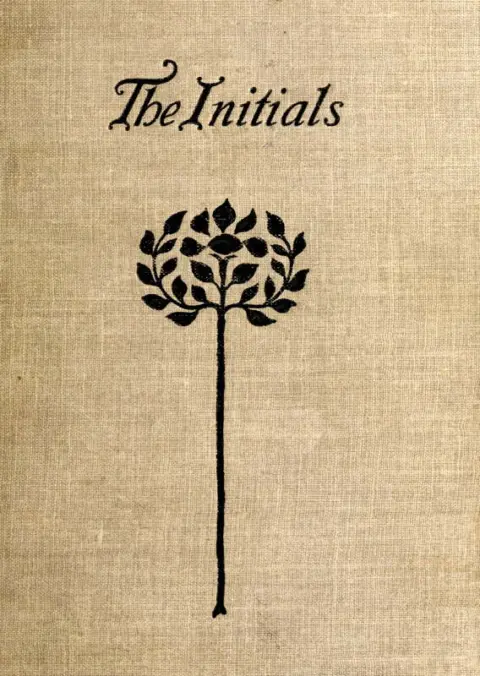
"The Initials: A Story of Modern Life" by Baroness Jemima Montgomery Tautphoeus is a novel written in the mid-19th century. The narrative is likely to explore themes of travel, identity, and the intricacies of social interactions among characters navigating the cultural landscape of Germany. The main character appears to be Hamilton, a young English traveler whose journey becomes intertwined with the lives of several German characters, including a mysterious person or family denoted by the initials "A. Z." At the start of the novel, we meet Hamilton, who is staying at a prestigious hotel in Munich but feels discontent with his travels, likening them to a lack of excitement due to the absence of true adventures. After receiving a letter from an enigmatic "A. Z." inviting him to visit Seon, Hamilton decides to follow up on this intriguing correspondence, unsure about the identity of the writer. His journey takes an unexpected turn when he meets the Rosenberg family, including two attractive sisters, and realizes that his acquaintance with them may lead to romantic entanglements. As Hamilton grapples with misunderstandings around the letter, he finds himself entering a vibrant world of social connections and German traditions, setting the stage for further explorations of character dynamics and cultural exchanges.
Introduction adapted from the source catalogue; source summaries may be automatically generated.
Free to read · English · 184,899 words · No account needed
MAKE TIME FOR A GOOD BOOK
On by default. Untick to stop anonymous reading totals. Each page counts after 10 seconds in view. How this works.
Anonymous counting is on unless you have switched it off.
Nothing could be less attractive than Major Stultz’s face at this moment, with his puffed-out crimson cheeks and wrinkled double chin—but Crescenz saw him not; with a good-humoured smile she tried to arrange still better the supporting cushion, and then stood behind him with all the immovable serenity of a Caryatid. Hildegarde walked to the window, and holding her hands at each side of her temples, endeavoured to look out into the darkness. “We shall have rain, I fear,” she observed to Hamilton, who had followed her.
He opened the window—it was a cold, cheerless night, the flickering lamps throwing unsteady gleams of light across the street.
“The weather is not very inviting,” said Hildegarde, drawing back into the warm room with a slight shudder.
Hamilton leaned out for some time in silence, and then whispered—“Who is that?” He pointed to the opposite side of the street, where a figure, muffled in a cloak, had been standing opposite the house, and now began to walk quickly away. “Do you know who that was?”
“I think it was Count Zedwitz,” answered Hildegarde.
“You knew he was there? You came to the window to see him?”
“No,” said Hildegarde, quietly.
“Then how could you know him so directly?”
“I recognised the cloak he used to wear at Seon.”
“Ah—yes—true—poor fellow!” said Hamilton.
“How inclined you are to suspect me!” said Hildegarde, reproachfully.
“One might suspect, without blaming you, for giving Zedwitz a gleam of hope to lighten his despair.”
“I should blame myself, for it would be unpardonable coquetry!”
“Coquetry! when you really love him!”
“Love him!” repeated Hildegarde, hastily—“No—yes—that is, I like him—I like him very much.”
At this moment the church bells in Munich began simultaneously to send forth loud peals. Madame Rosenberg raised herself on her pillow, and exclaimed, “What are you about, Hildegarde? Shut the window, and don’t let the cold night air into the room.”
Hamilton closed the window. When he looked round he perceived Major Stultz with the sofa-cushion on his knees, offering a profusion of thanks to Crescenz, who stood smiling beside him.
In a few minutes they were on their way to the Frauen church. It was crowded to excess, and brilliantly lighted, chiefly by the number of wax tapers which had been brought with the prayerbooks, and now burned brightly before each kneeling or sitting figure.
Your reading position is saved on this browser. Take it to another device with a library code. Reading pages adapt to text, rather than matching a printed edition.
BEHIND THE BOOK
This eBook is for the use of anyone anywhere in the United States and most other parts of the world at no cost and with almost no restrictions whatsoever. You may copy it, give it away or re-use it under the terms of the Project Gutenberg License included with this eBook or online at www.gutenberg.org. If you are not located in the United States, you will have to check the laws of the country where you are located before using this eBook. Read the source licence.
The original source file, including credits and licence, is retained by this library. Request an original-format copy at no charge. Please include the book title and Project Gutenberg identifier #58908.
KEEP YOUR CURIOSITY GOING
Coulson Kernahan

Maurice Baring
Frances Wright
Cécile Tormay

Frederic Jesup Stimson

W. H. P. (William Henry Pope) Jarvis