THE CLASSIC COLLECTION✦A dead man’s diaryCLASSIC FREE BOOKS
A dead man’s diary
Coulson Kernahan
THE CLASSIC COLLECTION · 1892
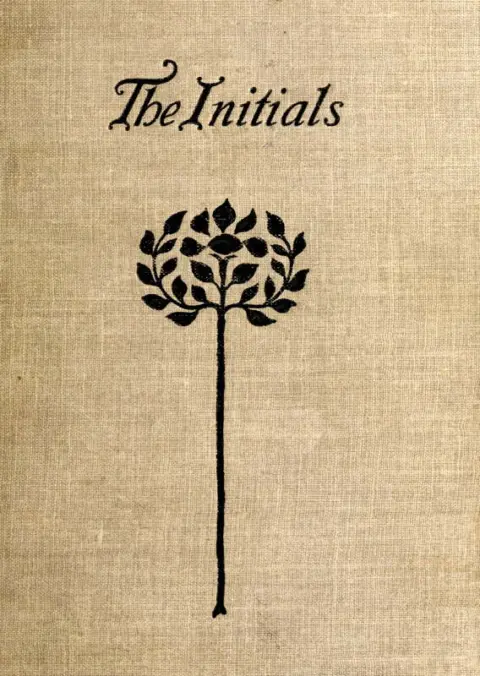
"The Initials: A Story of Modern Life" by Baroness Jemima Montgomery Tautphoeus is a novel written in the mid-19th century. The narrative is likely to explore themes of travel, identity, and the intricacies of social interactions among characters navigating the cultural landscape of Germany. The main character appears to be Hamilton, a young English traveler whose journey becomes intertwined with the lives of several German characters, including a mysterious person or family denoted by the initials "A. Z." At the start of the novel, we meet Hamilton, who is staying at a prestigious hotel in Munich but feels discontent with his travels, likening them to a lack of excitement due to the absence of true adventures. After receiving a letter from an enigmatic "A. Z." inviting him to visit Seon, Hamilton decides to follow up on this intriguing correspondence, unsure about the identity of the writer. His journey takes an unexpected turn when he meets the Rosenberg family, including two attractive sisters, and realizes that his acquaintance with them may lead to romantic entanglements. As Hamilton grapples with misunderstandings around the letter, he finds himself entering a vibrant world of social connections and German traditions, setting the stage for further explorations of character dynamics and cultural exchanges.
Introduction adapted from the source catalogue; source summaries may be automatically generated.
Free to read · English · 184,899 words · No account needed
MAKE TIME FOR A GOOD BOOK
On by default. Untick to stop anonymous reading totals. Each page counts after 10 seconds in view. How this works.
Anonymous counting is on unless you have switched it off.
“Oh, one of her daughters! They are very pretty,” said the Countess, raising her double lorgnette to her eyes—“really very pretty! and I think I have seen them somewhere before, but where I cannot recollect——”
“Oh, mamma, I know where you have seen them; they were in the same school with my cousin Thérèse, and we saw them at the examinations last year. Don’t you remember the two sisters who were so like each other? And as we drove home with the Princess N——, she said that one of them was the handsomest creature she had ever seen! I think, too, she said she had known their mother!”
“Not that person in the odious dishabille! You are dreaming, child!”
“No, no—their mother was noble—she was a Raimund, had no fortune, and married a nobody, when she was old enough to have been wiser; her relations never forgave her, but after her death they offered to educate these two girls for governesses; their father would not part with them; but when he afterwards married a rich goldsmith’s daughter, she immediately insisted on his sending them to school.”
“I believe I do remember something of this—most probably a sister of our friend Count Raimund, Agnes?”
“Mademoiselle’s name is Agnes,” said Hamilton, quickly. “Then, perhaps, you are the person who was so kind as to write me the letter which—” and he searched in his pocket for A. Z.’s letter.
“What!—what is that about a letter?” asked the old lady, hastily.
“Some mistake, mamma.”
“But he says you wrote to him, my dear.”
“No, mamma, I did not write to him; but I think it extremely probable that papa did. I know he wrote lately to an Englishman in Munich. He will be glad to see you, I am sure,” she added, turning to Hamilton; “for although he speaks English very tolerably, he finds writing it extremely difficult; and the little note in question occupied him nearly an hour. When you have breakfasted, I can go with you to his room.”
Hamilton pushed away his coffee-cup, and stood up directly.
“Agnes, Agnes!” cried her mother gravely, “you know your father is
sweating!”
“Yes, mamma, I know; but papa wishes very much to see his English correspondent. You have, probably, just returned from Graefenberg?” she said, addressing Hamilton. “Have you no letter from Preissnitz?”
“Letters from Preissnitz! I have no letter except that which I received the day before yesterday from Count Zedwitz.”
“You wish, perhaps, to speak to papa before you decide on going to
Graefenberg?”
Your reading position is saved on this browser. Take it to another device with a library code. Reading pages adapt to text, rather than matching a printed edition.
BEHIND THE BOOK
This eBook is for the use of anyone anywhere in the United States and most other parts of the world at no cost and with almost no restrictions whatsoever. You may copy it, give it away or re-use it under the terms of the Project Gutenberg License included with this eBook or online at www.gutenberg.org. If you are not located in the United States, you will have to check the laws of the country where you are located before using this eBook. Read the source licence.
The original source file, including credits and licence, is retained by this library. Request an original-format copy at no charge. Please include the book title and Project Gutenberg identifier #58908.
KEEP YOUR CURIOSITY GOING
Coulson Kernahan

Maurice Baring
Frances Wright
Cécile Tormay

Frederic Jesup Stimson

W. H. P. (William Henry Pope) Jarvis