THE CLASSIC COLLECTION✦A dead man’s diaryCLASSIC FREE BOOKS
A dead man’s diary
Coulson Kernahan
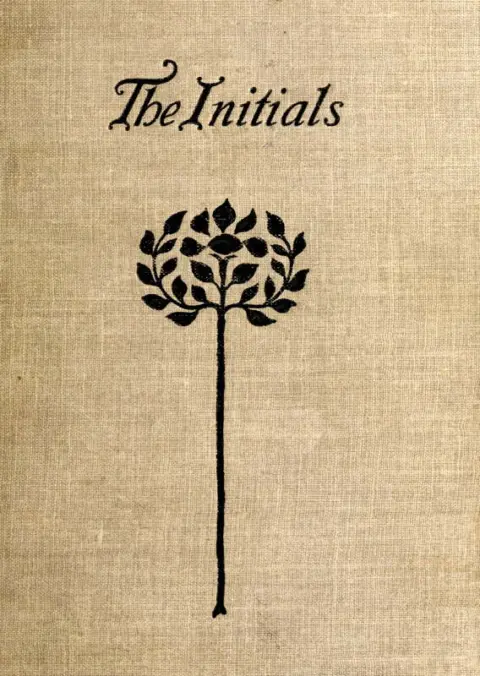
THE CLASSIC COLLECTION · 1892
"The Initials: A Story of Modern Life" by Baroness Jemima Montgomery Tautphoeus is a novel written in the mid-19th century. The narrative is likely to explore themes of travel, identity, and the intricacies of social interactions among characters navigating the cultural landscape of Germany. The main character appears to be Hamilton, a young English traveler whose journey becomes intertwined with the lives of several German characters, including a mysterious person or family denoted by the initials "A. Z." At the start of the novel, we meet Hamilton, who is staying at a prestigious hotel in Munich but feels discontent with his travels, likening them to a lack of excitement due to the absence of true adventures. After receiving a letter from an enigmatic "A. Z." inviting him to visit Seon, Hamilton decides to follow up on this intriguing correspondence, unsure about the identity of the writer. His journey takes an unexpected turn when he meets the Rosenberg family, including two attractive sisters, and realizes that his acquaintance with them may lead to romantic entanglements. As Hamilton grapples with misunderstandings around the letter, he finds himself entering a vibrant world of social connections and German traditions, setting the stage for further explorations of character dynamics and cultural exchanges.
Introduction adapted from the source catalogue; source summaries may be automatically generated.
Free to read · English · 184,899 words · No account needed
MAKE TIME FOR A GOOD BOOK
On by default. Untick to stop anonymous reading totals. Each page counts after 10 seconds in view. How this works.
Anonymous counting is on unless you have switched it off.
“Your mother seemed to think it was odd that Zedwitz always knew where you were to spend the evening. Have you ever in any way let him know, or——”
“Really, this is too much,” cried Hildegarde, angrily; “I will not be questioned in this manner—or on this subject——”
“You are right,” said Hamilton, quietly, “and I resign my most absurd office of corrector and improver. You have, however, no just cause for anger, for you not only proposed the plan yourself, but reminded me of my promise.” He leaned out of the window, and had recourse again to Fra Diavolo and the moon.
“You are a horrible tyrant!” she exclaimed after a pause, “and I suppose, if I leave your question unanswered, you will think me capable of making Count Zedwitz acquainted with all our walking-parties!”
“What matters it what I think?” said Hamilton, without turning round.
“Your question is exceedingly offensive, and yet I must answer it, and tell you that I am as much surprised as mamma at meeting him so often. If I could avoid seeing him, I should greatly prefer it.”
“Indeed!” cried Hamilton. “Then you have no wish to renew the—the——”
“None whatever,” replied Hildegarde, smiling.
“But if you think so highly of him,” persisted Hamilton, “surely you
must like him!”
“Like him!” she repeated, “why, have I not told you that I like him
exceedingly?”
“Something to that purport, certainly,” said Hamilton; “you are altogether inexplicable, and I dare not ask an explanation.”
“You have no right,” said Hildegarde; “what occurred before yesterday does not come under your cognisance.”
“I am completely at fault,” said Hamilton, in a low voice, as if reasoning with himself. “Zedwitz told me that you had said you liked him as an acquaintance, but nothing more. This, I know, is not the case; therefore there must be some misunderstanding—he suspected a prior attachment, but that seemed to me improbable.”
“Rather say impossible,” cried Hildegarde, laughing, “for the object of it must have been either Major Stultz—or you! ha, ha, ha!”
Hamilton did not laugh with her, and another long pause ensued—his jealousy, or, as he to himself termed it, his curiosity, prompted him to make another effort, and he again began: “I told Zedwitz he ought not to resign all hope; that probably the fear of opposition on the part of his family had influenced you.” He stopped, for Hildegarde bit her lip, and seemed agitated. She stood up—sat down—stood up again—and after a moment’s hesitation, said, “I do not know whether I had better tell you all or nothing.”
Your reading position is saved on this browser. Take it to another device with a library code. Reading pages adapt to text, rather than matching a printed edition.
BEHIND THE BOOK
This eBook is for the use of anyone anywhere in the United States and most other parts of the world at no cost and with almost no restrictions whatsoever. You may copy it, give it away or re-use it under the terms of the Project Gutenberg License included with this eBook or online at www.gutenberg.org. If you are not located in the United States, you will have to check the laws of the country where you are located before using this eBook. Read the source licence.
The original source file, including credits and licence, is retained by this library. Request an original-format copy at no charge. Please include the book title and Project Gutenberg identifier #58908.
KEEP YOUR CURIOSITY GOING
Coulson Kernahan

Maurice Baring
Frances Wright
Cécile Tormay

Frederic Jesup Stimson

W. H. P. (William Henry Pope) Jarvis