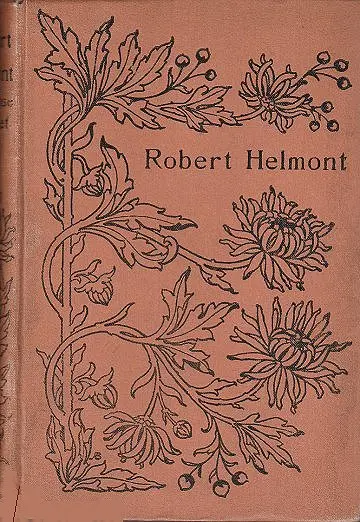
Robert Helmont: Diary of a Recluse, 1870-1871
Alphonse Daudet
THE CLASSIC COLLECTION · 1889
"The Immortal; Or, One of the 'Forty.'" by Alphonse Daudet is a novel written in the late 19th century. The story revolves around Léonard Astier-Réhu, a historian and member of the Académie Française, as he navigates the complexities of his family life, his literary ambitions, and societal expectations in Paris. This exploration offers insights into themes of ambition, familial obligations, and the contrasts between personal desires and public perception. At the start of the novel, we are introduced to the life of Léonard Astier-Réhu, who has resigned from his esteemed position as the Keeper of the Archives due to political pressures. The opening chapters depict the struggles of his family, particularly his son Paul, who is an ambitious architect facing financial difficulties amid their hollow domestic life. The dynamics between Léonard and his wife, Madame Astier, showcase a strained relationship marked by unfulfilled expectations and mutual sacrifices for their son. The narrative illustrates the themes of ambition and societal pressures, setting the stage for the unfolding drama in the lives of the Astier family and their connections to the elite circles of Parisian society.
Introduction adapted from the source catalogue; source summaries may be automatically generated.
Free to read · English · 70,267 words · No account needed
MAKE TIME FOR A GOOD BOOK
On by default. Untick to stop anonymous reading totals. Each page counts after 10 seconds in view. How this works.
Anonymous counting is on unless you have switched it off.
It was stifling in the Eighth Chamber, where the Fage case was just coming on after interminable preliminaries and great efforts on the part of influential persons to stop the proceedings. Never had this court-room, whose walls of a mouldy blue and diamond pattern in faded gilding reeked with the effluvium of rags and misery, never had this court seen squeezed on its dirty seats and packed in its passages such a press and such a crowd of fashionable and distinguished persons, so many flower-trimmed bonnets and spring costumes by the masters of millinery art, to throw into relief the dead black of the gowns and caps. People were still coming in through the entrance lobby, where the double doors were perpetually swinging as the tide flowed on, a wavy sea of thronging faces upturned beneath the whitish light of the landing. Everyone was there, all the well-known, well-worn, depressingly familiar personages that figure at every Parisian festivity, fashionable funeral, or famous ‘first night.’ There was Marguerite Oger well to the fore, and the little Countess Foder, and beautiful Mrs. Henry of the American Embassy. There were the ladies belonging to the Academic confraternity, Madame Ancein in mauve on the arm of Raverand, the leader of the bar; Madame Eviza, a bush of little roses surrounded by a busy humming swarm of would-be barristers. Behind the President’s bench was Danjou, standing with folded arms, and showing above the audience and the judges the hard angles of his regular stage-weathered countenance, everywhere to be seen during the last forty years as the type of social commonplace in all its manifold manifestations. With the exception of Astier-Réhu and Baron Huchenard, who were summoned as witnesses, he was the only Academician bold enough to face the irreverent remarks that might be expected in the speech of Fage’s counsel, Margery, the dreaded wit, who convulses the whole assembly and the bench with the mere sound of his nasal ‘Well.’ Some fun was to be expected; the whole atmosphere of the place announced it, the erratic tilt of the barristers’ caps, the gleam in the eyes and curl in the corners of the mouths of people giving one another little anticipatory smiles. There were endless anecdotes current about the achievements in gallantry of the little humpback who had just been brought to the prisoner’s box and, lifting his long well-greased head, cast into the court over the bar the conquering glance of a manifest ladies’ man. Stories were told of compromising letters, of an account drawn up by the prisoner mentioning right out the names of two or three well-known ladies of fashion, the regular names dragged again and again into every unsavoury case. There was a copy of the production going the rounds of the seats reserved for the press, a simple conceited autobiography containing none of the revelations imputed to it by public rumour. Fage had beguiled the tedium of confinement by writing for the court the story of his life. He was born, he said, near Vassy (Haute Marne), as straight as anybody--so they all say--but a fall from a horse at fifteen had bent and inflected his spine. His taste for gallantry had developed somewhat late in life when he was working at a bookseller’s in the Passage des Panoramas. As his deformity interfered with his success, he tried to find some way of getting plenty of money. The story of his love affairs alternating with that of his forgeries and the means employed, with descriptions of ink and of parchment, resulted in such headings to his chapters as ‘My first victim--For a red ribbon--The gingerbread fair--I make the acquaintance of Astier-Réhu--The mysterious ink--I defy the chemists of the Institute.’ This brief epitome is enough to show the combination, the humpback’s self-satisfaction plus the arrogance of the self-taught artisan. The general result of reading the production was utter amazement that the Permanent Secretary of the Académie Française and the official representatives of science and literature could have been taken in for two or three years by an ignorant dwarf with a brain crammed full of the refuse of libraries and the ill-digested parings of books. This constituted the extraordinary joke of the whole business, and was the explanation of the crowded court. People came to see the Académie pilloried in the person of Astier-Réhu, who sat among the witnesses, the mark of every eye. There he sat without moving, absorbed in his thoughts, not turning his head, and hardly answering the fulsome compliments of Freydet who was standing behind, with black gloves and a deep crape hat-band, having quite recently lost his sister. He had been summoned for the defence, and the Academic candidate was afraid that the fact might damage him in the eyes of his old master. He was apologising and explaining how he had come across the wretched Fage in Védrine’s studio, and that was the reason of this unexpected call. But his whispers were lost in the noise of the court and the monotonous hum from the bench, as cases were called on and disposed of, the invariable ‘This day week, this day week’ descending like the stroke of the guillotine and cutting short the barrister’s protest, and the entreaties of poor red-faced fellows mopping their brows before the seat of justice. ‘But, Monsieur le Président...’ ‘This day week.’ Sometimes from the back of the court would come a cry and a despairing movement of a pair of arms, ‘I am here, M. le Président, but I can’t get through, there’s such a crowd...’ ‘This day week.’ When a man has beheld such clearances as these, and seen the symbolic scales operate with such dexterity, he gets a vivid impression of French justice; it is not unlike the sensation of hearing the funeral service raced through in a hurry by a strange priest over a pauper’s grave.
Your reading position is saved on this browser. Take it to another device with a library code. Reading pages adapt to text, rather than matching a printed edition.
Alphonse Daudet
Alphonse Daudet
Alphonse Daudet
Alphonse Daudet
BEHIND THE BOOK
This eBook is for the use of anyone anywhere in the United States and most other parts of the world at no cost and with almost no restrictions whatsoever. You may copy it, give it away or re-use it under the terms of the Project Gutenberg License included with this eBook or online at www.gutenberg.org. If you are not located in the United States, you will have to check the laws of the country where you are located before using this eBook. Read the source licence.
The original source file, including credits and licence, is retained by this library. Request an original-format copy at no charge. Please include the book title and Project Gutenberg identifier #25766.
KEEP YOUR CURIOSITY GOING
Coulson Kernahan

Maurice Baring
Frances Wright
Cécile Tormay

Frederic Jesup Stimson

W. H. P. (William Henry Pope) Jarvis