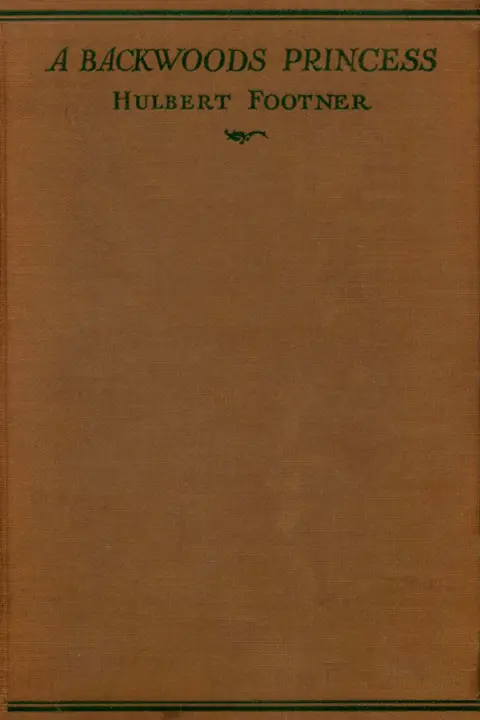
A backwoods princess
Hulbert Footner
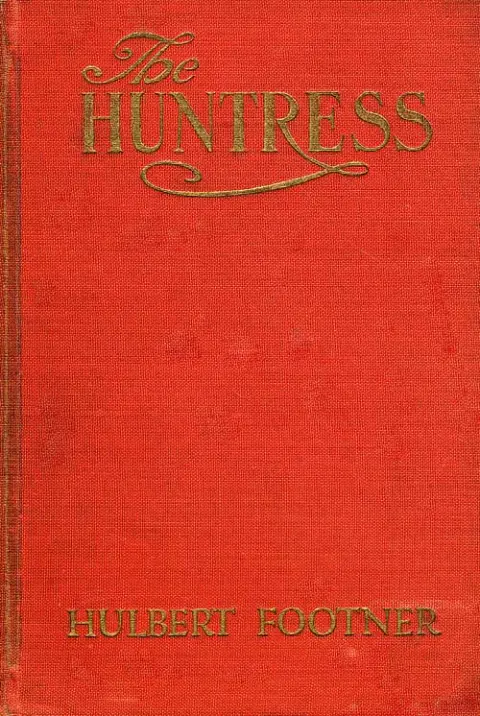
THE CLASSIC COLLECTION · 1922
"The Huntress" by Hulbert Footner is a novel written in the early 20th century. Set in a remote Indigenous village, the story introduces us to Bela, a headstrong and unconventional young woman who defies the traditional gender roles of her tribe. The narrative seems to revolve around her quest for identity, familial connections, and the complicated dynamics of attraction and societal expectation. The opening of the novel presents a vivid depiction of life in the "Fish-Eaters' Village," where tensions arise from Bela's rebellious nature, which sets her apart from the other women and frustrates her father, Charley Whitefish. As a strong-willed individual, Bela refuses to conform to the expectations placed on her, leading to conflict not only within her family but also with the rest of the tribe. The chapter elicits a sense of identity struggle, moving from her initial defiance against her father's authority to a revelation about her mixed heritage. With budding feelings for the outside world represented by white men and advice from the enigmatic old Musq'oosis, the story hints at a transformational journey for Bela as she seeks her place between two cultures.
Introduction adapted from the source catalogue; source summaries may be automatically generated.
Free to read · English · 82,123 words · No account needed
MAKE TIME FOR A GOOD BOOK
On by default. Untick to stop anonymous reading totals. Each page counts after 10 seconds in view. How this works.
Anonymous counting is on unless you have switched it off.
They fell silent, mutually embarrassed, but not unhappy. There was something both delightful and dangerous in their proximity within that secret circle. The eyes of both confessed it.
"Will you eat?" asked Bela, "I have bread and fish."
He shook his head. "I have to go soon," he replied with a glance at
the sun.
Her face fell. "I lak feed anybody come to my place," she said
wistfully.
"Oh, well, go ahead," assented Sam, smiling.
She hastened to prepare a simple meal. Self-consciousness did not trouble her if she might be busy. Sam loved to follow her graceful movements by the fire. What harm? he asked the watch-dog within. This dog had grown drowsy, anyhow.
Bela's curiosity in turn began to have way.
"Where you live before you come here, Sam?" she asked.
"In a city. New York. It isn't real living."
"I know a city!" she exclaimed. "Musq'oosis tell me. They got houses high as jack-pines. Windows wide as a river. At night a thousand thousand moons hang down to give the people light."
"Right!" said Sam. "What would you say to a sky-scraper I wonder?"
"What is sky-scraper?"
"Like fifty houses piled up one on top of the other, and reaching to
the sky."
Bela pouted. "You mak' fun I think because I know not'ing."
"Honest to goodness!" he swore.
"What good to be so high?" she asked. "High roof no good."
"There are different floors inside. Fifty of them."
"How do people get to the top?"
"In an elevator. Kind of box you get into. Whiz, up she goes like
that!"
Bela's face showed strong incredulity. She let the subject drop.
"You got fat'er, mot'er out there, Sam?" she asked.
He shook his head. "Both dead."
"You got no people 'tall?" she asked, quick with sympathy.
"Brothers," he said grimly. "Three of them. They don't think much of
me."
One question followed another, and the time flew by. They were making famous progress now. They ate. Afterward Sam stretched out in the grass with his hands under his head, and told his story freely.
"Gad, what a relief to talk!" he said. "I haven't really opened up since we left Prince George. Those fellows, they're all right in their way, but pretty coarse. We don't hit it off much. I keep mum to avoid trouble."
"I lak hear you talk," murmured Bela softly.
"My brothers are all a lot older than I," Sam went on. "I was the baby of the family. It's considerable of a handicap to a kid. They baby you along until after you're grown up, then all of a sudden they expect you to stand alone.
Your reading position is saved on this browser. Take it to another device with a library code. Reading pages adapt to text, rather than matching a printed edition.
Hulbert Footner
Hulbert Footner
Hulbert Footner
Hulbert Footner
BEHIND THE BOOK
This eBook is for the use of anyone anywhere in the United States and most other parts of the world at no cost and with almost no restrictions whatsoever. You may copy it, give it away or re-use it under the terms of the Project Gutenberg License included with this eBook or online at www.gutenberg.org. If you are not located in the United States, you will have to check the laws of the country where you are located before using this eBook. Read the source licence.
The original source file, including credits and licence, is retained by this library. Request an original-format copy at no charge. Please include the book title and Project Gutenberg identifier #26283.
KEEP YOUR CURIOSITY GOING
Coulson Kernahan

Maurice Baring
Frances Wright
Cécile Tormay

Frederic Jesup Stimson

W. H. P. (William Henry Pope) Jarvis