A backwoods princess
Hulbert Footner
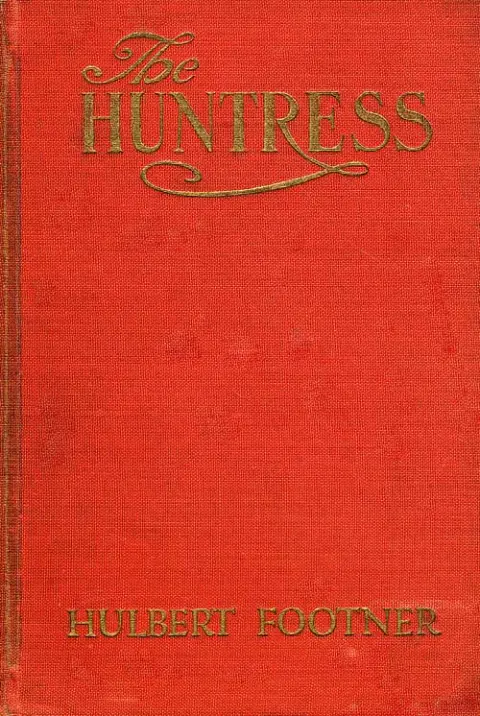
THE CLASSIC COLLECTION · 1922
"The Huntress" by Hulbert Footner is a novel written in the early 20th century. Set in a remote Indigenous village, the story introduces us to Bela, a headstrong and unconventional young woman who defies the traditional gender roles of her tribe. The narrative seems to revolve around her quest for identity, familial connections, and the complicated dynamics of attraction and societal expectation. The opening of the novel presents a vivid depiction of life in the "Fish-Eaters' Village," where tensions arise from Bela's rebellious nature, which sets her apart from the other women and frustrates her father, Charley Whitefish. As a strong-willed individual, Bela refuses to conform to the expectations placed on her, leading to conflict not only within her family but also with the rest of the tribe. The chapter elicits a sense of identity struggle, moving from her initial defiance against her father's authority to a revelation about her mixed heritage. With budding feelings for the outside world represented by white men and advice from the enigmatic old Musq'oosis, the story hints at a transformational journey for Bela as she seeks her place between two cultures.
Introduction adapted from the source catalogue; source summaries may be automatically generated.
Free to read · English · 82,123 words · No account needed
MAKE TIME FOR A GOOD BOOK
On by default. Untick to stop anonymous reading totals. Each page counts after 10 seconds in view. How this works.
Anonymous counting is on unless you have switched it off.
Gilbert Beattie, driving home by way of the French outfit, after having seen his sister-in-law embark, found that another party of settlers had arrived. Many of the natives, attracted by news of these events, had also come in, and the settlement presented a scene of activity such as it had never known.
It gave the trader much food for thought. Clearly the old order was passing fast, and it behooved an enterprising merchant to adjust himself to the new. Beattie was no longer a young man, and he felt an honest anxiety for the future. Would he be able to maintain his supremacy?
When he reached his own store he found a handsome native girl waiting to see him. He had seen her before, but could not place her. He asked her name.
"Bela Charley," she answered.
"O-ho!" he said, looking at her with a fresh curiosity. "You are she, eh?" Whatever they might be saying about this girl, he commended the calm, self-respecting air with which she bore his scrutiny. "Do you want to trade?" he asked. "One of the clerks will wait on you."
She shook her head. "Want see you."
"What can I do for you?"
"Company got little house beside the road down there. Nobody livin'
there."
"Well, what of it?"
"You let me live there?" she asked.
"You'd better go home to your people, my girl," he said grimly.
"I have left them," she returned coolly.
"What would you think of doing?" he asked curiously. "How could you
make your living?"
"Plenty people here now," she said. "More comin'. I goin' keep
stoppin'-house for meals."
"Alone?" he asked, frowning.
"Sure!" said Bela.
He shook his head. "It wouldn't do."
"Why?"
"You're too good-looking," he replied bluntly. "It wouldn't be
respectable."
"I tak' care of myself," averred Bela. "Anybody say so."
"How about that story that's going the rounds now?"
"Moch lies, I guess."
"Very like; but it can't be done," he said firmly. "I can't have a scandal right in front of my wife's door."
"Good for trade," suggested Bela insinuatingly. "Mak' the new people come up here. Now they always hangin' round Stiffy and Mahooley's."
This argument was not without weight; nevertheless, Beattie continued to shake his head. "Can't do it unless you get a chaperon."
"Chaperon?" repeated Bela, puzzled.
"Get a respectable woman to come live with you, and I'll say all
right."
Bela nodded and marched out of the store without wasting any further
words.
In an hour she was back, bringing Mary, Bateese Otter's widow. Mary, according to the standards of the settlement, was a paragon of virtue. Gilbert Beattie grinned.
Your reading position is saved on this browser. Take it to another device with a library code. Reading pages adapt to text, rather than matching a printed edition.
Hulbert Footner
Hulbert Footner
Hulbert Footner
Hulbert Footner
BEHIND THE BOOK
This eBook is for the use of anyone anywhere in the United States and most other parts of the world at no cost and with almost no restrictions whatsoever. You may copy it, give it away or re-use it under the terms of the Project Gutenberg License included with this eBook or online at www.gutenberg.org. If you are not located in the United States, you will have to check the laws of the country where you are located before using this eBook. Read the source licence.
The original source file, including credits and licence, is retained by this library. Request an original-format copy at no charge. Please include the book title and Project Gutenberg identifier #26283.
KEEP YOUR CURIOSITY GOING
Coulson Kernahan

Maurice Baring
Frances Wright
Cécile Tormay

Frederic Jesup Stimson

W. H. P. (William Henry Pope) Jarvis