A backwoods princess
Hulbert Footner
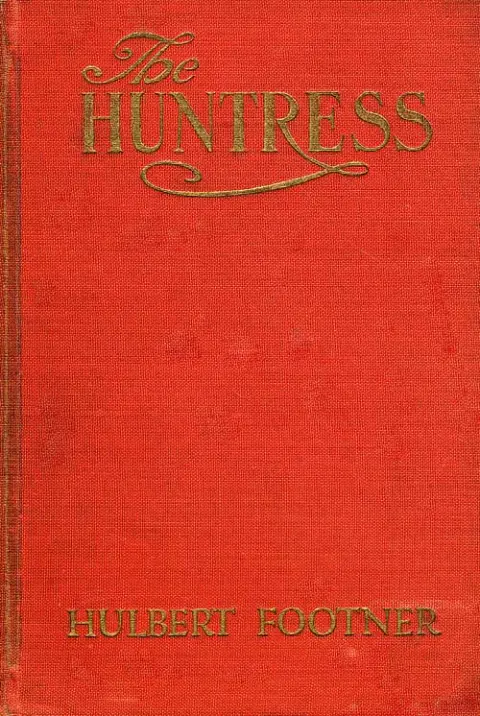
THE CLASSIC COLLECTION · 1922
"The Huntress" by Hulbert Footner is a novel written in the early 20th century. Set in a remote Indigenous village, the story introduces us to Bela, a headstrong and unconventional young woman who defies the traditional gender roles of her tribe. The narrative seems to revolve around her quest for identity, familial connections, and the complicated dynamics of attraction and societal expectation. The opening of the novel presents a vivid depiction of life in the "Fish-Eaters' Village," where tensions arise from Bela's rebellious nature, which sets her apart from the other women and frustrates her father, Charley Whitefish. As a strong-willed individual, Bela refuses to conform to the expectations placed on her, leading to conflict not only within her family but also with the rest of the tribe. The chapter elicits a sense of identity struggle, moving from her initial defiance against her father's authority to a revelation about her mixed heritage. With budding feelings for the outside world represented by white men and advice from the enigmatic old Musq'oosis, the story hints at a transformational journey for Bela as she seeks her place between two cultures.
Introduction adapted from the source catalogue; source summaries may be automatically generated.
Free to read · English · 82,123 words · No account needed
MAKE TIME FOR A GOOD BOOK
On by default. Untick to stop anonymous reading totals. Each page counts after 10 seconds in view. How this works.
Anonymous counting is on unless you have switched it off.
"Small nothing!" cried Mahooley. "Those horses are bred in the country. They will thrive on shavings. They run out all winter."
"How moch wit' wagon and harness?" asked Musq'oosis indifferently.
"Six hundred and fifty."
"Wa!" said Musq'oosis. "You t'ink you got race-horses. I give
five-fifty."
"Nothing doing!"
"All right, I go see Beattie."
"Hold on."
Thus it raged back and forth all afternoon. Half a dozen times they went out to look at the horses. Musq'oosis had to admit they were a nervy pair, though small. A dozen times the negotiations were called off, only to be renewed again.
"Be reasonable," said Mahooley plaintively. "I suppose you want a year's credit. I've got to count that."
"I pay cash," said Musq'oosis calmly.
Mahooley stared. "Where the hell will you get it?"
"I got it now."
"Let me see it."
Musq'oosis declined.
Mahooley finally came down to six hundred, and Musq'oosis went up to five-seventy-eight. There they stuck for an hour.
"Five-seventy-eight!" said Mahooley sarcastically. "Why don't you add
nineteen cents or so?"
"Tak' it or leave it," said Musq'oosis calmly.
Mahooley finally took it. "Now, let me see the colour of your money,"
he said.
Musq'oosis produced another little paper. This one read:
I promise to pay the Indian, Musq'oosis, five hundred and seventy-eight dollars ($578.00) on demand.
Mahooley looked discomfited. He whistled.
"That's good money, ain't it?" asked Musq'oosis.
"Sure! Where did you get it?" demanded the trader. "I never heard of
this."
"Beattie and me got business," replied Musq'oosis with dignity.
Mahooley was obliged to swallow his curiosity.
"Well, who are you going to get to drive?" he asked.
Musq'oosis's air for the first time became ingratiating. "I tell you," he returned. "Let you and I mak' a deal. You want me do somesing. I want you do somesing."
"What is it?" demanded Mahooley suspiciously.
"You do w'at I want, I promise I tell the Fish-Eaters come to your
store."
Mahooley's eyes gleamed. "Well, out with it!"
"I want you not tell nobody I buy your team. Nobody but Stiffy. I want hire white man to drive, see? Maybe he not lak work for red man. So you mak' out he workin' for you, see?"
"All right," agreed Mahooley. "That's easy. But who can you get?"
"Sam."
Mahooley indignantly exploded. Sam, the white slave, the butt of the whole camp, the tramp without a coat to his back or a hat to cover his head. He assured Musq'oosis more than once that he was crazy.
Your reading position is saved on this browser. Take it to another device with a library code. Reading pages adapt to text, rather than matching a printed edition.
Hulbert Footner
Hulbert Footner
Hulbert Footner
Hulbert Footner
BEHIND THE BOOK
This eBook is for the use of anyone anywhere in the United States and most other parts of the world at no cost and with almost no restrictions whatsoever. You may copy it, give it away or re-use it under the terms of the Project Gutenberg License included with this eBook or online at www.gutenberg.org. If you are not located in the United States, you will have to check the laws of the country where you are located before using this eBook. Read the source licence.
The original source file, including credits and licence, is retained by this library. Request an original-format copy at no charge. Please include the book title and Project Gutenberg identifier #26283.
KEEP YOUR CURIOSITY GOING
Coulson Kernahan

Maurice Baring
Frances Wright
Cécile Tormay

Frederic Jesup Stimson

W. H. P. (William Henry Pope) Jarvis