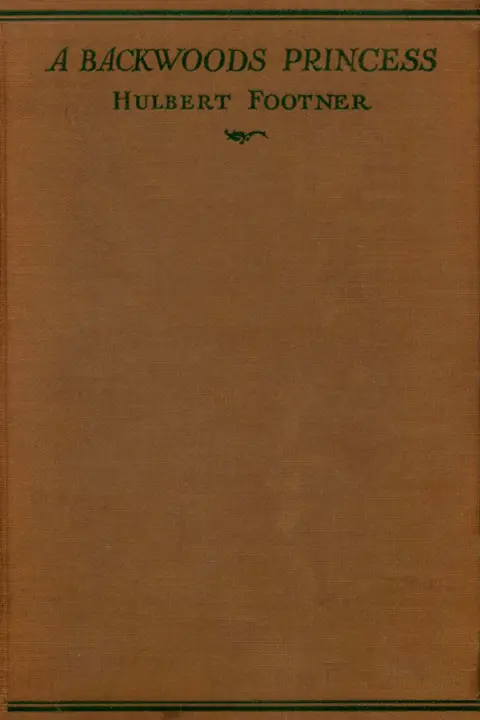
A backwoods princess
Hulbert Footner
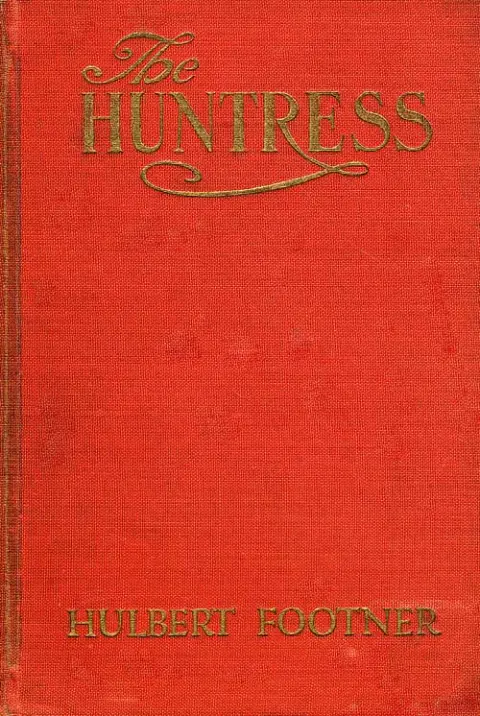
THE CLASSIC COLLECTION · 1922
"The Huntress" by Hulbert Footner is a novel written in the early 20th century. Set in a remote Indigenous village, the story introduces us to Bela, a headstrong and unconventional young woman who defies the traditional gender roles of her tribe. The narrative seems to revolve around her quest for identity, familial connections, and the complicated dynamics of attraction and societal expectation. The opening of the novel presents a vivid depiction of life in the "Fish-Eaters' Village," where tensions arise from Bela's rebellious nature, which sets her apart from the other women and frustrates her father, Charley Whitefish. As a strong-willed individual, Bela refuses to conform to the expectations placed on her, leading to conflict not only within her family but also with the rest of the tribe. The chapter elicits a sense of identity struggle, moving from her initial defiance against her father's authority to a revelation about her mixed heritage. With budding feelings for the outside world represented by white men and advice from the enigmatic old Musq'oosis, the story hints at a transformational journey for Bela as she seeks her place between two cultures.
Introduction adapted from the source catalogue; source summaries may be automatically generated.
Free to read · English · 82,123 words · No account needed
MAKE TIME FOR A GOOD BOOK
On by default. Untick to stop anonymous reading totals. Each page counts after 10 seconds in view. How this works.
Anonymous counting is on unless you have switched it off.
Within the store of the French outfit, Stiffy, the trader, was audibly totting up his accounts in his little box at the rear, while Mahooley, his associate, sat with his chair tipped back and his heels on the cold stove. Their proper names were Henry Stiff and John Mahool, but as Stiffy and Mahooley they were known from Miwasa Landing to Fort Ochre.
The shelves of the store were sadly depleted; never was a store open for business with so little in it. A few canned goods of ancient vintages and a bolt or two of coloured cotton were all that could be seen. Nevertheless, the French outfit was a factor to be reckoned with.
There was no fur going now, and the astute Stiffy and Mahooley were
content to let custom pass their door. Later on they would reach out
for it.
Mahooley was bored and querulous. This was the dullest of dull seasons, for the natives were off pitching on their summer grounds, and travel from the outside world had not yet started.
Stiffy and Mahooley were a pair of "good hard guys," but here the resemblance ended. Stiffy was dry, scanty-haired, mercantile; Mahooley was noisy, red-faced, of a fleshly temperament, and a wag, according to his lights.
"I'd give a dollar for a new newspaper," growled Mahooley.
"That's you, always grousin' for nothin' to do!" said his partner. "Why don't you keep busy like me?"
"Say, if I was like you I'd walk down to the river here and I'd get in the scow and I'd push off, and when I got in the middle I'd say, 'Lord, crack this nut if you can! It's too much for me!' and I'd step off."
"Ah, shut up! You've made me lose a whole column!"
"Go to hell!"
Thus they bickered endlessly to pass the time.
Suddenly the door opened and a stranger entered, a white man.
As a rule, the slightest disturbance of their routine was heralded in advance by "moccasin telegraph," and this was like a bolt from the blue. Mahooley's chair came to the floor with a thump.
"Well, I'm damned!" he said, staring.
Stiffy came quickly out of his little box to see what was up.
"How are you?" began the stranger youth diffidently.
"Who the hell are you?" asked Mahooley.
"Sam Gladding."
"Is the York boat in? Nobody told me."
"No, I walked around the lake."
Mahooley looked him over from his worn-out moccasins to his bare head. "Well, you didn't bring much with you," he observed.
Sam frowned to hide his rising blushes. He offered the rabbit-skin
robe to create a diversion.
Your reading position is saved on this browser. Take it to another device with a library code. Reading pages adapt to text, rather than matching a printed edition.
Hulbert Footner
Hulbert Footner
Hulbert Footner
Hulbert Footner
BEHIND THE BOOK
This eBook is for the use of anyone anywhere in the United States and most other parts of the world at no cost and with almost no restrictions whatsoever. You may copy it, give it away or re-use it under the terms of the Project Gutenberg License included with this eBook or online at www.gutenberg.org. If you are not located in the United States, you will have to check the laws of the country where you are located before using this eBook. Read the source licence.
The original source file, including credits and licence, is retained by this library. Request an original-format copy at no charge. Please include the book title and Project Gutenberg identifier #26283.
KEEP YOUR CURIOSITY GOING
Coulson Kernahan

Maurice Baring
Frances Wright
Cécile Tormay

Frederic Jesup Stimson

W. H. P. (William Henry Pope) Jarvis