THE CLASSIC COLLECTION✦A dead man’s diaryCLASSIC FREE BOOKS
A dead man’s diary
Coulson Kernahan
THE CLASSIC COLLECTION · 1902
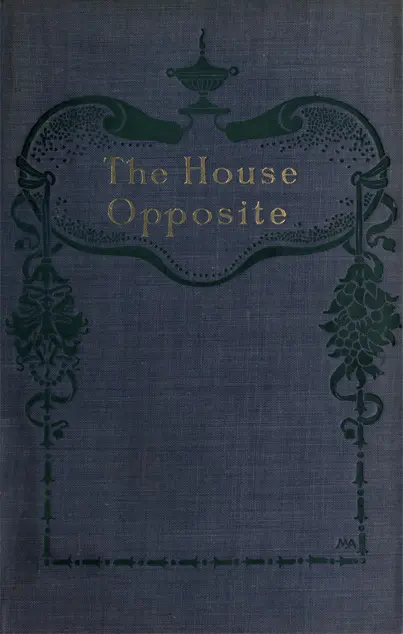
"The House Opposite: A Mystery" by Elizabeth Kent is a mystery novel written in the early 20th century. The story revolves around Dr. Charles Fortescue, who becomes embroiled in a perplexing murder investigation after witnessing peculiar events from his rooftop. The narrative captures a sense of intrigue and suspense as Dr. Fortescue grapples with his observations and connects them to the unfolding crime. At the start of the novel, the protagonist, Dr. Fortescue, seeks relief from the oppressive heat of New York City's summer by moving to his rooftop. There, he witnesses a commotion in the neighboring Rosemere apartment building, which leads him to suspect something sinister is occurring. As he observes various characters such as a mysterious woman and a distressed man, his curiosity intensifies. Soon after, he is drawn into the investigation of a murder when he is called to the scene, revealing that the victim is a man found dead in the building under suspicious circumstances. As the story expands, Dr. Fortescue uncovers connections between the dead man and residents of the Rosemere, particularly Mrs. Atkins and the enigmatic Miss May Derwent, heightening the intrigue surrounding the case.
Introduction adapted from the source catalogue; source summaries may be automatically generated.
Free to read · English · 62,803 words · No account needed
MAKE TIME FOR A GOOD BOOK
On by default. Untick to stop anonymous reading totals. Each page counts after 10 seconds in view. How this works.
Anonymous counting is on unless you have switched it off.
Turning back into the room, I saw that a bullet had pierced one of the panels of the door around which the fight seemed to be centred. A minute more, and it would give way. I rushed to the other one, and, quickly unlocking it, dashed through the waiting room, and caught the lunatic in the rear. With a bound, I was upon him, my two hands encircling his throat.
"Stand clear of that pistol!" I shouted, as Argot (for it was indeed he) tried to fire over his shoulder. A young man I had not seen before sprang forward, and, seizing his arm, bent it back till it caused a yell of pain and the pistol fell from the madman's grasp. At this juncture the janitor appeared, and the four of us had little difficulty in overpowering the fellow, although he still fought like a demon. As soon as he was safely bound, I sent my boy to telephone for an ambulance. I now observed, for the first time, that Argot had evidently tried to disguise himself. An enormous pillow, stuffed inside his trousers, and several towels, wound around his shoulders, gave him the appearance of extreme obesity. So, after all, he had been the fat man, and the running footsteps had been his. Well, I was glad that one mystery, at least, was cleared up.
The young stranger, whose opportune appearance had, in all probability, saved my life, still knelt beside the prostrate man, and he and I, together, succeeded in preventing him from breaking his bonds during one of his many paroxysms of frenzy.
"Thank you very much for your timely assistance," I said; "you are a
brave man."
"Oh, not at all," he replied; "I am on duty here; I've been shadowing
this man all the evening."
We had an awful job getting Argot into the ambulance, and I confess I never felt more relieved in my life than when I saw him safely locked up in a padded cell.
As I was coming away from the hospital, I met Merritt hurrying towards
it.
"Hello!" he called out; "is it all over?"
"Yes; he's locked up, if that's what you mean."
"Well, Doctor, you've had a pretty lively time of it, my man tells me."
"It's entirely owing to your forethought, in having Argot immediately watched, that some of us are alive at present."
"You don't say; well, let's have a drink to celebrate the occasion. You look a little white around the gills, Doctor."
After tossing down my second bracer, I said: "Well, Mr. Merritt, how do you feel about your bet now?"
"Oh, all right," he answered, with a twinkle in his eye.
Your reading position is saved on this browser. Take it to another device with a library code. Reading pages adapt to text, rather than matching a printed edition.
BEHIND THE BOOK
This eBook is for the use of anyone anywhere in the United States and most other parts of the world at no cost and with almost no restrictions whatsoever. You may copy it, give it away or re-use it under the terms of the Project Gutenberg License included with this eBook or online at www.gutenberg.org. If you are not located in the United States, you will have to check the laws of the country where you are located before using this eBook. Read the source licence.
The original source file, including credits and licence, is retained by this library. Request an original-format copy at no charge. Please include the book title and Project Gutenberg identifier #41525.
KEEP YOUR CURIOSITY GOING
Coulson Kernahan

Maurice Baring
Frances Wright
Cécile Tormay

Frederic Jesup Stimson

W. H. P. (William Henry Pope) Jarvis