THE CLASSIC COLLECTION✦A dead man’s diaryCLASSIC FREE BOOKS
A dead man’s diary
Coulson Kernahan
THE CLASSIC COLLECTION · 1902
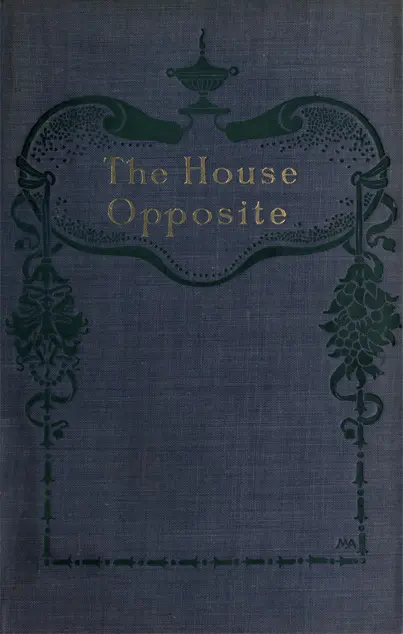
"The House Opposite: A Mystery" by Elizabeth Kent is a mystery novel written in the early 20th century. The story revolves around Dr. Charles Fortescue, who becomes embroiled in a perplexing murder investigation after witnessing peculiar events from his rooftop. The narrative captures a sense of intrigue and suspense as Dr. Fortescue grapples with his observations and connects them to the unfolding crime. At the start of the novel, the protagonist, Dr. Fortescue, seeks relief from the oppressive heat of New York City's summer by moving to his rooftop. There, he witnesses a commotion in the neighboring Rosemere apartment building, which leads him to suspect something sinister is occurring. As he observes various characters such as a mysterious woman and a distressed man, his curiosity intensifies. Soon after, he is drawn into the investigation of a murder when he is called to the scene, revealing that the victim is a man found dead in the building under suspicious circumstances. As the story expands, Dr. Fortescue uncovers connections between the dead man and residents of the Rosemere, particularly Mrs. Atkins and the enigmatic Miss May Derwent, heightening the intrigue surrounding the case.
Introduction adapted from the source catalogue; source summaries may be automatically generated.
Free to read · English · 62,803 words · No account needed
MAKE TIME FOR A GOOD BOOK
On by default. Untick to stop anonymous reading totals. Each page counts after 10 seconds in view. How this works.
Anonymous counting is on unless you have switched it off.
I hesitated a moment. On the one hand I was anxious to oblige Atkins, whom I liked, and quite curious to see his wife again, and fathom, if possible, the cause of the change in her husband; while, on the other hand, I felt some delicacy about invading a lady's home when I had reason to believe that my being there would not be agreeable to her, for I remembered that she had refused even to look at me on leaving the coroner's presence.
"If you are sure Mrs. Atkins would care to see me, I shall be delighted to accept your invitation."
"Why should she object to see you?" he demanded.
"There is really no reason," I hastened to explain; "only as you tell me your wife has been much upset by the murder, and is consequently rather nervous at present, I don't wish to inflict myself on her if there is the least danger that my company may recall that tragic occurrence too vividly to her."
Atkins gave me a long, penetrating look, but having apparently satisfied himself that I had given my real reason, he said:
"Nonsense, Doctor! Mrs. Atkins isn't as unreasonable as that. I'm sure she'll be glad to see you. Now, remember, we shall expect you at seven sharp to-morrow."
"All right," I called back to him.
I have given such a long account of this trifling incident, because for some time afterwards I could not get the young fellow's face out of my mind, and I kept imagining all sorts of possible, and impossible, reasons for his changed looks. Could it be that he suspected the murdered man to have been a friend of his wife's, and feared that she might have some guilty knowledge of his death?
As I realised how such a thought would torture him, I wanted to go at once and tell him how my first grave suspicions had been confirmed, till now I was fully convinced of Argot's guilt. But, fearing that some injudicious word might show him that I had guessed the cause of his anxiety, I refrained. That evening after dining quietly at the Club with an old school-fellow I walked slowly home, down Madison Avenue, which, with its long rows of houses, almost all of which were closed up for the summer, presented an extremely dreary aspect. Although it was barely nine o'clock, the streets in that part of the town were well nigh deserted, everyone who could do so having fled from the city. The night was extremely dark, damp and hot. As I was nearing my office, I observed that the back door of the Rosemere was being cautiously opened, and a woman's head, covered with a thick veil, peeped out. Madame Argot, I thought, and so it proved. Having satisfied herself that her lord and master was not in sight, she darted across the street, and disappeared in my house. I hurried up, so as not to keep her waiting, and, as I did so, I fancied I heard some one running behind me. Turning quickly around, I detected nothing suspicious. The only person I could see was a very fat man, whom I had passed several blocks back. Was he nearer than he should have been? I couldn't tell. At any rate, he was still far enough away for it to be impossible to distinguish his features, but as I was sure that he was not Argot, I did not wait for him to come up with me. On entering the reception room, I found Madame, still heavily veiled, huddled up in a corner, where she thought she could not be seen from the street. I told her to go into the office and, approaching the window, I looked out. There was still nobody in sight except the fat man, and he had crossed over, and was ambling quietly along on the other side of the way. He was almost opposite now, and, after looking at him critically, I decided that it was too improbable that the running foot steps I had heard following me had been his. But whose were they, then? I trusted that the murder had not affected my nerves, also. At any rate, I decided to take the precaution of shutting and bolting the window, and of pulling down the blind, none of which things, during this hot weather, had I been in the habit of doing. But I did not intend to give that white-faced apparition, to whom I attributed the mysterious footsteps, the chance of falling upon me unaware, especially not while Madame Argot was on the premises.
Your reading position is saved on this browser. Take it to another device with a library code. Reading pages adapt to text, rather than matching a printed edition.
BEHIND THE BOOK
This eBook is for the use of anyone anywhere in the United States and most other parts of the world at no cost and with almost no restrictions whatsoever. You may copy it, give it away or re-use it under the terms of the Project Gutenberg License included with this eBook or online at www.gutenberg.org. If you are not located in the United States, you will have to check the laws of the country where you are located before using this eBook. Read the source licence.
The original source file, including credits and licence, is retained by this library. Request an original-format copy at no charge. Please include the book title and Project Gutenberg identifier #41525.
KEEP YOUR CURIOSITY GOING
Coulson Kernahan

Maurice Baring
Frances Wright
Cécile Tormay

Frederic Jesup Stimson

W. H. P. (William Henry Pope) Jarvis